

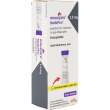

Topical Minoxidil foams and solutions are often the first hair loss treatment people try, but they don’t suit everybody. Between the twice-daily applications, waiting for it to dry, and potential for scalp irritation, some people can find it inconvenient to stick with long-term.
But Minoxidil isn’t only available as a scalp solution or foam, it’s also available in tablet form. Oral Minoxidil is a blood pressure medicine, but it is also used in much lower doses as an off-label treatment for hair loss in both men and women.
It can be a convenient alternative to a twice-daily topical application. But how does it work, how effective is it, and is it safe?
What is oral Minoxidil?
Oral Minoxidil was originally developed as a treatment for high blood pressure. In the UK, it’s still only licensed for that purpose. Its use for hair loss is considered off-label, meaning doctors can prescribe it, but it hasn’t been formally approved for this use.
However, dermatologists and hair specialists around the world are prescribing it more often for men and women with thinning hair (1). For many, it offers a simpler, more discreet alternative to applying topical solutions every day that is easier to stick with.
How does it work?
Minoxidil is a vasodilator, meaning it relaxes and widens blood vessels (2). At low doses, it’s thought to improve blood flow to the scalp so more nutrients reach the hair follicles. This helps extend the growth phase of the hair cycle, encouraging stronger, thicker regrowth.
When used for male hair loss, the doses are much smaller than those prescribed for blood pressure. A typical starting plan is:
1.25mg daily (half a 2.5mg tablet) for the first two weeks
Increasing to 2.5mg once daily if tolerated
This low-dose approach aims to strike a balance, supporting hair growth while minimising side effects.
Is oral Minoxidil effective for hair loss?
The research so far is encouraging. Studies suggest that around 65% of patients see visible regrowth after several months of taking Minoxidil tablets once daily. These results are broadly comparable with topical Minoxidil (3), which has been the go-to hair loss treatment since the 80s.
As with all hair loss treatments, results don’t appear overnight. New hair growth takes time, and it may be 3 to 6 months of consistent use before you notice visible changes. Importantly, if you stop taking Minoxidil, the benefits gradually wear off and hair loss will return.
Who might consider oral Minoxidil?
Oral Minoxidil isn’t for everyone, but it may appeal to you if you:
Struggle with finding time to apply topical Minoxidil twice-daily
Dislike the mess or residue from foams and solutions
Experience scalp irritation from direct topical application
Wants a more discreet option that is easier to fit into your routine
That said, oral Minoxidil isn’t licensed for treating hair loss in the UK, so it should only be considered under medical supervision. Because it’s off-label, you’ll need clinical guidance to make sure it’s safe for you and doesn’t clash with any other medication you take.
Risks and side effects
Like all medicines, oral Minoxidil can cause side effects. At the low doses prescribed for hair loss, these are often mild, but they’re important to understand before starting treatment:
Common side effects: fluid retention, swollen ankles, lightheadedness, or extra hair growth on the body or face (hypertrichosis)
Less common but serious: rapid heartbeat, changes in blood pressure, or pericardial effusion (a rare fluid build-up around the heart)
There have also been reports of “werewolf syndrome” (excessive hair growth all over the body) when higher Minoxidil doses were accidentally given to children (4) — a reminder of why dosing and medical oversight are so important.
Another thing to be aware of is temporary shedding (5). In the first few weeks, you may notice more hair falling out. While unsettling, this is often a sign that the treatment is working. The older hairs are being shed to make way for healthier, stronger ones, and shedding usually settles within a month.
Off-label use: important warnings
Because oral Minoxidil is only licensed for blood pressure in the UK, its use as a treatment for hair loss is strictly off-label. That means:
It should never be taken without a clinical review
It’s not suitable during pregnancy or breastfeeding
It should not be combined with other blood-pressure medications without medical advice
Practical tips and lifestyle considerations
If you and your clinician decide oral Minoxidil is right for you, a few practical considerations can make the process easier and safer:
Tablet splitting: The smallest licensed tablet is 2.5mg, which is higher than the usual starting dose for hair loss. A tablet cutter is useful for accurately splitting them in half for the first two weeks until your dose is increased.
Blood pressure monitoring: Because Minoxidil widens blood vessels throughout the body, not just the scalp, it can lower blood pressure. Regular checks in the first few weeks help keep you safe.
Alcohol awareness: Alcohol also lowers blood pressure. Drinking heavily on days you take Minoxidil could make your blood pressure drop too far. While the occasional drink is fine, try to avoid overdoing it and never skip doses regularly.
Patience and consistency: It usually takes 3 to 6 months to see results from oral Minoxidil. This can feel like a long time, but hair growth is a slow process. Staying consistent gives you the best chance of seeing improvement.
Oral vs topical Minoxidil: how do they compare?
Neither oral vs topical Minoxidil is “better” in terms of effectiveness, as both have similar success rates. The right choice depends on what feels realistic and sustainable for you.
Topical Minoxidil is applied directly to the scalp. It doesn’t affect blood pressure, but it can cause itching, irritation, or dryness, and applying it twice-daily is essential to see full results.
Oral Minoxidil is more convenient and easier to build into a routine. But because it’s taken orally and circulates throughout the body, it carries a higher risk of systemic side effects.
Depending on your level of hair loss, we may recommend combining Minoxidil with Finasteride for added benefit. This can be done with topical or oral versions, though many people find it easier to manage when both treatments are taken as tablets.
Is oral Minoxidil right for you?
Oral Minoxidil is an exciting option if you’ve struggled with topical treatments or are too busy to stick with the time-consuming topical Minoxidil routine. As a daily tablet, many people find oral Minoxidil more convenient and discreet. But it’s not risk-free, and it remains an off-label option in the UK.
If you’re curious, the safest way to explore it is through a consultation with our team. That way, you can weigh up the potential benefits and risks with professional guidance, and decide if it’s the right fit for your lifestyle and hair growth goals.
👉 Take the first step – find out if oral Minoxidil is right for you
References
Goh A, Mahon JM, Cooke N. BH04 Growing interest: a survey of low-dose oral Minoxidil prescribing for hair loss. British Journal of Dermatology [Internet]. 2025 Jun 27;193.
Blood Pressure UK (BPUK). Medications for high blood pressure - vasodilators [Internet]. www.bloodpressureuk.org.
Alghuyaythat WKZ, Alsalhi WA, Altamimi RM, et al. Comparative Efficacy of Oral Minoxidil and Topical Minoxidil in Treating Androgenetic Alopecia: A Systematic Review and Meta-Analysis. Journal or Pioneering Medical Sciences [Internet]. 2025 Jan-Apr; 14(1):464 – 472.
Desai DD, Nohria A, Brinks A, Needle C, Shapiro J, Lo Sicco KI. Minoxidil-induced hypertrichosis: Pathophysiology, clinical implications, and therapeutic strategies. JAAD Reviews [Internet]. 2024 Aug 17;2:41–9.
NICE. Topical Minoxidil [Internet]. NICE. 2025.