




Rimegepant a new hope for migraine sufferers




If you suffer from migraines, you'll know they're much more than "just a headache". They can leave you with intense pain, nausea, sensitivity to light or sound, and make everyday tasks feel impossible.
The good news is that there are now more migraine treatments available than ever before. Whether you're looking for a medicine to help relieve migraine attacks or a treatment to help prevent them from happening so often, our clinicians can help you find an option that's right for you.
At Oxford Online Pharmacy, all prescription migraine treatments are supplied following an online clinical consultation. Once approved by one of our UK-registered prescribers, your medication is delivered discreetly to your door.
Browse our migraine treatments below or start a free online consultation to find the most appropriate option for you.
Migraines at a glance: | ||
|---|---|---|
| ||
A migraine is a neurological condition that affects around 1 in 7 people (1).
While it's often thought of as a severe headache, migraines can cause a range of symptoms and vary widely in how often they occur and how they affect daily life. Some people experience only a few migraines each year, while others have attacks several times a month.
Understanding your migraine pattern can help you identify triggers, recognise when treatment is needed and know when to seek medical advice.
The symptoms of a migraine include (2):
Moderate to severe head pain, often described as throbbing or pulsating
Pain that's usually on one side of the head, but can affect both sides
Nausea or vomiting
Sensitivity to light, sound or smells
Temporary visual disturbances (known as an aura) before or during the migraine
Difficulty concentrating or feeling mentally "foggy"
Not everyone experiences all of these symptoms or at the same severity or duration. Some people can continue with their day despite the pain, while others need to rest in a quiet, dark room until the migraine passes. Some people experience symptoms for a few hours, while others for a few days.
You might also find that your symptoms vary from one migraine attack to the next. For example, some people may experience aura sometimes but not others.
Is it a migraine or headache? | ||
|---|---|---|
Migraines typically cause moderate to severe throbbing or pulsating pain that can last between 4 to 72 hours, often alongside nausea, sensitivity to light or sound, or aura. Headaches are more likely to cause mild to moderate dull, aching or tight pain, usually without these additional symptoms. If you're unsure whether your symptoms are caused by a migraine or another type of headache, read our Migraine vs Headache guide. | ||
While migraines can come on suddenly, the symptoms typically develop in four stages (3).
What you might notice | ||
|---|---|---|
Stage 1: Prodrome | Feeling unusually tired, irritable or hungry, food cravings, neck stiffness or difficulty concentrating. These early warning signs can appear hours or even a day or two before the headache starts (2). | |
Stage 2: Aura | Temporary visual or sensory symptoms such as flashing lights, zig-zag lines, blind spots or tingling sensations that last around 5 to 60 minutes. Around one in three people with migraines experience an aura (3). | |
Stage 3: Headache | A moderate to severe headache, often throbbing or pulsating, with symptoms such as nausea and sensitivity to light, sound or smells, lasting between 4 hours and 3 days (2). | |
Stage 4: Postdrome | Once the headache has gone, it's common to feel drained, tired or mentally "foggy" for a day or two. |
Not everyone will experience every stage. For example, around two-thirds of people with migraines don’t experience aura. “Silent migraines” can also occur, where you experience aura symptoms without ever getting a headache.
Stages can also overlap, with some people experiencing aura and headache simultaneously rather than one followed by the other.
Because migraines can vary so much from person to person in terms of symptoms, severity and how often they occur, healthcare professionals use different terms to describe the most common patterns of migraine. Some of the most common include (4):
Migraine without aura – The most common migraine type. The headache develops without any visual or sensory warning symptoms (no stage two) and is often accompanied by nausea and sensitivity to light or sound.
Migraine with aura – Temporary visual or sensory symptoms, such as flashing lights, zig-zag lines or tingling sensations, develop before or during the migraine. Visual auras are the most common, accounting for 90% of migraines with auras (5).
Chronic migraine – Where a sore head and headache occurs on at least 15 days each month, with symptoms of a migraine on at least 8 of those days for more than 3 months, you have chronic migraines. This type of migraine affects around 2 in 100 people (6).
Menstrual migraine – Some women experience a recurring headache that occurs around the time of their period. These migraines are triggered by hormonal changes during the menstrual cycle and are more likely to be without aura (7).
Could you have chronic migraine? | ||
|---|---|---|
You may have chronic migraine if you (6):
If this sounds familiar, speak to your doctor or book a consultation with Oxford Online Pharmacy. People with chronic migraine often benefit from prescription preventive treatment to reduce how often migraines occur. | ||
While researchers still don't fully understand what causes migraines, we now know much more about why they happen and what can trigger an attack.
Migraines are thought to result from changes in how the brain and nerves communicate. During a migraine attack, certain nerves become activated and release chemicals that contribute to pain.
One of these chemicals is a protein called calcitonin gene-related peptide (CGRP), which is known to be involved in migraine attacks (8). This discovery has led to newer treatments, such as Emgality and Vydura, which target the CGRP pathway to help prevent migraines or reduce pain severity.
Genetics also play a role (1). Migraines often run in families, so you're more likely to experience them if a close relative also suffers from migraines. Hormonal changes are also thought to contribute, which helps explain why migraines are around three times more common in women than men.
While the underlying migraine headache cause can't usually be changed, many people find that certain situations or lifestyle factors can trigger an attack.
Some of the most common migraine triggers include (9):
Stress or anxiety
Poor sleep or changes to your sleep routine
Hormonal changes, including your period
Missing meals
Dehydration
Alcohol
Too much caffeine or suddenly stopping caffeine
Bright or flickering lights
Strong smells
Certain foods, such as aged cheeses or processed meats
Migraine triggers are highly individual, so something that triggers one person's migraines may have no effect on someone else. Keeping a migraine diary can help you identify patterns and better understand what triggers your own attacks.
Once you've identified your triggers, making small lifestyle changes to manage or avoid them may help reduce how often you experience migraines alongside the right treatment.
Migraine treatment isn't just about relieving pain during an attack. Depending on how often you experience migraines and how much they affect your daily life, treatment may focus on stopping attacks when they happen, reducing how often they occur, or a combination of both.
Broadly speaking, there are two main ways to treat migraines (10):
Acute treatments are taken on-demand when the headache phase of a migraine starts to stop the attack or reduce your symptoms.
Preventive treatments are taken regularly to reduce how often migraines happen and reduce their duration and severity.
If you only have the occasional migraine, treatment is usually focused on relieving symptoms during an attack. But if you're experiencing frequent migraines, this may not be enough. Your clinician may recommend adding a preventive treatment to reduce future attacks.
The table below summarises the key differences:
Acute migraine treatment | Preventive migraine treatment | |
|---|---|---|
Taken when the headache phase of a migraine starts while pain is still mild. | Taken regularly, even when you don't have a migraine. | |
Helps stop a migraine attack or reduce pain and sensitivity to light or sound. | Helps reduce how often migraines happen, how severe they are, and how long they last. | |
Best suited to occasional migraine attacks, regardless of severity. | Usually recommended for frequent migraines or chronic migraines. |
Triptans are the most commonly prescribed acute medicines for treating migraines. They are specifically designed to treat migraine attacks and are usually the first prescription treatment recommended for people with moderate to severe symptoms (10).
Oxford Online Pharmacy offers a range of triptans, including:
Sumatriptan (usually the first-line treatment)
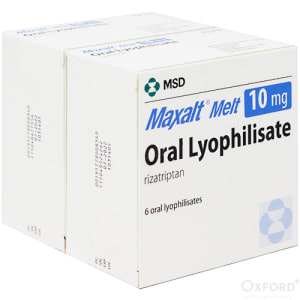
Rizatriptan
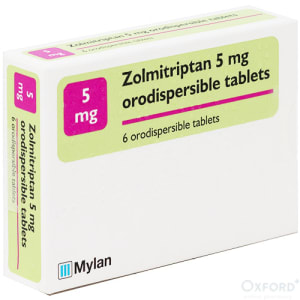
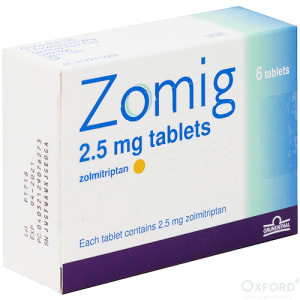
Zolmitriptan
Almotriptan
Frovatriptan
All these medicines are available as tablets, but depending on the exact triptan, you may be able to choose other formats. For example, Rizatriptan is available as a melting tablet (Maxalt), while Sumatriptan injections and Sumatriptan nasal spray are other tablet alternatives.
If one triptan doesn't work well for you, don't be discouraged. Many people find that another triptan provides better relief. If you aren’t suitable for triptans or don’t find any to be effective, a gepant like Vydura (Rimegepant) is another prescription-only option that can be taken during an attack (10).
For milder migraines, some people find that over-the-counter painkillers, such as paracetamol, ibuprofen or aspirin, provide enough relief. Regular pain relief can also be taken alongside prescription treatments for extra relief if needed.
Whichever acute treatment you use, taking it as early as possible after your migraine starts usually gives you the best chance of relieving your symptoms. | ||
|---|---|---|
Many traditional preventive migraine treatments were originally developed for other conditions but have since been found to reduce the frequency of migraine attacks. These include (11):
Propranolol, a beta-blocker that also treats high blood pressure and some heart conditions.
Amitriptyline, an antidepressant that can be prescribed at low doses for migraine prevention.
Topiramate, an anti-epileptic medicine that can help reduce migraine frequency.
These medicines are often used as first-line preventive treatments and can be very effective for migraine relief. But they aren't suitable for everyone, and some people may experience side effects or find they don't provide enough relief.
For these people, newer migraine-specific treatments that target the CGRP protein involved in migraine attacks may be considered. Oxford Online Pharmacy offers:
Emgality, a once-monthly injection that is typically considered for people who haven't responded well to, can't tolerate, or aren't suitable for other preventive treatments (12).
Vydura (Rimegepant), a dissolvable tablet that can be taken every other day as a preventative migraine treatment (13).
Whichever preventive treatment you’re prescribed, it won’t work immediately. Some people notice an improvement within the first month. For others, it can take 2 to 3 months to experience the full benefit, so you should wait at least this long until deciding whether it has worked (11).
Preventive treatments don't cure migraines or stop every attack. Many people keep acute treatments on hand to treat breakthrough attacks when they happen. | ||
Most people don't need the most advanced migraine treatments straight away. Treatment is usually stepped up gradually depending on how often migraines occur and how well previous treatments have worked.
Occasional migraines – Simple painkillers or a prescription acute treatment, such as a triptan, taken when a migraine starts. Often Sumatriptan is given as the first prescription for patients.
If acute treatments aren't working – Your clinician may recommend trying a different triptan or another acute treatment, such as a gepant like Vydura, taken at the beginning of an attack.
Frequent or chronic migraines – A preventive medicine such as propranolol or amitriptyline may be recommended to reduce how often migraines occur.
If first-line preventive treatments aren't suitable or effective – Newer migraine-specific medicines, such as Emgality or Vydura (taken every other day), may be considered.
Every person's migraine journey is different, so your clinician will recommend the most appropriate treatment based on your symptoms, medical history and previous response to treatment.
The right migraine treatment depends on how often you experience migraines, how severe they are and your previous response to treatment.
Oxford Online Pharmacy offers the following range of prescription migraine treatments for a variety of migraine experiences. While all of the medicines below are effective for the right patient, they work in different ways and are suitable for different types of migraine.
Treatment | Medicine type | Used for | Available as | Typically used when... |
|---|---|---|---|---|
Sumatriptan | Triptan | Acute treatment | Tablet, nasal spray, injection | You're starting prescription migraine treatment for the first time. |
Rizatriptan | Triptan | Acute treatment | Tablet, melt | You'd prefer a tablet that dissolves on your tongue, or you don’t get along with Sumatriptan. |
Zolmitriptan (Zomig) | Triptan | Acute treatment | Tablet, melt | Neither Sumatriptan nor Rizatriptan are effective or suitable for you. |
Almotriptan (Almogran) | Triptan | Acute treatment | Tablet | Other triptans haven't provided relief, and you want to try another option. |
Frovatriptan | Triptan | Acute treatment | Tablet | Your clinician feels a longer-acting triptan may be appropriate. |
Vydura (Rimegepant) | CGRP receptor antagonist (gepant) | Acute treatment | Dissolvable tablet | Triptans haven't worked or aren't suitable. |
Vydura (Rimegepant) | CGRP receptor antagonist (gepant) | Preventive treatment | Dissolvable tablet (every other day) | You have frequent migraines where preventive treatment is appropriate. |
Emgality (Galcanezumab) | CGRP monoclonal antibody | Preventive treatment | Monthly injection | You experience frequent or chronic migraines and other preventive medicines aren’t suitable or effective. |
There's no single treatment that's right for everyone with migraines. During your online consultation, our pharmacy team will assess your symptoms and recommend the most appropriate treatment for you.
While medication can be very effective, there are several things you can do to help improve migraine symptoms and reduce the impact they have on your daily life.
Take acute treatments as early as possible. Triptan medicines such as Sumatriptan, Rizatriptan, and Zolmitriptan work best when taken as soon as the headache phase begins, while the pain is still mild.
Use your aura as an early warning sign. If you experience aura, these visual or sensory symptoms can act as a sign that a migraine is developing. Using this time to get somewhere safe, avoid activities such as driving, and prepare to take your acute treatment.
Consider a different formulation if you're feeling sick. If nausea or vomiting makes it difficult to swallow tablets, melts, nasal sprays or injections may be a better option than standard painkillers or prescription migraine tablets.
Ask about anti-sickness medicines. Medicines such as Metoclopramide or Prochlorperazine can help relieve nausea and vomiting during a migraine. They may also help you keep your migraine medicine down, giving it the best chance of working (10).
Keep a migraine diary. Recording when your migraines happen and what you were doing beforehand can help you identify your triggers. Where possible, managing or avoiding these triggers may help reduce how often migraines occur.
Take your preventive treatment consistently. Preventive migraine medicines work gradually and may take several weeks to have their full effect. Continue taking them exactly as prescribed, even if you don't notice an immediate improvement.
Rest and stay hydrated. If possible, take a break from work or other activities and rest in a quiet, dark room until your symptoms improve. Drinking plenty of fluids can also help, particularly if you've been vomiting.
While most migraines aren't a medical emergency, you should seek urgent medical attention if you experience (2):
A sudden, severe headache that reaches maximum intensity within seconds
A migraine that lasts longer than 72 hours
Aura symptoms that last longer than 1 hour
A headache after a head injury
A headache with confusion, weakness, difficulty speaking or vision loss
A headache with a fever, stiff neck or seizures
Loss of consciousness
You should also arrange a routine appointment with your GP if:
You're experiencing migraine symptoms for the first time
Your headaches are becoming more frequent or severe
Your usual migraine treatment is no longer working
Your migraine symptoms have changed significantly
How long do migraines last?
Without treatment, a migraine attack can last anywhere from 4 to 72 hours (2). Many people feel unusually tired, washed out or have difficulty concentrating for another day or so. Taking migraine treatment as soon as symptoms begin often helps shorten the attack and improve symptom control.
What’s the difference between a headache and a migraine?
Although migraines are often thought of as severe headaches, they're a neurological condition. Unlike a typical headache, migraines commonly cause additional symptoms such as nausea, vomiting, sensitivity to light or sound, and visual disturbances known as aura (1).
Can caffeine cause a migraine?
Yes, but it depends on the person. For some people, drinking too much caffeine or suddenly cutting back can trigger a migraine. Others find that a small amount of caffeine helps relieve symptoms during an attack (14).
Can alcohol cause a migraine?
Alcohol is a common migraine trigger, although it doesn't affect everyone in the same way. Some people find that red wine or beer are more likely to trigger an attack than others. If you often experience migraines after drinking, reducing your intake or avoiding your trigger drinks may help.
Does stress cause migraines?
Stress is one of the most common migraine triggers. Some people get migraines during periods of stress, while others notice an attack once the stressful period has passed. Although it's not always possible to avoid stress, getting enough sleep, exercising regularly and taking time to relax may help.
What foods trigger migraines?
There's no single list of foods that trigger migraines, and many people don't have any food triggers at all. Some people find that foods such as chocolate, dairy, and foods tyramine, monosodium glutamate (MSG) and nitrates trigger migraines, but there is also limited evidence to back this up (9).
Can migraines make you vomit?
Yes. Nausea and vomiting are common migraine symptoms (1-2). If vomiting makes it difficult to take tablets, melts, nasal sprays or injections may be more suitable. You may also be prescribed anti-sickness medicine such as Metoclopramide or Prochlorperazine to relieve nausea and vomiting.
Can my period cause migraines?
Yes. Some women experience menstrual migraines triggered by the natural drop in oestrogen levels around the time of their period. These migraines often follow a pattern and may be managed with acute treatments, preventive medicines, the combined contraceptive pill, or hormone supplements (7).
What is migraine with aura?
Migraine with aura is a migraine type where temporary visual or sensory symptoms develop before the headache, lasting 5 to 60 minutes (3). The most common auras are flashing lights, zig-zag lines or blind spots, although some people experience tingling sensations, numbness or difficulty speaking.
How do I stop migraine auras?
There's no guaranteed way to stop an aura once it has started. Aura symptoms usually settle on their own within an hour. If you're prescribed an acute migraine treatment, taking it as soon as the headache phase begins may help reduce the severity of the migraine that follows.
Can migraines be cured permanently?
There is currently no permanent cure for migraines. But the right combination of trigger management, acute treatments and preventive medicines can significantly reduce how often migraines happen and how severe they are.
Can I take a triptan with a preventive migraine treatment?
Yes. Preventive treatments reduce how often migraines happen and reduce the severity and duration of attacks, but they don't prevent every attack. Many people continue to keep an acute treatment like a triptan available in case a migraine occurs.
What if my migraine treatment isn’t working?
If your current migraine treatment isn't providing enough relief, speak to your clinician. There are several different migraine medicines available, and switching to another triptan or considering a preventive treatment may improve symptom control.
The Migraine Trust. What Is migraine? [Internet]. The Migraine Trust. 2021.
NHS. Migraine [Internet]. NHS. 2019.
The Migraine Trust. Stages of a migraine attack [Internet]. The Migraine Trust. 2025.
The Migraine Trust. Types of Migraine [Internet]. The Migraine Trust. 2021.
Joppeková, Pinto MJ, da Costa MD, Boek R, Berman G, Salim Y, et al. What does a migraine aura look like? – A systematic review. The Journal of Headache and Pain. 2025 Jul 1;26(1).
Chronic migraine [Internet]. The Migraine Trust.
The Migraine Trust. Menstrual migraine [Internet]. The Migraine Trust.
Wattiez AS, Sowers LP, Russo AF. Calcitonin gene-related peptide (CGRP): role in migraine pathophysiology and therapeutic targeting. Expert Opinion on Therapeutic Targets [Internet]. 2020 Feb 1;24(2):91-100.
The Migraine Trust. Migraine attack triggers [Internet]. The Migraine Trust.
The Migraine Trust. Migraine treatment pathway [Internet]. The Migraine Trust. 2025.
The Migraine Trust. Preventive medicines [Internet]. The Migraine Trust. 2025.
Emgality 120 mg solution for injection in pre-filled pen - Summary of Product Characteristics (SmPC) - (emc) | 10478 [Internet]. Medicines.org.uk. 2025.
VYDURA 75 mg oral lyophilisate - Patient Information Leaflet (PIL) - (emc) | 13928 [Internet]. Medicines.org.uk. 2025 [cited 2026 Jul 5].
Nowaczewska M, Wicinski M, Kamierczak W. The Ambiguous Role of Caffeine in Migraine Headache: From Trigger to Treatment. Nutrients. 2020 Jul 28;12(8):2259.
Authored on July 12, 2026

Reviewed on July 27, 2026

Robert Bradshaw (Pharmacist) — MRPharms BSc(Hons) Pharmacy
Superintendent Pharmacist
GPhC Number: 2036118
Not sure which treatment option is right for you? Fill out your details and an Oxford Online Pharmacy expert will get in touch.