


What is migraine prevention and how is it different from acute treatment?
As you may have guessed, migraine prevention is taking steps to actively stop a migraine before it begins, rather than treating it once it has already taken hold.
Most people who suffer from migraines take medication as soon as they notice the first signs of one creeping in. Not everyone is lucky enough to get early warning signs, but it is possible to start getting symptoms as soon as 24 hours before. These could include unusual fatigue, increased sensitivity to light, sounds or smells, nausea or even unusual thirst (1). Around a quarter of sufferers also experience a symptom known as aura, which can include things like flashing lights in their vision, tingling or numbness starting in one hand and travelling up their arm, or difficulty speaking (2).
Migraine prevention focuses on taking steps to reduce how often you have migraines. This can involve tracking triggers so that you can avoid them in future and making healthy lifestyle changes such as limiting alcohol and caffeine, doing regular exercise and controlling stress.
It can also involve taking medications which have been shown to be effective at helping to prevent migraines before they have started (1).
What is CGRP and why do newer prevention medicines target it?
Migraine medications work in different ways. Some of the most popular target calcitonin gene-related peptides (CGRP). CGRP is a protein made by your own body and found throughout your nervous system. Studies show that it plays a key role in the development of migraine attacks. It does this through three separate mechanisms (3). These are:
Dilating the blood vessels in your brain and the surrounding tissues.
Transmitting pain signals along the main nerve that is involved in migraines, called the trigeminal nerve.
Triggering inflammation around nerves in your head, making them more sensitive to those pain signals.
CGRP migraine medications work by interrupting the effects of this peptide. They do this by either blocking the receptor that the protein binds to, to stop it from triggering pain signals, or by binding to the protein itself to stop it activating a migraine (4).
Unlike older migraine medications which were prescribed initially for another condition and later found to reduce migraine frequency, such as the anti-seizure medication, Topiramate (5), CGRP medications have been specifically created as migraine preventatives, based on their ability to act on the biological processes involved in impending migraine attacks.
Two popular CGRP medications for migraine prevention are Vydura (Rimegepant) and Emgality (Galcanezumab).
Tablet-based migraine prevention: Vydura (Rimegepant)
Vydura is the brand name of a CGRP medication that works by blocking the receptor that the peptide binds to (7). The active ingredient is Rimegepant. It is an oral medication, supplied as a dissolvable oral lyophilisate which is a thin wafer that you place under your tongue. There are no tablets to swallow, no injections needed and no water required, making it very accessible to most patients (6).
Who is Vydura for and how is it taken?
Vydura is suitable for adults with migraine, with or without aura. It is available in two mechanisms: for prevention and for acute treatment.
For the prevention of migraine, Vydura should be taken every other day. It is helpful to take it at the same time each time, so that it becomes routine. Place it under your tongue, where it should melt without water (6).
Do not take more than one Vydura lyophilisate in 24 hours.
What to expect and possible side effects of Vydura
In clinical trials, around half of people taking Vydura every other day experienced at least a 50% reduction in their monthly migraine days (11).
Vydura should not be taken by anyone who is allergic to any of the ingredients in the medicine and may need to be taken with care if you have severe liver problems, or if you have reduced kidney function or are on dialysis (6). Your clinician will assess your suitability for Vydura at the point of prescribing it.
For a full list of medicines that interact with Vydura, and other cautions, please refer to the Patient Information Leaflet (PIL).
The only commonly reported side effect of Vydura is nausea, which may affect up to 1 in 10 people (6). However, this does not mean that other side effects will not occur.
If you experience any symptoms associated with an allergic reaction, such as difficulty breathing, swelling of your airway, mouth, lips or tongue, even more than 24 hours after taking Vydura, stop the medication immediately and speak to your doctor.
Injection-based migraine prevention: Emgality (galcanezumab)
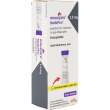
Emgality is the brand name of a CGRP medication that binds to the peptide itself to prevent it from activating the biological processes associated with a migraine (10). The active ingredient is galcanezumab. It is an injectable medication, supplied as a pre-filled pen for single use only. This means that each pen contains just one dose (120mg) of galcanezumab (10).
Who is Emgality for and how is it taken?
In clinical studies, people taking Emgality had around 4 to 5 fewer migraine days each month (8,9).
Emgality is suitable for adults with frequent migraine who have already tried and not responded to standard preventives, diagnosed by a migraine specialist.
It is a subcutaneous injection which means it is injected into a fatty area just under your skin. You can see our Emgality injection guide to find out exactly how to administer an Emgality injection.
Each Emgality pen contains a single dose of galcanezumab. However, your first dose will be a loading dose of two pens (a total of 240mg). After this, you will have one injection every month. We recommend injecting on the same date every month, so it is easier to keep track of when your next dose is due (10).
What to expect and possible side effects of Emgality
Emgality usually takes around one week to start working (8,9).
Emgality should not be taken by anyone who is allergic to any of the ingredients within the medication. You should also let your prescriber know if you have a serious cardiovascular disease as the treatment has not been studied on patients with this type of condition (10).
Injection-site reactions are the most common effect of treatment, and include mild redness, a bruising, itching or rash. This typically resolves itself after a few days. Other common (affecting up to 1 in 10 people) side effects include:
Vertigo/feelings of dizziness
Constipation
Itching
Rash
If you experience any symptoms associated with an allergic reaction, such as difficulty breathing, swelling of your airway, mouth, lips or tongue, even more than 24 hours after taking Emgality, stop the medication immediately and speak to your doctor (10).
For a full list of medicines that interact with Emgality and other cautions, please refer to the Patient Information Leaflet PIL (10).
Vydura vs Emgality: the key differences
To simplify the key differences between Vydura and Emgality, we have organised them into this table.
Vydura (Rimegepant) | Emgality (Galcanezumab) | |
|---|---|---|
Type of CGRP | Blocks the CGRP receptor to prevent migraine | Binds directly to the CGRP protein to prevent migraine |
How it is taken | Oral lysophilisate that dissolves on your tongue | Injection administered via pre-filled pen |
Dosing schedule | Every other day | One injection per month |
Preventative or acute treatment? | Both (can be used to treat acute migraine on the days it is not being taken as a preventative) | Preventative only |
Common side effects | Nausea | Injection site reactions |
Prescribing | Via regular consultation | Via migraine specialist |
How do you know which option might suit you
Both Vydura and Emgality represent effective migraine prevention medication. The right choice for you depends on your individual needs, medical history and dosing schedule and method of taking preferences. Your prescriber will be able to help you make the best choice for you following your consultation.
FAQs
Which treatment works better, Vydura or Emgality?
Both Vydura and Emgality have been shown to be clinically effective at reducing the number of migraine days a regular sufferer may experience. Your healthcare professional can advise which may be more suitable for you (7,8,9).
What is the main difference between the Vydura and Emgality?
The most obvious difference is how they are taken, with Vydura being taken orally via a tablet placed under your tongue, and Emgality via injection. Dosing schedules are also significantly different, with Vydura being taken every other day to help prevent migraines, and Emgality being administered once every month (7,10).
Which treatment has fewer side effects, Vydura or Emgality?
Both medicines are generally well tolerated, but they have different side effect profiles. This is partly due to the differences in how they are taken. Your prescriber can discuss the risks and benefits of each migraine prevention medication with you.
Can I switch from Vydura to Emgality or vice versa?
It may be possible to change your migraine prevention treatment from one to the other. However, you should discuss your reasons for this with your prescriber, and they will help you to make the best choice based on your individual needs.
References
NHS. Migraine [Internet]. NHS. 2019 May [cited 2026 July 29].
Shankar Kikkeri N, Nagalli S. Migraine with Aura. PubMed. Treasure Island (FL): StatPearls Publishing; 2024 Feb
Wattiez AS, Sowers LP, Russo AF. Calcitonin gene-related peptide (CGRP): role in migraine pathophysiology and therapeutic targeting. Expert Opinion on Therapeutic Targets [Internet]. 2020 Feb 1 [cited 2026 July 29];24(2):91–100.
Eller MT, Katarína Schwarzová, Gufler L, Anel Karisik, Kaltseis K, Frank F, et al. CGRP-Targeted Migraine Therapies in Patients With Vascular Risk Factors or Stroke. Neurology. 2025 June 19;105(2).
Naegel S, Obermann M. Topiramate in the prevention and treatment of migraine: efficacy, safety and patient preference. Neuropsychiatric Disease and Treatment. 2010 [Internet].
Vydura 75 mg oral lyophilisate - Patient Information Leaflet (PIL). electronic medicines compendium (emc), Datapharm. 2026 [Internet].
VYDURA 75 mg oral lyophilisate - Summary of Product Characteristics (SmPC) - (emc) | 13928 [Internet]. Medicines.org.uk. 2025 [cited 2026 July 29].
Skljarevski V, Matharu M, Millen BA, Ossipov MH, Kim BK, Yang JY. Efficacy and safety of galcanezumab for the prevention of episodic migraine: Results of the EVOLVE-2 Phase 3 randomized controlled clinical trial. Cephalalgia. 2018 [Internet].
Stauffer VL, Dodick DW, Zhang Q, Carter JN, Ailani J, Conley RR. Evaluation of Galcanezumab for the Prevention of Episodic Migraine: The EVOLVE-1 Randomized Clinical Trial. JAMA Neurology. 2018 [Internet].
Emgality 120 mg solution for injection in pre-filled pen - Patient Information Leaflet (PIL). electronic medicines compendium (emc), Datapharm. 2026 [Internet].
Croop R, Lipton RB, Kudrow D, Stock DA, Kamen L, Conway CM, Stock EG, Coric V, Goadsby PJ. Oral rimegepant for preventive treatment of migraine: a phase 2/3, randomised, double-blind, placebo-controlled trial. Lancet. 2021