

Phimosis Treatment


-
 UK-registered clinical team
-
Confidential & secure
-
No GP visit needed
-
Fast & discreet delivery

Phimosis treatment with Oxford Online Pharmacy
Phimosis is the term used to describe when the foreskin of the penis is too tight. There are two types of phimoses: physiological and pathological.
To put it simply, physiological phimosis refers to the tight foreskin seen in babies and young boys that normally improves over time without any medical intervention. By the age of 16, only around 1% of people with phimosis are still affected. (1)
However, pathological phimosis refers to tight foreskin that is caused by issues such as scarring, inflammation or repeated infections. This type of phimosis typically causes symptoms like pain, bleeding, trouble passing urine or recurrent balanitis (inflammation of the head of the penis). (1) Although pathological phimosis is considered rare (exact rates vary because studies rarely distinguish between pathological and physiological types), there is a treatment that can help – Betamethasone 0.1%. in both ointment and cream form.
Explore our range of Phimosis treatment below or start a consultation now.
Find out more about Phimosis and how to treat a tight foreskin in adults.

Do I have phimosis?
On such a personal part of the body, it can be hard to know what "normal" foreskin can look like, and when there's an issue that should be checked out by a medical professional.
The main symptom of phimosis is foreskin that is too tight for you to be able to pull it back over the head of your penis. However, you may also experience:
Painful erections
Pain during sex
Pain or burning when urinating
Foreskin that balloons when you pass urine
Redness, swelling, itching or general soreness of either your foreskin or the head of your penis
Cracks or breaks in your foreskin
Unusual discharge or smell from your foreskin
People with phimosis are also at greater risk of developing recurrent infections, such as urinary tract infections (UTI's). (2)
If you experience any of the above symptoms you must seek medical assistance from your GP.
Some studies also suggest that phimosis can increase the risk of balanitis, especially if maintaining good hygiene is difficult. This is because moisture, dead skin cells, smegma and urine can become trapped underneath the foreskin, creating an environment for bacteria and fungi to develop. (3)
If you are not experiencing any of the more severe issues listed above, you may be able to treat your phimosis with topical steroid creams or ointments.
Compare Phimosis treatments
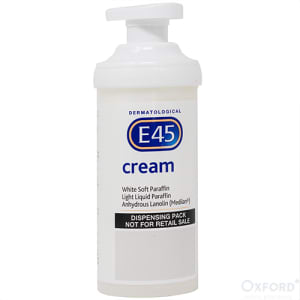
Betamethasone Cream 0.1% for phimosis
Betamethasone 0.1% cream for Phimosis is an effective topical treatment for phimosis. It works by softening your foreskin, so that over time it has more stretch and can retract more easily.
The active ingredient in betamethasone 0.1% is betamethasone valerate at 0.1% strength, which is the equivalent of 1mg of betamethasone per gram. Topical betamethasone is a corticosteroid, which reduces inflammation so that the skin becomes softer, more supple and less resistant to stretching. (4)
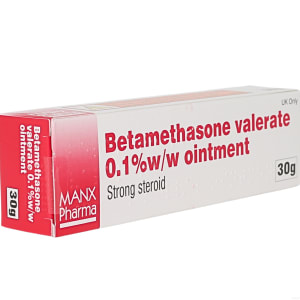
Betamethasone Ointment 0.1% for phimosis
Betamethasone Ointment for Phimosis is a prescription topical steroid that calms inflammation directly at the skin's surface. It's licensed in the UK for conditions like eczema, psoriasis, and contact dermatitis, and some providers also prescribe it off-label to help ease a tight foreskin. This off-label use isn't unusual or experimental – evidence supports steroid ointments as an effective first-line, non-surgical option for phimosis. As with any off-label prescription, it's only recommended once a clinician has confirmed it's the right fit for the individual. There is some general guidance about applying betamethasone for skin on the NHS website.
Always follow the specific application guidance provided by your prescribing clinician.
What is the difference between Betamethasone Cream and Ointment?
Betamethasone cream and ointment contain the same active ingredient but differ in their base formulation. Cream has a water-based, lighter texture that absorbs quickly and doesn't leave much residue, making it more suitable for moist areas, skin folds, or where a less greasy feel is preferred. Ointment has an oil-based, thicker consistency that forms a protective layer on the skin, offering more intense hydration and better penetration – making it generally more effective for dry, thickened, or particularly stubborn areas of skin. For conditions like phimosis, ointment is typically favoured but it depends on personal preference and any allergies to individual ingredients in either the cream or ointment.
When to see a doctor urgently
You should also see a doctor urgently if your foreskin gets stuck behind the head of your penis, you can't pass urine or there's severe swelling, visible discolouration or severe pain, as these can all be signs of a more serious emergency called paraphimosis. If you develop paraphimosis and it's not treated quickly, it can lead to tissue damage. (1)
References
Overview: Phimosis. Institute for Quality and Efficiency in Health Care (IQWiG); 2023. Available from: https://www.ncbi.nlm.nih.gov/books/NBK326437/ Accessed July 2026.
Matsuoka H, Kajiwara I, Tahara H, Oshima K. Phimosis as a pathogenetic factor in urinary tract infection and vesicoureteral reflux. Nihon Hinyokika Gakkai zasshi The Japanese journal of urology [Internet]. 1994 June [cited 2026 July 22];85(6):953-7. Available from: https://pubmed.ncbi.nlm.nih.gov/8065077/
Wray AA, Velasquez J, Khetarpal S. Balanitis [Internet]. PubMed. Treasure Island (FL): StatPearls Publishing; 2020 [cited 2026 July 22]. Available from: https://www.ncbi.nlm.nih.gov/books/NBK537143/
Palmer LS, Palmer JS. The Efficacy of Topical Betamethasone for Treating Phimosis: A Comparison of Two Treatment Regimens. Urology. 2008 July;72(1):68-71. Available from: https://pubmed.ncbi.nlm.nih.gov/18455770/ Accessed July 2026.
Dewan A Patrick. Efficacy of Topical Steroid Ointment in Treating Phimosis: A Review of Clinical Practice. [Internet]. Nih.gov. 2026 [cited 2026 July 22]. Available from: https://pmc.ncbi.nlm.nih.gov/articles/pmc12268225/
Side effects of betamethasone for skin [Internet]. nhs.uk. 2023 Nov [cited 2026 July 22]. Available from: https://www.nhs.uk/medicines/betamethasone-skin/side-effects-of-betamethasone-for-skin/
NHS. Tight foreskin (phimosis and paraphimosis) [Internet]. nhs.uk. 2017 Oct [cited 2026 July 22]. Available from: https://www.nhs.uk/conditions/phimosis/
Czajkowski M, Czajkowska K, Zaranska K, Giemza A, Klacz J, Sokolowska-Wojdylo M, et al. Male Circumcision Due to Phimosis as the Procedure That Is Not Only Relieving Clinical Symptoms of Phimosis But Also Improves the Quality of Sexual Life. Sexual Medicine. 2021 Apr;9(2):100315. Available from: https://pmc.ncbi.nlm.nih.gov/articles/PMC8072165/ Accessed July 2026.
Authored on September 16, 2026

Robert Bradshaw (Pharmacist) — MRPharms BSc(Hons) Pharmacy
Superintendent Pharmacist
GPhC Number: 2036118
Reviewed on September 17, 2026

Not sure which treatment option is right for you? Fill out your details and an Oxford Online Pharmacy expert will get in touch.