


-
 UK-registered clinical team
 -
Confidential & secure
-
No GP visit needed
-
Fast & discreet delivery


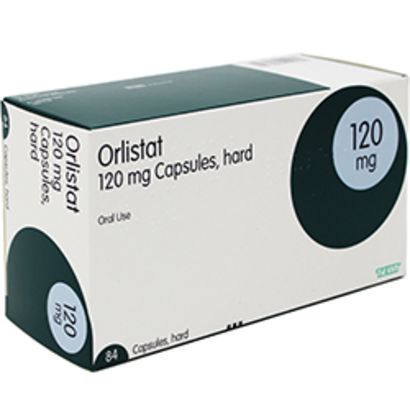
Orlistat Weight Loss Tablets (120mg)
Orlistat Weight Loss Tablets (120mg) Product information
£29.99 (£0.36 per capsules)
| 120mg | |
|---|---|
| 84 capsules | £29.99 |
| 168 capsules | £58.94 |
| 252 capsules | £89.39 |
Buy Orlistat in the UK
Obesity and excess weight are common, long-term health conditions that can affect physical health, emotional wellbeing and quality of life. Losing weight may help reduce the risk of weight-related conditions such as type 2 diabetes, high blood pressure and cardiovascular disease, particularly when weight loss is supported by sustainable changes to diet and physical activity (1).
There are several weight-loss treatments available, and the most suitable option depends on factors such as your BMI, existing health conditions, medicines and treatment goals. Orlistat 120mg is an established prescription only treatment that can help treat obesity when combined with exercise and changes to your diet (2).
Orlistat is a generic treatment. This means that it is a version of a branded drug that contains the same active ingredient, in the same strength and dose form, and works in the same way in the body.
You can buy Orlistat 120mg tablets following a consultation with a clinician at Oxford Online Pharmacy. It is available under several brand names including Xenical and Alli 60mg, as well as a generic medication.
Find out more about how Orlistat works for weight loss.
Product Information for Orlistat Weight Loss Tablets (120mg)
What is Orlistat 120mg?
Orlistat 120mg is a prescription-only oral weight loss treatment licensed for UK adults who are classed as clinically overweight or obese. It should be combined with a reduced calorie, low fat diet and increased levels of exercise to see the optimal effect of treatment (2).
How does Orlistat work?
Unlike appetite-suppressing weight loss medications (like Mounjaro), Orlistat acts in your stomach, where it works to stop some of the fat you eat from being absorbed by your body. Instead, this fat passes through your system and out of your body in your bowel movements (3).
The actual process sees Orlistat binding to the enzymes in your stomach to stop them from breaking down dietary fat, preventing around 30% of the fat you eat from being absorbed by your body (3). Absorbing dietary fat contributes to obesity when it causes your total calorie intake to exceed the energy that your body burns (4).
How long does Orlistat take to work?
Orlistat starts working as soon as you take it, but it will take around 24-48 hours for you to notice any changes to your digestion. This will probably begin as (2):
Oily/greasy looking stools
Oily spotting on your underwear, or on toilet paper
More frequent need to have a bowel movement, sometimes urgently
More flatulence than usual
Orlistat treatment is generally only continued and considered successful if the patient has lost at least 5% of their starting body weight within the first three months; if this milestone isn't reached, the medication is usually stopped (2).
Who is Orlistat for?
Orlistat is recommended for people who have (5):
A body mass index (BMI) of 30 or more
or
A body mass index (BMI) of 28 or more accompanied by a weight-related health condition such as high blood pressure or type 2 diabetes
As with all prescription-only medications, you will need to have a consultation with a licensed clinician to check that Orlistat is safe and suitable for you to use before you can access this treatment.
How effective is Orlistat?
In clinical studies, people taking Orlistat along with a reduced-calorie, low-fat diet lost more weight than those following the diet alone. On average, patients lost about 5–10% of their starting weight over one year, with most of the loss happening in the first 6 months (5).
Because of this, UK guidelines recommend checking your progress after 12 weeks. If you have not lost at least 5% of your starting weight by then (or 3% if you have type 2 diabetes), Orlistat is unlikely to help enough and should be stopped. This 12-week check helps make sure you only continue the medicine if it is working for you (6).
Orlistat alternatives
If Orlistat isn’t right for you, there are other weight loss medications that you may wish to consider. These include:
Weight loss injections like Mounjaro and Wegovy which work by mimicking a natural hormone found in your stomach that signals your brain to make you feel full (7). These come under a class of weight loss medication known as GLP-1s (7).
The Wegovy Pill, which contains the same active ingredient as Wegovy injections.
Foundayo, which is another oral form of GLP-1.
Mysimba, which combines an anti-depressant and an opioid-receptor blocker to make you feel fuller for longer, while also turning off the feelings of reward you get when eating certain foods (8).
Orlistat Weight Loss Tablets (120mg) reviews
How to use Orlistat Weight Loss Tablets (120mg)
Orlistat 120mg capsules are a prescription-only medication and should always be taken as directed. You should always read the Patient Information Leaflet that comes with your medication.
It is important that you take Orlistat exactly as directed. You should (2):
Take one capsule three times a day, swallowed with water
Take it either before a meal, with a meal or up to one hour after eating.
However, if your meal does not have any fat in it, do not take a capsule (2).
You can choose the option that suits you best, but most people find that taking it the same way each time helps to make it a habit.
How to store Orlistat:
Keep Orlistat out of sight and reach of children
Store it in its original packaging, keeping the blister pack in the outer carton to protect it from light and moisture
Do not store above 25°C
Side effects of Orlistat Weight Loss Tablets (120mg)
Orlistat can cause some side effects, although not everyone will experience them. The majority of side effects are related to the impact that the medication has on your digestive system and can include (2):
Oily, greasy bowel movements
Needing to pass bowel movements urgently or more often than usual
Increased flatulence
Loose stools/diarrhoea
Stomach pain
You are less likely to experience these side effects if you choose to eat a healthy, balanced diet that isn’t high in fat.
You can read a full list of potential side effects on the Patient Information Leaflet (PIL).
Orlistat warnings
Although allergic reactions to Orlistat are rare, they can happen. If you notice any signs of an allergic reaction, stop the medication and get medical advice right away. Symptoms of an allergic reaction include:
Swollen lips, tongue and throat
Breathing difficulties
A raised itchy rash
In rare cases, Orlistat can cause acute pancreatitis. This is where your pancreas becomes inflamed, causing severe pain in your stomach or back.
Bleeding from your bottom is another rare side effect.
If you experience any rare side effects, you should stop treatment and speak to a healthcare professional right away (2).
Taking Orlistat with other medications
You must always let your prescribing clinician know if you are taking any other medicines or supplements. This is because Orlistat could interact with them.
Some of the medicines that are known not to interact well with Orlistat include (2):
Medicines used to prevent blood clots, like Warfarin
HIV medicines
Medicines used for anxiety or depression
Amiodarone; a medication used to treat heart rhythm problems
Levothyroxine; a treatment for an underactive thyroid
Taking Orlistat with oral contraception
If you are taking the combined pill and your Orlistat gives you either severe diarrhoea, or diarrhoea lasting for more than 24 hours, your pill may no longer be effective at preventing pregnancy. You should use an additional barrier method, such as condoms (2).
Who should not take Orlistat?
Orlistat is safe for most people to use. However, you should let your prescriber know if you:
Are pregnant or breastfeeding (or if you become pregnant while taking Orlistat)
Have a chronic liver condition called cholestasis
Have chronic kidney disease or any other condition that stops vitamins and minerals being absorbed properly by your body
You also should not take Orlistat if you are allergic to any of the ingredients in the medication (2).
-
No. There is no evidence to show that Orlistat is safe or recommended to take alongside other weight loss medications. Orlistat should be combined with a nutritious, calorie-controlled, low-fat diet and exercise to support weight loss.
-
Many people with other medical conditions or taking other medications do safely take Orlistat to help support their weight loss goals. However, you should always disclose your full medical history including any medications you are currently or have recently taken, at the time of your consultation for Orlistat. Your prescribing clinician will help determine whether it is safe for you to take Orlistat (2).
-
You can buy a lower dose (60mg) of Orlistat over the counter under the brand names Alli or Orlos. However, full strength (120mg) Orlistat is only available on prescription following a consultation with a licensed clinician. If you are sold Orlistat 120mg without a prescription, this is illegal and the medication could potentially be unsafe.
-
Orlistat should be used alongside following a nutritious, calorie-controlled, low-fat diet.
As we know, Orlistat works by reducing how much fat gets absorbed by your body. This means that eating some fat is important, but a diet that is too high in fat will make side effects more likely (2).
Focus on eating lean meats, white fish, lower fat dairy, and plenty of fresh fruit and vegetables. Avoid fried or highly processed foods.
When reading food labels, look at the ‘total fat’ and ‘per 100g’ column. Choose foods that have less than 5g per 100g of fat, with a total fat intake of 40-50g of fat per day (9).
For more advice on what to eat and useful Olistat-friendly meal plans, read our What to eat on Orlistat: A practical diet guide.
-
Yes, it is recommended that you combine taking any weight loss medication, including Orlistat, with increased exercise (2). Exercise forms an important part of any weight loss journey as it helps to burn calories, build muscle and improve cardiovascular health (10).
Just a brisk 10-minute walk each day can produce many health rewards while contributing to the recommended 150 minutes of weekly exercise for adults aged 19 to 64, as per the NHS physical activity guidelines.
-
No, Orlistat does not have any impact on appetite, which is controlled by your brain. GLP-1 weight loss medications work in this way. Orlistat works directly in your stomach to reduce the amount of fat your body absorbs (2,7).
-
Potentially, yes. Increased bowel movements are a side effect associated with Orlistat use, particularly if you eat a diet that contains higher amounts of fat (2).
-
It is strongly recommended that you do not take two Orlistat capsules at once. A double dose could lead to even more unabsorbed fat passing through your body, making gastrointestinal side effects like diarrhoea even more common (11).
-
You may be able to get Orlistat on the NHS if you meet the strict eligibility criteria. Learn more here.
-
Your progress will be reviewed after 12 weeks to see how much weight you have lost. if you have lost at least 5% of your starting weight (or 3% for people with diabetes) and you are able to tolerate the side effects of treatment, you may be able to continue Orlistat long-term (6). Find out more about the long term side effects of taking Orlistat.
Important - Before taking any medication, it is always important to read the Patient Information Leaflet (PIL)
Orlistat Weight Loss Tablets (120mg) - Patient Information Leaflet
The Look AHEAD Research Group. Long-term Effects of a Lifestyle Intervention on Weight and Cardiovascular Risk Factors in Individuals With Type 2 Diabetes Mellitus. Archives of Internal Medicine. 2010 Sept 27;170(17). [cited 20206 Aug 22]. Available from: https://pubmed.ncbi.nlm.nih.gov/20876408/
NHS website. Orlistat [Internet]. nhs.uk. 2026 [cited 2026 Aug 22]. Available from: https://www.nhs.uk/medicines/orlistat/
Guerciolini R. Mode of action of orlistat. International Journal of Obesity and Related Metabolic Disorders: Journal of the International Association for the Study of Obesity [Internet]. 1997 June 1 [cited 2026 Aug 22];21 Suppl 3:S12–23. Available from: https://pubmed.ncbi.nlm.nih.gov/9225172/
Wit M, Trujillo‐Viera J, Strohmeyer A, Klingenspor M, Hankir M, Sumara G. When fat meets the gut—focus on intestinal lipid handling in metabolic health and disease. EMBO Molecular Medicine. 2022 Apr 19;14(5). [cited 2026 Aug 22]. Available from: https://pmc.ncbi.nlm.nih.gov/articles/PMC9081902/
Torgerson JS, Hauptman J, Boldrin MN, Sjostrom L. Xenical in the Prevention of Diabetes in Obese Subjects (XENDOS) Study: A randomized study of orlistat as an adjunct to lifestyle changes for the prevention of type 2 diabetes in obese patients. Diabetes Care. 2003 Dec 23;27(1):155–61. [cited 2026 Aug 22]. Available from: https://pubmed.ncbi.nlm.nih.gov/14693982/
NICE. Overweight and Obesity Management [Internet]. Nice.org.uk. NICE; 2025 [cited 2026 Aug 22]. Available from: https://www.nice.org.uk/guidance/ng246
GOV.UK. GLP-1 medicines for weight loss and diabetes: what you need to know [Internet]. GOV.UK. 2025 [cited 2026 Aug 23]. Available from: https://www.gov.uk/government/publications/glp-1-medicines-for-weight-loss-and-diabetes-what-you-need-to-know/glp-1-medicines-for-weight-loss-and-diabetes-what-you-need-to-know
EMA. Mysimba [Internet]. European Medicines Agency. 2018 [cited 2026 Aug 23]. Available from: https://www.ema.europa.eu/en/medicines/human/EPAR/mysimba
Dietary advice whilst taking Orlistat | NHS Lanarkshire [Internet]. [cited 2026 Aug 23]. Available from: https://www.nhslanarkshire.scot.nhs.uk/patient-information-leaflets/nutrition-dietetics/pil-dietad-22-12321-l/
Soltani S, Yazdanpanah Z, Razmpoosh E, Azam Ahmadi V, Rostampour K, Lotfi M, et al. The Effect of Aerobic or Resistance Exercise Combined With a Low-Calorie Diet Versus Diet Alone on Cardiometabolic Outcomes in Adults with Overweight and Obesity: A Systematic Review and Meta-Analysis. Nutrition Reviews [Internet]. 2025 June 4 [cited 2026 Aug 23];84(4):693–705. Available from: https://academic.oup.com/nutritionreviews/article-abstract/84/4/693/8156784?
Takrori E, Peshin S, Singal S. Gastrointestinal Adverse Effects of Anti-Obesity Medications in Non-Diabetic Adults: A Systematic Review. Medicina. 2025 Nov 5;61(11):1987. [cited 2026 Aug 23]. Available from: https://pmc.ncbi.nlm.nih.gov/articles/PMC12654588/
We recommend taking a multivitamin alongside your weight loss medication to ensure you get the necessary nutrients to support healthy weight loss. You can get Centrum Advanced multivitamin tablets here.
- What are appetite suppressant tablets?
- Can you get Orlistat from your GP?
- Does Orlistat work for weight loss?
- What are the best weight loss pills?
- Does Orlistat burn existing fat?
- Can you get orlistat on the NHS?
- Understanding the Differences Between Orlistat, Xenical, and Alli
- Weight loss pills that actually work: What the evidence says in 2026
- Long-term side effects of Orlistat
- What to eat on orlistat: A practical diet guide
Authored on September 1, 2026

Robert Bradshaw (Pharmacist) — MRPharms BSc(Hons) Pharmacy
Superintendent Pharmacist
GPhC Number: 2036118
GMC Number: 20399999
Reviewed on September 9, 2026
