

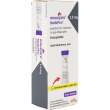

For years, the answer to “do weight loss pills actually work?” was often “not very well.” Some prescription tablets, such as Orlistat, can help people lose weight, but the results are usually modest and often fall short of people’s expectations. But that’s started to change.
A new generation of weight loss tablets known as oral GLP-1s have shown to help some people achieve an average weight loss of around 11–17% of their starting weight depending on the medication, putting them much closer to today's leading weight loss injections than traditional tablet options (2,3).
In this article, we’ll look at the evidence from clinical trials on these new medicines, how much weight people lose on average, and which weight loss tablets have the strongest clinical data backing them.
Please be aware that Orforglipron (Foundayo) has not yet been approved for use in the UK and is awaiting approval by the MHRA. This article is for informational purposes only.
Complete a consultation to discuss evidence-based weight loss tablets with our prescribers.
In this article:
What does clinical trial weight loss actually mean?
What counts as a weight loss pill that “works”?
How much weight loss is possible with weight loss tablets?
What could this weight loss look like in practice?
Why do some people lose more weight than others?
Are older weight loss tablets still effective?
What does clinical trial weight loss actually mean?
When researchers study weight loss medications, they usually look at the percentage of body weight people lose over a specific time period. That’s why you’ll often see results like “participants lost 13.6% of their body weight on average.”
Percentage weight loss may seem confusing at first, but researchers use it because people start at different weights, which affects how much weight they lose. Someone weighing more will usually lose more kilograms than someone starting at a lower weight, even if the treatment is equally effective.
By reporting weight loss as a percentage, researchers can compare results fairly across everyone in the study. For example, if a treatment produces an average weight loss of 10%, someone weighing 90kg could expect to lose around 9kg, while someone weighing 120kg could expect to lose 12kg.
Of course, it’s important to remember that this is average weight loss. Some people lose more weight than the average, and others less.
What counts as a weight loss pill that “works”?
Generally, a weight loss pill is considered to "work" if it helps people lose at least 5% of their starting body weight on average. This threshold isn't random. Research shows that losing and maintaining 5% of body weight can (1):
Improve blood pressure
Improve cholesterol levels
Improve blood sugar control
Reduce the risk of developing diabetes
Lower the risk of heart disease.
However, 5% is only the minimum benchmark. With more weight loss, there are even further health benefits — an even lower risk of heart disease, improvements in sleep apnoea and joint pain, and even remission of type 2 diabetes (1).
This is why obesity studies often report how many participants achieve larger reductions, such as 10%, 15% or even 20% of their starting weight. Many trials also measure changes in waist circumference, blood pressure, cholesterol levels, triglycerides, and blood sugar control to understand whether the weight loss is translating into meaningful health improvements.
In other words, the goal isn't simply to lose weight. It's to improve health, and weight loss percentage is one of the main ways researchers measure how effectively a weight loss pill achieves that.
How much weight loss is possible with weight loss tablets?
For many years, most weight loss tablets helped people lose around 5% to 10% of their starting weight — enough to be “clinically meaningful” but often falling short of people’s expectations.
But with two new-generation weight loss pills on their way to the UK, that’s started to change:
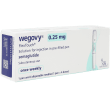
Wegovy pill (oral Semaglutide)
The Wegovy pill contains Semaglutide, the same ingredient in Wegovy injections, only taken as a daily tablet.
The OASIS-4 trial is the biggest clinical study on oral Semaglutide for obesity. In the trial, people taking the 25mg weight loss tablet lost an average of 14-17% of their starting body weight after 64 weeks. Researchers also looked at how many participants achieved specific weight loss milestones (2):
90% lost at least 5% of their starting body weight
70% lost at least 10% of their starting body weight
50% lost at least 15% of their starting body weight
25% lost at least 20% of their starting body weight
These results are particularly impressive because, as discussed earlier, each of these thresholds is associated with other health benefits.
Among people who started the study with prediabetes, 71% achieved normal blood sugar levels by week 64. Additionally, 43% of the participants who started with obesity no longer met the criteria for obesity by the end of the trial.
These results make oral semaglutide one of the most effective weight loss tablets ever developed and broadly comparable to the current 2.4mg Wegovy injection.
Foundayo tablet (Orforglipron)
Foundayo (Orforglipron) is another new GLP-1 weight loss medicine that works on the same hormonal pathway as the Wegovy tablet and has been shown to produce double-digit weight loss in clinical trials.
The main study on Orforgliprion for obesity is ATTAIN-1, in which participants taking 36mg strength daily lost an average of 11-12% of their starting body weight after 72 weeks. Researchers also look at how many participants achieved specific weight loss milestones (3):
55% lost at least 10% of their starting body weight
36% lost at least 15% of their starting body weight
18% lost at least 20% of their starting body weight
As with the Wegovy tablet, the benefits extended beyond weight loss. Participants experienced improvements in waist circumference, blood pressure, triglyceride levels, and cholesterol levels, suggesting the weight loss was translating into meaningful health improvements.
While it’s tempting to compare these results to those from the OASIS-4 trial on oral Semaglutide, perhaps the most important takeaway is that Foundayo joins a small group of weight loss tablets capable of producing more than 12% average weight loss.
That’s well above the 5% minimum threshold and is associated with significant health improvements and places Foundayo among the most effective weight loss pills to date.
Complete a consultation to discuss evidence-based weight loss tablets with our prescribers.
What could this weight loss look like in practice?
Percentages can feel abstract, so it can be helpful to translate them into weight loss in kilograms.
Starting weight | 5% Loss | 10% Loss | 15% Loss | 20% Loss |
|---|---|---|---|---|
90kg | 4.5kg | 9kg | 13.5kg | 18kg |
100kg | 5kg | 10kg | 15kg | 20kg |
120kg | 6kg | 12kg | 18kg | 24kg |
The average weight loss seen with the latest GLP-1 tablets falls somewhere between the 10% and 15% columns, to give you an idea of how much actual weight you might lose.
That said, it’s worth remembering that these figures are averages, not guaranteed results. Some people lose less weight and will see results closer to the 5% column. Others will see substantially more weight loss and see results closer to the 20% weight loss column.
Why do some people lose more weight than others?
There are several reasons why some people lose more weight than others. We’ve already mentioned one: your starting body weight. People with a higher starting weight often lose more kilograms overall.
But several other factors also come into play:
Your physical activity levels
How closely you follow dietary advice
Whether you’re getting quality sleep
How consistently you take your medication
Whether you take the medication correctly
Your stress levels
Any underlying health conditions
Researchers are still learning exactly why some people respond better than others. But the evidence consistently shows that people who make healthy lifestyle changes alongside consistently taking their medication tend to get better results.
Modern weight loss tablets can help people achieve meaningful weight loss, but they should be combined with healthy eating habits, regular physical activity, good sleep, and ongoing support.
Are older weight loss tablets still effective?
Before medicines like the Foundayo and Wegovy tablets were developed, the two prescription weight loss pills were Orlistat and Mysimba. Both treatments can still lead to clinically meaningful weight loss and improved health outcomes. In trials:
Orlistat: People taking Orlistat lost around 3% more body weight than those making changes to their diet and exercise alone (4). It is most effective in patients who consume a moderate to high fat diet. After one year of treatment, around 20% of people achieved weight loss of at least 10% of their starting body weight (5)
Mysimba: People taking Mysimba lost up to 5% more body weight than those following diet and exercise programmes alone. Across clinical trials, average weight loss typically ranged from around 5% to 8% of starting body weight. (6).
However, the newer generation of GLP-1 tablets has massively increased the amount of weight loss that is possible with an oral medication. Based on current evidence, oral Semaglutide (Wegovy tablet) and Orforglipron (Foundayo) are the most effective weight loss tablets studied to date.
If you're considering prescription weight loss treatment, Oxford Online Pharmacy can help you explore your options and understand which treatments may be suitable for your goals and medical history.
Complete a consultation to discuss evidence-based weight loss tablets with our prescribers.
References
Ryan DH, Yockey SR. Weight Loss and Improvement in Comorbidity: Differences at 5%, 10%, 15%, and over. Current Obesity Reports [Internet]. 2017 Apr 28;6(2):187–94.
Wharton S, Ildiko Lingvay, Bogdanski P, Duque R, Jacob S, Karlsson T, et al. Oral Semaglutide at a Dose of 25 mg in Adults with Overweight or Obesity. New England Journal of Medicine. 2025 Sep 17;393(11):1077–87.
Wharton S, Aronne LJ, Stefanski A, Alfaris NF, Ciudin A, Yokote K, et al. Orforglipron, an Oral Small-Molecule GLP-1 Receptor Agonist for Obesity Treatment. New England Journal of Medicine. 2025 Sep 16;
Drew BS, Dixon AF, Dixon JB. Obesity management: Update on orlistat. Vascular Health and Risk Management [Internet]. 2007 Dec;3(6):817.
Xenical 120 mg hard capsules - Summary of Product Characteristics (SmPC) - (emc) [Internet]. Medicines.org.uk.
Mysimba 8 mg/90 mg prolonged-release tablets - Summary of Product Characteristics (SmPC) - (emc) | 2684 [Internet]. Medicines.org.uk. 2023.