



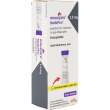

Mounjaro (Tirzepatide) is a prescription-only injectable medicine. It was originally developed to support blood sugar control in adults with type 2 diabetes, but it has also been licensed in the UK to support weight management in adults with obesity or certain weight-related health conditions.
In this article, we’ll explain how Mounjaro works, how it helps reduce body weight, and what you can expect if it’s prescribed as part of your treatment plan.
Curious about Mounjaro?
What does Mounjaro do to your body?
Mounjaro is part of a group of medicines called GLP-1 receptor agonists. It also acts on a second receptor, GIP, which is involved in blood sugar control and appetite regulation. Together, these effects help:
- Improve how your body uses insulin
- Lower blood sugar levels
- Reduce appetite and food cravings
- Support weight loss alongside healthy lifestyle changes
One of the ways Mounjaro works is by slowing down how quickly food leaves your stomach. This can help you feel fuller for longer, reducing the urge to snack or eat large portions.
It also affects areas of the brain that regulate hunger and satiety. By mimicking the body’s natural fullness hormones, it can reduce the drive to eat and help create a calorie deficit over time.
Mounjaro: What does it do for weight loss?
The active ingredient, Tirzepatide, works similarly to satiety (fullness) hormones, like GLP-1 and GIP, reducing the drive to eat more (1).
Studies show that Mounjaro has substantial effects on body weight. People with obesity who use the drug can reduce their body weight by up to 22% over periods of a year or more (2).
The UK’s Medicines and Healthcare Products Regulatory Agency (MHRA) recently authorised Mounjaro for weight loss and weight management in adults with obesity (BMI greater than 30 kg/m2) or those in “at-risk groups,” like people with pre-diabetes or heart problems.
Dosage and administration
Mounjaro is taken as a self-injection with a small needle just under the skin instead of a pill. Injection sites can vary (3), some people inject in the tummy, while others prefer the thigh or upper arm.
The dose for the first four weeks is 2.5 mg. Then, it can be increased in 2.5 mg increments every 4 weeks until reaching the dose that works best for you, with 15 mg weekly being the maximum (4).
If you’re prescribed Mounjaro through our service, our pharmacy team will support you with following the dose recommended by the prescribing doctor.
Are there any side effects?
Like all medicines, Mounjaro can cause side effects. The most common include nausea, diarrhoea, constipation, and indigestion. These may affect more than 1 in every 10 people who use this medicine.
Other side effects can include tiredness, reduced appetite, or injection site reactions. More serious side effects, such as pancreatitis, are rare. You can find the full list in the patient information leaflet.
So, what does Mounjaro do for weight loss?
Mounjaro is one of a group of GLP-1 and GIP-activating medicines that can help people lose body weight and improve their health under the right treatment conditions.
References
- Kaneko S. Tirzepatide: A Novel, Once-weekly Dual GIP and GLP-1 Receptor Agonist for the Treatment of Type 2 Diabetes. touchREV Endocrinol. 2022 Jun;18(1):10-19
- Mounjaro KwikPen 10mg solution for injection in pre-filled pen - Summary of Product Characteristics (SmPC) - (emc) [Internet]
- Eli Lilly and Company (2022) Mounjaro (Tirzepatide) injection, for subcutaneous use [Prescribing Information]. Indianapolis, IN: Eli Lilly and Company.
- Frías, J.P. et al. (2021) 'Tirzepatide versus semaglutide once weekly in patients with type 2 diabetes', The Lancet, 398(10300), pp. 143-155.