

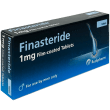


Male pattern baldness affects up to half of men over the age of 50 (1), and many start to see changes much earlier. It can feel worrying, frustrating, and totally knock your confidence.
One of the most widely used treatments for this type of hair loss is Finasteride (2), a medicine that works by targeting the hormonal cause of male pattern baldness. But how exactly does it work, and what can you expect if you start taking it?
What is Finasteride?
Finasteride is a prescription-only tablet used to treat a type of hair loss called androgenetic alopecia, also known as male pattern baldness.
It belongs to a group of medicines called 5-alpha reductase inhibitors. These medicines work by reducing the amount of a hormone called dihydrotestosterone (DHT), the key hormone responsible for hair thinning in men who are genetically predisposed.
How DHT contributes to hair loss
DHT is a naturally occurring hormone derived from testosterone. It plays an important role in puberty and adult male health, helping to develop traits like facial hair, body hair, and a deeper voice.
But DHT also affects the scalp. In men with a genetic sensitivity to it, DHT binds to receptors in the hair follicles and gradually causes them to shrink. This process, known as miniaturisation, leads to thinner, shorter hair over time until the follicles eventually stop producing visible strands altogether.
How Finasteride works for hair loss
Finasteride works by blocking an enzyme called 5-alpha reductase, which is needed to convert testosterone into DHT (3). By deactivating this enzyme, DHT levels are reduced in the scalp and bloodstream by over 60% (4).
The lower your DHT levels, the less your hair follicles are affected by this hormone. That means Finasteride can slow down or stop further hair loss. It can also help some men regrow hair in areas, if the affected hair follicles are still active (one of the benefits of treating hair loss early).
Importantly, Finasteride doesn’t stop testosterone production or affect masculinity. It reduces how much DHT is made downstream without affecting your testosterone levels.
How to take Finasteride
Finasteride is taken once daily as a 1mg tablet, usually at the same time (5). It can be taken with or without food. Because the medicine works gradually, consistency is key. Missing doses or stopping suddenly can cause DHT levels to rise again, which may reverse your progress.
You might also come across topical hair loss treatments that include Finasteride, which are applied directly to the scalp. While some men prefer topical application, you need to apply the solutions daily. Most men find taking a pill far more convenient.
How long does Finasteride take to work?
Although Finasteride lowers DHT levels immediately, it takes time for this to translate to real results.
- Most men notice a reduction in hair loss after around 3 to 6 months (3).
- Visible regrowth (such as thicker hair or new growth around the crown) can take up to a year.
The process is gradual because hair growth itself is slow. Old, damaged hairs must shed so newer, healthier strands can grow in. Finasteride supports this process, but it still takes time.
When Finasteride is stopped, DHT levels return to normal within a few weeks, and any benefits will slowly start to fade. Hair loss will return to its pre-treatment pattern.
Why is Finasteride prescription-only?
Because Finasteride affects hormone levels, it must be prescribed after a proper assessment by a qualified doctor. This ensures it’s suitable and safe for you, especially if you have other health conditions or take other medicines.
Finasteride is not suitable for use in women and shouldn’t be taken if you’ve ever had issues with your liver, severe bladder problems, or depression or suicidal thoughts (6).
Are there any side effects?
Yes. All medications come with a risk of side effects, and Finasteride is no exception. Fortunately, most side effects are mild and usually reversible after stopping treatment. The most commonly reported side effects involve sexual function (7):
- Reduced libido (sex drive)
- Difficulty getting or maintaining an erection
- Changes in ejaculation volume
Finasteride has also been associated with low mood and depression, which is why it’s important not to take this medicine if you’ve ever experienced depression. If you notice mood changes, you should stop taking Finasteride immediately and speak to a clinician.
How does Finasteride compare to other hair loss treatments?
The other main treatment for male pattern baldness is Minoxidil (2). You can buy Minoxidil tablets, but for hair loss it is most often prescribed as a topical solution or foam applied directly to the scalp.
Although Finasteride and Minoxidil treat the same condition, they work in different ways:
- Finasteride reduces DHT levels to prevent hair follicle shrinkage.
- Minoxidil increases blood flow to the follicles to encourage growth.
Because the treatments act through different mechanisms, many men use both treatments together for combined benefits: one reduces the hormone causing thinning, while the other stimulates growth. If you’re trying to start a family, Minoxidil may be preferred as it can be used by women and does not affect fertility (2).
Finding the right hair loss treatment for you
Hair loss is common but treatable. Finasteride is one strong option, but the best choice depends on your goals and health profile.
At Oxford Online Pharmacy, our UK-registered doctors and pharmacists can help assess your situation and recommend safe, clinically proven treatments including Finasteride, Minoxidil, or both.
Want to learn more? View our hair loss treatments to find an approach that works for you
Explore nowReferences
- Cranwell W, Sinclair R. Male Androgenetic Alopecia [Internet]. Nih.gov. MDText.com, Inc.; 2016.
- NHS. Hair loss [Internet]. nhs.uk. 2017.
- NHS. Common questions about finasteride [Internet]. nhs.uk. 2023.
- DrugBank. Finasteride [Internet]. go.drugbank.com. 2005.
- NHS. How and when to take finasteride [Internet]. nhs.uk. 2023.
- NHS. Who can and cannot take finasteride [Internet]. nhs.uk. 2023.
- NHS. Side Effects of Finasteride [Internet]. nhs.uk. 2023.