

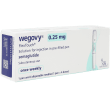

Why might I feel hungry on Wegovy or Mounjaro?
Mounjaro and Wegovy support weight loss by helping you feel fuller and reducing your appetite, but they don’t switch off hunger completely. Feeling hungry at times is still a normal and expected part of treatment, especially before meals or as your weekly dose wears off.
Here, we help you figure out what kind of hunger is normal, when hunger is expected, and what to do if you think your appetite hasn’t changed and treatment isn’t working.
What kind of hunger is normal on Wegovy or Mounjaro?
It’s normal to feel hungry before a meal, even when using weight loss injections. These medicines don’t block all signals that tell your brain it’s time to eat. Instead, they help reduce how often you feel hungry and how much food it takes to feel full.
Many of our patients find they feel fuller more quickly or stay full for longer. Others describe reduced cravings or a lower interest in snacking. These effects vary depending on the dose, diet, and the body’s individual response to treatment. Effects can also vary depending on which injection you are using, as Wegovy works on one gut hormone (GLP-1) and Mounjaro works on two (GLP-1 and GIP) (1).
You may also notice that your hunger changes throughout the week or across different stages of treatment. For example:
Hunger may return slightly as your weekly dose wears off
Feeling hungrier before meals, but satisfied after eating, is a positive sign
Appetite may increase during hormonal changes, stress, or poor sleep
When is hunger on Wegovy or Mounjaro not expected?
GLP-1 medicines are not designed to suppress hunger entirely and it’s important to still ensure your meals are nutritious so your body is getting the energy it needs. However, it may be worth speaking to our friendly team if you:
Still experience food noise (constantly thinking about food)
Still feel very hungry even after meals
Haven’t noticed any change in appetite after 4-6 weeks of treatment
This can sometimes happen if your dose hasn’t reached its full effect yet or the dose needs optimising, your eating pattern doesn’t align well with how the medicine works, or factors such as volume of meals, sleep or stress are affecting appetite.
In these situations, we may advise continuing the current dose a little longer, exploring diet adjustments, or, if appropriate, increasing the dose. Wegovy and Mounjaro medicines should always be used as part of a long-term, structured plan that includes lifestyle support.
Should I increase my dose if I still feel hungry?
If you still feel hungry while using Wegovy or Mounjaro, it can sometimes mean you’re ready for the next dose increase — but not always.
GLP-1 doses are increased gradually, usually no more often than every four weeks (2). This gives your body time to adjust and helps reduce the risk of side effects.
It’s also important to remember that appetite changes don’t happen immediately. During the first few weeks of treatment, your body’s hunger signals are still adjusting, and it can take time to notice a clear difference. Feeling some hunger doesn’t necessarily mean the medication isn’t working.
Ultimately, whether a dose increase is appropriate depends on your overall progress and how your body is responding. If you’re concerned about your appetite, our team can review your progress and advise whether any changes are needed.
How long does it take for appetite changes to happen?
Hunger is a complex signal that’s influenced by your brain, hormones, and digestive system, and GLP-1 medicines like Mounjaro and Wegovy support these pathways progressively, rather than switching off appetite and overriding your body’s basic need for energy (3).
Many people find that their hunger naturally shifts over the first month of treatment. But this process is gradual, and appetite changes look different for everyone. Some people notice clear differences early on, while others see more gradual changes, and this is reflected in how responses to GLP1 treatment vary from person to person (4).
If you feel unsure about your response to treatment, it’s worth checking in with our team. They can help you understand whether your experience is typical, what your treatment journey might look like, or whether any changes should be considered.
Contact our team or visit our weight management hub for more information and advice.
References
Nauck MA, D'Alessio DA. Tirzepatide, a dual GIP/GLP-1 receptor co-agonist for the treatment of type 2 diabetes with unmatched effectiveness regarding glycaemic control and body weight reduction. Cardiovasc Diabetol. 2022 Sep 1;21(1):169. doi: 10.1186/s12933-022-01604-7. PMID: 36050763.
NICE. A guide for prescribing medicines to manage overweight and obesity. National Institute for Health and Care Excellence. 2026.
Park JS, Kim KS, Choi HJ. Glucagon-Like Peptide-1 and Hypothalamic Regulation of Satiation: Cognitive and Neural Insights from Human and Animal Studies. Diabetes & Metabolism Journal. 2025 May 1;49(3):333–47.
Squire P, Naude J, Zentner A, Bittman J, Khan N. Factors associated with weight loss response to GLP-1 analogues for obesity treatment: a retrospective cohort analysis. BMJ Open. 2025 Jan 1;15(1):e089477–7.