

If you’ve just started your prescription weight loss medication and you’re not sure what to eat, or the nausea is making meals feel impossible, this guide covers what works.
Key Facts
When on weight loss medications, it is good for your diet to include whole foods, lean protein (1.0 to 1.6g per kg body weight daily), vegetables and plenty of water.
Around 1 in 5 users experience nausea but bland foods like broth, toast, eggs and bananas can help manage it.
High-fat, fried, spicy and sugary foods can worsen nausea symptoms during treatment.
Most side effects settle within 3 to 4 weeks. Meal timing and portion size make a real difference in those early weeks.
You don’t need to follow a specific diet. The medication reduces general feelings of hunger so your job is to make what you eat count.
Table of Contents
How does your medication affect your appetite?
Why does the medication cause nausea and which foods help?
How much protein should you eat?
What foods should you avoid?
What’s the best meal schedule?
How to build a weekly meal plan you’ll actually stick to
Can you eat normal foods again?
Frequently asked questions
How does your medication affect your appetite?
Your prescription weight loss medication works by reducing feelings of hunger (sometimes referred to as food noise) and by delaying the speed at which your stomach empties, reducing your overall appetite.
These weight loss medications work by mimicking either one or two gut hormones involved in appetite and digestion. It helps to send stronger “I’m full” signals to the brain and slows down how quickly food leaves the stomach, and it also improves how your body handles sugar and fat in the bloodstream.
This means that you’ll feel less hungry and much fuller after smaller meals, which may have an effect on the amount of food you eat. Most people notice a clear change in their appetite within the first 1 to 2 weeks after starting on the medication. After about 5 weeks, the side effects that come with this adjustment (mainly nausea) have usually settled.
In clinical trials, participants on the highest dose lost an average of 22.5% of their body weight over a 72-week period, and 96% of people on moderate-to-high doses lost at least 5% of their starting weight (1). That being said, the medication shouldn’t be doing all the work on its own, results should come alongside changes to diet and physical activity too.
Why does the medication cause nausea and which foods help?
Nausea from these medications is usually as a result of the slower stomach emptying. It can help to eat more bland foods like broth, toast, eggs, bananas and ginger in order to help minimise stomach discomfort. It is one of the most common side effects at the start of treatment, but for most people it improves within 2 to 4 weeks.
Around 22% of users experience nausea, making it the most common side effect, and it is particularly noticeable during the first few weeks of treatment. It can also be noticeable when your body is adjusting to a new pen that is at a higher dose than the previous one (in the dose escalation phase). It isn’t a sign that something’s wrong. It’s the medication doing what it’s meant to do: slowing your digestion.
When your stomach feels unsettled, blander foods and drinks tend to cause less discomfort, including:
Plain broth or clear soups
Dry toast or crackers
Scrambled eggs
Bananas
Rice
Boiled potatoes
Ginger tea or ginger chews
Peppermint tea
It is usually easier to eat small amounts slowly rather than forcing a full meal, and many people find it more comfortable to sip water between meals rather than with them.
It is also advised to avoid eating large meals immediately after your injection and it’s worth waiting 3 to 4 hours before eating. Alternatively, you could take your injection at bedtime so the peak feelings of nausea come while you’re asleep.
How much protein should you eat?
You should aim for approximately 1.0 to 1.6g of protein per kg of body weight daily, which equates to about 60 to 120g for most people. Getting enough protein is important during any type of weight loss because it contributes to preserving muscle mass.
When you lose weight, you don’t just lose fat, you also lose muscle. Losing muscle can actually make it harder to maintain your results in the long term as it slows down your overall resting metabolic rate. Protein is the single biggest tool we have to counteract this effect.
For a person weighing 75kg (11 stone 5 ounces), that’s an intake of approximately 75 to 120g of protein per day. It is often easier to spread that target across three meals rather than trying to get it all in at one go, so roughly 20 to 40g per meal using good protein sources like chicken breast, turkey, fish, eggs, Greek yoghurt, cottage cheese, lentils and tofu.
If your appetite is suppressed and eating feels like a bit of a chore, try to focus on how you can incorporate protein into your meal over anything else. Having a protein shake or eating Greek yoghurt with some nuts is better than skipping a meal entirely. It also helps to combine a good diet with resistance training around three times a week to help maintain muscle mass during your weight loss journey.
What foods should you avoid?
High-fat, fried, spicy and sugary foods are most likely to make nausea or digestive discomfort worse. Cutting back on them, especially in the initial weeks, can make the adjustment period somewhat easier.
Category | Concern | Examples | Possible alternative |
|---|---|---|---|
High-fat foods | Slow digestion further, worsening fullness and nausea | Slow digestion further, worsening fullness and nausea | Grilled chicken, baked fish, olive oil in moderation |
Refined carbs and sugar | Cause blood sugar spikes and crashes; counteract medication benefits | White bread, pastries, sweets, sugary cereals, fizzy drinks | Whole grains, oats, brown rice, berries |
Spicy or acidic foods | Irritate the stomach lining, worsening stomach side effects | Chilli, hot sauce, citrus juice on empty stomach, vinegar-based dressings | Mild herbs, ginger, lemon in water (not on empty stomach). |
Alcohol | Irritates the stomach, increases nausea, adds empty calories | Beer, wine, spirits, cocktails | Sparkling water with lime, herbal tea |
Don’t worry, switching to these alternatives may only be temporary. Most people can gradually reintroduce these foods once their body has adjusted to the weight loss medication (usually after around 8 weeks). The goal during the early weeks is to ingest things that are kind to your stomach.
What’s the best meal schedule?
For most people, three moderate meals a day works well, spaced about 4 to 5 hours apart. It also helps not to eat straight after injecting yourself, and an earlier, lighter dinner can make nausea easier to manage.
A lot of people end up skipping meals because they’re not getting the hunger cues that they’re used to, but that can backfire. Even if you feel less hungry, your body still needs energy, protein, fibre and nutrients, etc., to function. In most cases, having three proper meals works better than grazing on snacks throughout the day.
A simple routine might look like breakfast at 8am, focused on protein, lunch at 12:30pm with lean protein, vegetables and whole grains, then dinner at 6pm with a lighter, more vegetable-based meal. If you inject in the morning, it may feel better to delay breakfast until mid-morning and keep it fairly bland.
It’s worth remembering that the medication turns the volume down on food noise, but it does not mute it completely. If you keep ignoring it, you’re more likely to end up tired, irritable and subsequently making worse food choices later in the day.
How to build a weekly meal plan you’ll actually stick to
You should aim for three meals a day with a consistent amount of protein, around 20 to 40g per meal. A helpful trick can be to do batch-cooking. You can then incorporate protein, vegetables and grains into meals for 2 or 3 days at a time, and it can make the whole process much easier to keep on top of.
A simple way to plan your meals is to think of each one as having three main parts: a protein, some vegetables or a salad, and a whole grain or starchy carbohydrate. You can get ahead for the week by preparing two or three different proteins (for example, baked chicken, boiled eggs or cooked lentils) and then build different meals around those.
A sample day could look like this:
Breakfast: Scrambled eggs on wholemeal toast with spinach (30g protein)
Lunch: Grilled chicken salad with quinoa, cucumber and a light dressing (35g protein)
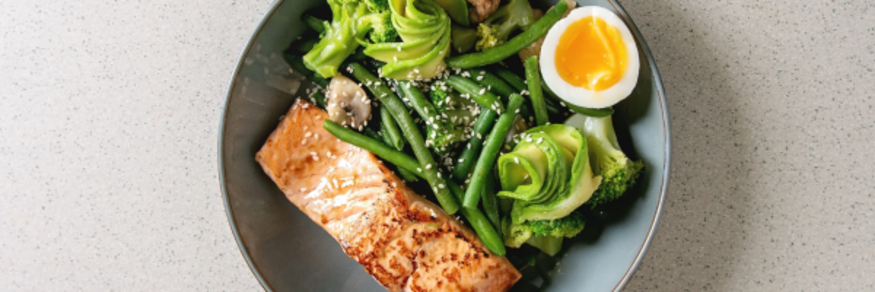
Dinner: Baked salmon with roasted vegetables and brown rice (30g protein)
The same structure can work across different dietary requirements or food preferences. Chicken can be swapped for paneer or tofu, quinoa for couscous, and salmon for lentil dhal. The principle stays the same: protein first, then vegetables, and finally your carbs.
Can you eat normal foods again?
Yes, you can go back to eating regular food. The medicine doesn't stop you from eating any specific foods, it just makes you feel less hungry in general. You’ll be eating things you’re used to, but you’ll likely be eating them in much smaller amounts. Most people can slowly start to include their favourite foods again, and enjoy them in reasonable amounts, after around 3 months of being on the treatment.
The first few weeks are generally the toughest as the feelings of nausea may mean that you do not want to eat or drink much, but that should improve with time. After you’ve been on a steady dose of the medication, most foods are back on the menu, just in smaller portions than before.
The goal in the long term is not to deny yourself certain foods, but about finding a sustainable way of eating which will continue to be useful for you, even when you’ve finished with the medication. So, you’re learning to eat healthily with a smaller appetite than you had before, and not trying to fight against it.
Frequently asked questions
Can I drink alcohol while on my medication?
As for drinking alcohol while taking the medication, it’s best to avoid it for the first 8 weeks as it can make nausea and stomach irritation worse. Once you are on a stable dose of the medication, a drink now and then might be acceptable, but sugary cocktails and spirits are best avoided, especially on an empty stomach.
Will I regain weight after stopping?
Unfortunately, putting weight back on is a common thing when people stop taking weight loss medications, particularly if you fall back into old habits of overeating and not getting enough exercise. In clinical trials, people who stopped treatment tended to put a significant proportion of weight back on (2). If you continue the better food habits you've been making while on the treatment, you’ll lower your chance of this.
How soon will nausea go away?
Most people experience the side effect of nausea in the first 4 weeks after starting treatment, but it usually resolves by the 5th to 8th week. If the nausea is severe or is not improving, it may be worth speaking to your prescriber about adjusting your medication.
Can I eat all the foods I like when on medication?
It is fine to carry on eating most foods that you currently enjoy. Tolerance of certain foods varies from person to person but high-fat, spicy or sugary foods are the most common triggers for nausea. If you follow a bland diet in the initial weeks to help with the nausea, it is advisable to reintroduce foods one at a time to see how your body responds.
Do I really need to count calories?
You don’t necessarily need to count calories, but it is always advisable to watch what you eat, even if you’re not on weight loss medication. The medication reduces food noise and appetite, so you’ll naturally eat less anyway. It is equally important to meet your protein targets, eat enough vegetables and stay hydrated.
How do I manage nausea at work?
A bit of planning can make nausea easier to handle during the working day. Pack bland snacks (crackers, fruit, nuts), carry ginger chews or a Thermos of peppermint tea, eat slowly, and sip water throughout the day. Some people find it helps to take their injection at bedtime, so the worst of the nausea happens overnight rather than during the workday.
Can family members eat the same meals I do?
Yes, the meal advice (lean protein, vegetables, whole grains, minimally processed foods, etc.) is not of benefit to only people on weight loss medications but is general healthy eating advice for anyone. Family members can eat the same dishes but they may want to have larger portions.
Should I lift weights while on my medication?
Yes. Resistance training is a good idea while you are losing weight because it helps you hold on to muscle mass that you otherwise may have lost. Combined with upping your protein intake, strength training helps maintain your resting metabolic rate and reduces the risk of developing loose skin.
If you have questions about managing your diet during your weight loss medication journey, speak to your prescriber or pharmacist – they can provide guidance tailored to your individual needs.
References
(1) Jastreboff AM, Aronne LJ, Ahmad NN, et al. Tirzepatide once weekly for the treatment of obesity. N Engl J Med. 2022;387(3):205-216.
(2) Aronne LJ, Sattar N, Horn DB, et al. Continued treatment with tirzepatide for maintenance of weight reduction in adults with obesity. JAMA. 2024;331(1):38-48.