

Demand for high-protein foods has surged in recent years, with research revealing 43% of consumers have increased their protein intake in the past year. By 2031, the UK protein market is expected to be worth £631 million.
As more consumers seek out high-protein foods, ‘protein-washing’ has become increasingly widespread, with products marketed as high in protein to entice health-conscious buyers.
This is largely driven by the rapid rise of GLP-1 weight loss medications, such as Mounjaro and Wegovy. An estimated 4% of the UK population (approximately 2.8 million people) now use these medications, with users often advised to receive at least 30% of their calories from protein to preserve muscle mass during weight loss.
Oxford Online Pharmacy examined 88 high-protein snack products from six of the UK’s largest supermarkets to determine whether they offer sufficient nutritional value and good value for money for GLP-1 users.
Our research found that over 1 in 4 high-protein snacks (27%) provided less than 30% of their calories from protein.
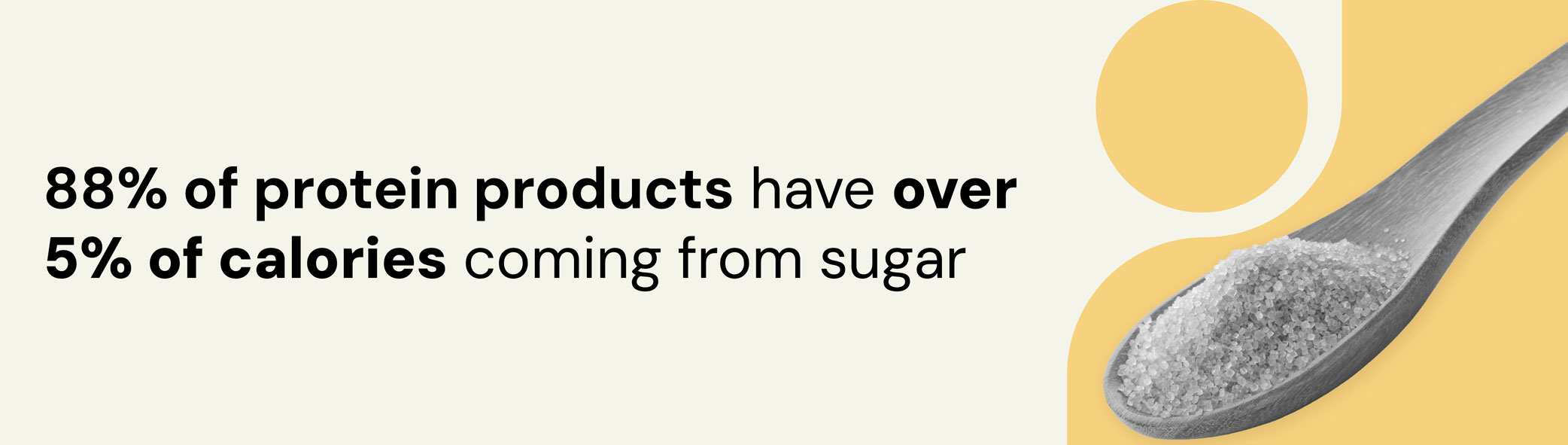
Oxford Online Pharmacy also found that 88% of the high-protein snacks reviewed contained more sugar than recommended under NHS guidelines.
What is protein?
Protein is one of three essential macronutrients (alongside carbohydrates and fats) that your body needs to function effectively. It’s found throughout the body, including in hair, muscles, bones and skin, where it helps to repair damaged cells and build new ones.
Protein is made up of amino acids, many of which must be obtained through food. It’s found in both plant and animal products such as meat, eggs, dairy, nuts and seeds.
The National Academy of Medicine (NAM) suggests that protein should make up 10% to 35% of your daily calories.
What is protein-washing?
Protein-washing is a marketing tactic used by food brands to label products as ‘high in protein’, even when protein content is only moderately higher or similar to standard alternatives.
This is often used to justify higher prices or create a perception of being a healthier option, distracting from other nutritional factors such as sugar content, calories or additives.
Which protein snacks provide enough protein?
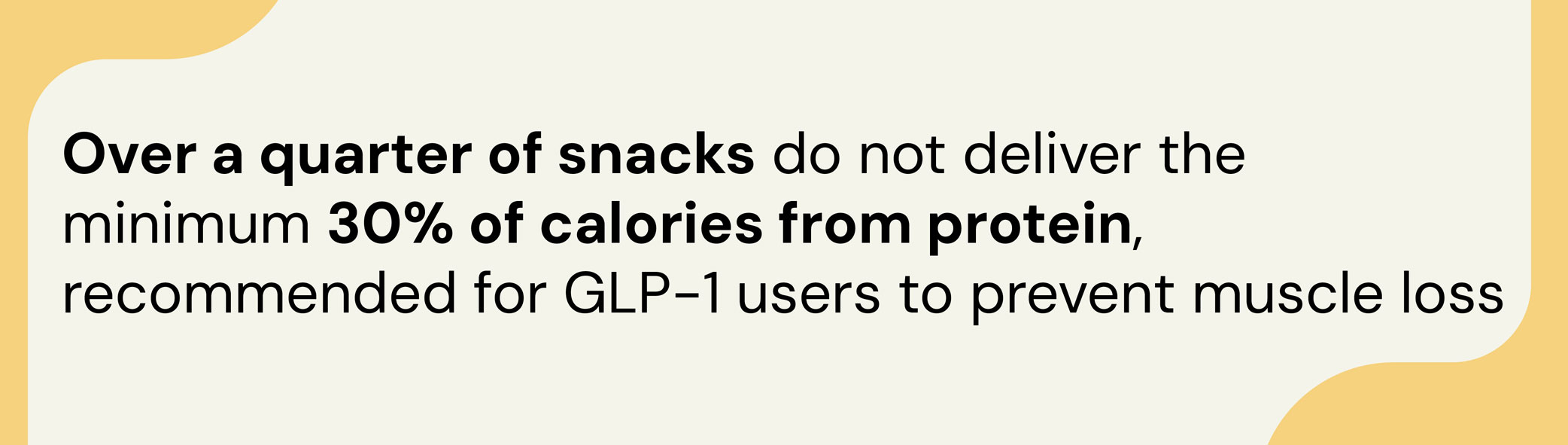
GLP-1 users are often recommended to aim for at least 30% of their daily calories from protein. Of the protein snacks reviewed, over a quarter (27%) provided less than 30% of calories from protein.
Oxford Online Pharmacy looked at six categories of protein snacks that included ‘protein’ in the product name:
Coffee drinks
Desserts
Milkshakes
Porridge pots
Bars
Yoghurts
On average, milkshake products contain the highest amount of protein at 26.3g per serving, with the highest individual milkshake product providing 50g of protein. Porridge products contain the least amount of protein, averaging 14g per serving.
All protein yoghurts examined provide over 30% of their calories from protein, with some products delivering as much as 68%.
In contrast, protein porridges are the poorest-performing category for protein contribution to calories, with all but one (94%) failing to meet the 30% target.
At an individual product level, a high-protein pudding delivered just 11% of calories from protein, while one protein bar delivered 75% by comparison, highlighting the variation consumers experience.
Which protein snacks offer the best value?
Some protein snacks come with premium prices attached, making it important to assess whether the protein content genuinely justifies the cost.
The most cost-effective high protein snacks:
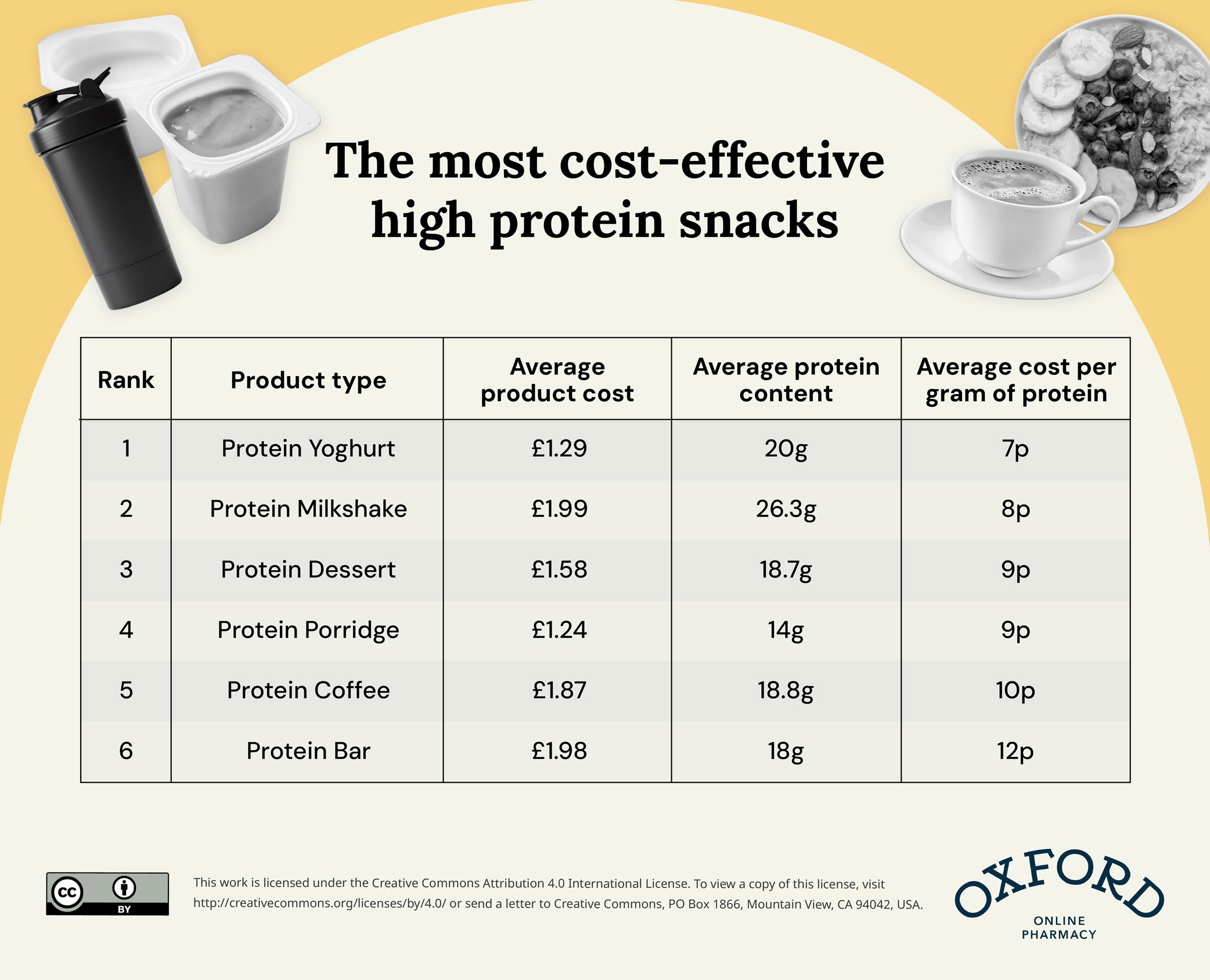
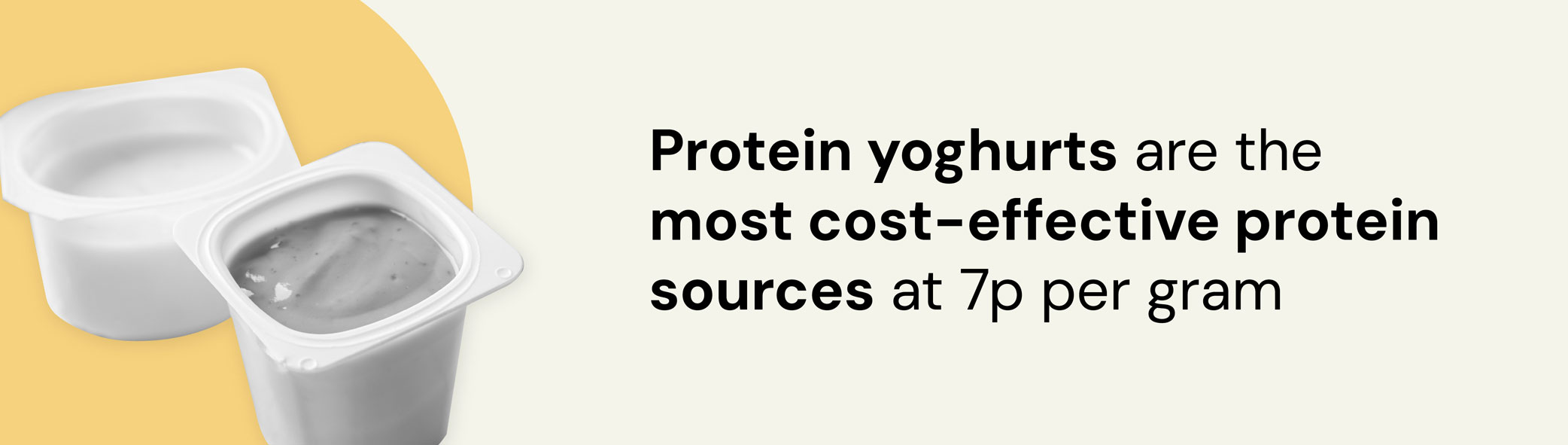
Oxford Online Pharmacy found that protein yoghurts are the most cost-effective protein snack category. The average protein yoghurt contains 20g of protein and costs £1.29, equating to 7p per gram of protein.
Despite being the most expensive option on average, protein milkshakes are the second-best value option, providing the highest average quantity of protein at 26.3g per serving and costing around 8p per gram.
Protein bars offer the worst value for money in terms of protein content. On average, they contain 18g of protein and cost £1.98, equivalent to 12p per gram of protein.
How much sugar do protein snacks contain?
NHS guidelines recommend that adults should consume no more than 5% of their daily calories from free sugars. Around 90% of the high-protein snacks Oxford Online Pharmacy looked at exceeded this amount.
NHS also recommends that an adult’s daily sugar intake should be no more than 30g. The protein snacks reviewed range from 0.6g to 32g of sugar.
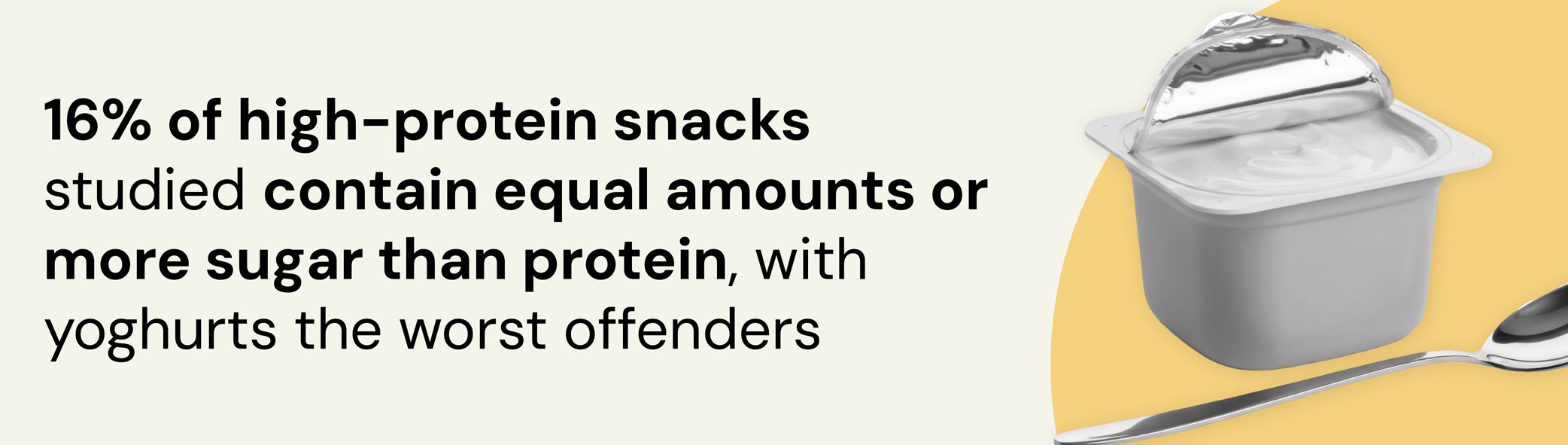
16% of the snacks contain equal amounts or more sugar than protein, with yoghurts the most likely to fall into this category. So, while protein yoghurts are the most cost-effective, they’re also among the most sugar-heavy snack options.
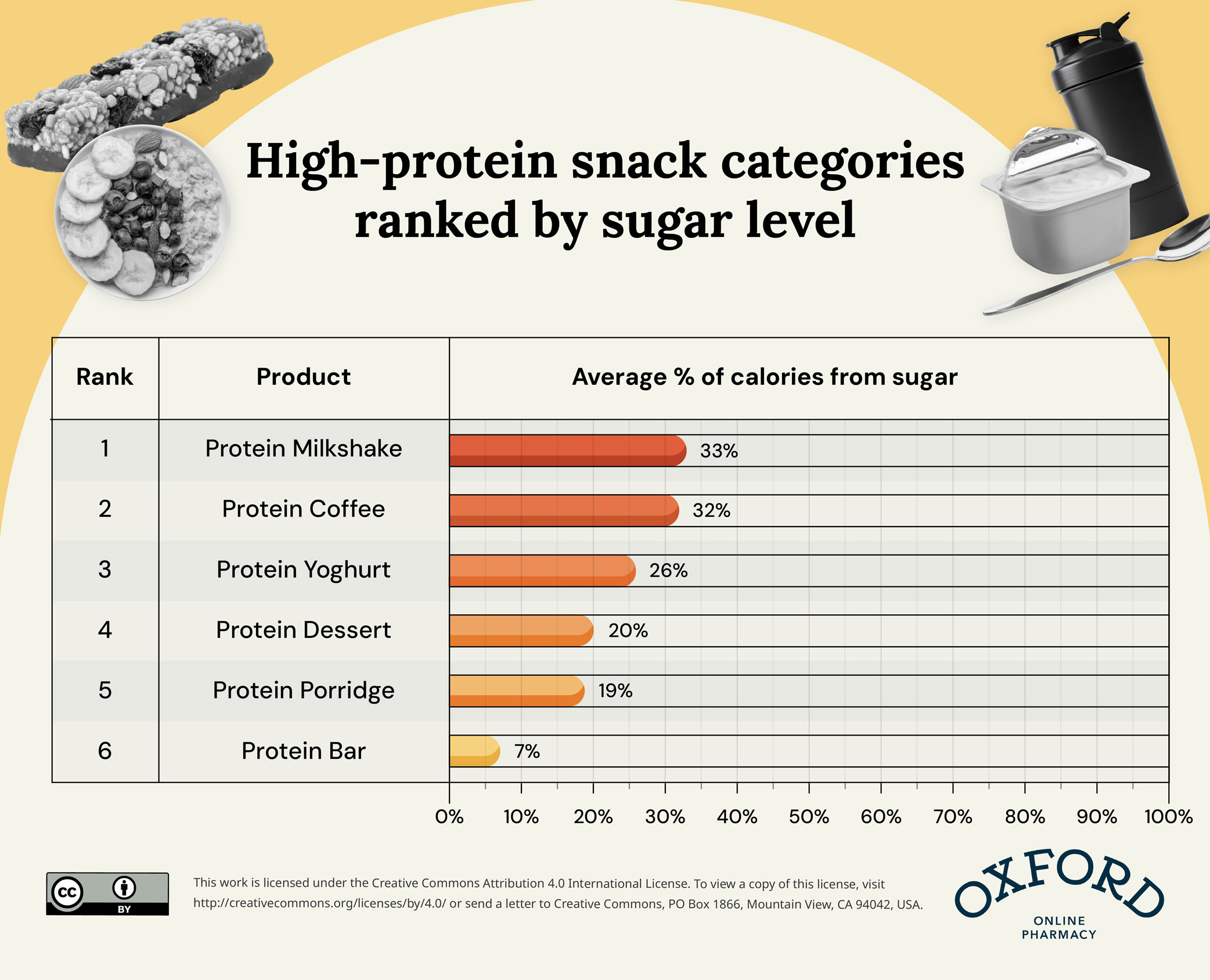
On average, protein milkshakes contain the highest proportion of calories from sugar at 33%, followed by protein coffees at 32%.
Two of the milkshake products analysed were found to exceed the recommended daily sugar intake (30g) and had around 50% of their total calories from sugar.
Protein bars have the lowest proportion of calories from sugar on average at just 7%, although many use artificial sweeteners in place of sugar to improve flavour.
High-protein snack categories ranked by sugar level:
How to spot protein-washing
When selecting protein snacks, useful options for GLP-1 users are products that are low in sugar, high in protein and derive a high percentage of calories from protein, while offering good value for money.
To avoid protein-washing products, be cautious of foods that aren’t typically high in protein but are marketed as such. It’s also essential to check the nutritional information, including calories, protein and sugar content.
If a ‘high protein’ product contains a similar amount of sugar and protein, or relies heavily on processed ingredients, it may be considered protein-washing, using a ‘health halo’ to mask poor nutritional value.
Typically, the most reliable sources of protein come from less processed, whole food alternatives.
Whole food protein alternatives
High-protein supermarket snacks can provide sufficient protein to help GLP-1 users meet their nutritional needs, but whole foods are typically more reliable sources of protein.
The following whole food alternatives typically provide around or over 30% of calories from protein:
Beef jerky
Boiled eggs
Chicken breast
Edamame
Greek yoghurt
Prawns
Tofu
Tuna
Greek yoghurt and chicken breast are among the most protein-dense whole foods, typically deriving around 60-80% of calories from protein.
Other convenient protein sources include chickpeas, beans, salmon, and lentils, though these are generally less protein-rich per calorie than other options.
Contact Oxford Online Pharmacy for expert support
If you have questions about weight loss injections or tablets, our UK-registered prescribers and pharmacists are here to help you explore safe, evidence-based options.
Start a consultation or speak with an expert from our clinical team for free.
References
Ocado Retail. Demand for high-protein foods soars, fuelled by social media trends and the shift from ultra-processed foods [Internet]. Ocado Retail Limited; 2025 Mar 2 [cited 2025]. Available from: https://ocadoretail.com/media-centre/press-releases/demand-for-high-protein-foods-soars-fuelled-by-social-media-trends-and-the-shift-from-ultra-processed-foods/
Mordor Intelligence. United Kingdom protein market size & share analysis – growth trends and forecast (2026–2031) [Internet]. Mordor Intelligence; 2026 [cited 2026]. Available from: https://www.mordorintelligence.com/industry-reports/united-kingdom-protein-market
Kennaugh C, Pattni N. GLP-1 agonists: the next big disruptor in society [Internet]. Kantar; 2025 Aug 12 [cited 2025]. Available from: https://www.kantar.com/uki/inspiration/fmcg/2025-wp-glp-1-agonists-the-next-big-disruptor-in-society
NHS. Sugar: the facts [Internet]. National Health Service; 2023 May 19 [cited 2025]. Available from: https://www.nhs.uk/live-well/eat-well/food-types/how-does-sugar-in-our-diet-affect-our-health/