





Hair loss, also known as alopecia, is a common concern for many individuals, affecting both men and women across various age groups. It can result from genetic factors, hormonal imbalances, nutritional deficiencies, stress, or medical conditions. In recent years, significant advancements have been made in the field of hair loss medical solutions. This article will explore various options available for managing and treating hair loss, including medications, surgical procedures, and innovative therapies.
Medications for Hair Loss
Two approved medications are commonly prescribed to treat hair loss: minoxidil and finasteride.
- Minoxidil: Initially developed as a blood pressure medication, minoxidil is a topical solution applied directly to the scalp. It helps increase blood flow to hair follicles, promoting hair growth and preventing further hair loss. Minoxidil is available over the counter in 2% and 5% concentrations and is typically used for androgenetic alopecia, the most common form of hair loss.
- Finasteride: A prescription medication taken orally, Finasteride works by inhibiting the conversion of testosterone to dihydrotestosterone (DHT), a hormone that can cause hair follicles to shrink and eventually stop producing hair. Finasteride is primarily prescribed for men with androgenetic alopecia and has been proven to slow hair loss and promote regrowth in some cases.
Surgical Procedures for Hair Loss
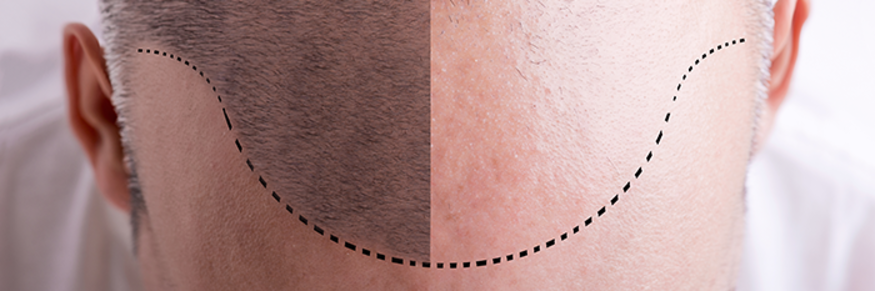
For those seeking a more permanent solution, hair transplant surgery has evolved to become a popular and effective option.
- Follicular Unit Transplantation (FUT): Also known as strip harvesting, FUT involves removing a strip of skin containing hair follicles from a donor area, usually the back of the head. The strip is then dissected into individual follicular units, which are transplanted into the recipient area with hair loss. FUT has a high success rate, but it may leave a linear scar at the donor site.
- Follicular Unit Extraction (FUE): Unlike FUT, FUE involves extracting individual hair follicles directly from the donor area using a small punch device. These follicles are then implanted into the recipient area one by one. FUE is less invasive than FUT and leaves minimal scarring, making it a popular choice for patients seeking a more natural appearance.
Innovative Therapies for Hair Loss
In addition to medications and surgical procedures, several emerging therapies show promise in the treatment of hair loss.
- Platelet-Rich Plasma (PRP) Therapy: PRP therapy involves extracting a patient's blood, processing it to separate the plasma and platelets, and then injecting the platelet-rich plasma into the scalp. The growth factors present in PRP are believed to stimulate hair growth and prolong the hair growth cycle. PRP therapy has shown positive results in some patients, but more extensive research is needed to establish its long-term efficacy. 1
- Low-Level Laser Therapy (LLLT): LLLT uses red or near-infrared light to stimulate hair growth by increasing blood flow to the scalp and enhancing cellular energy production. Hair loss patients can use LLLT devices, such as helmets or combs, at home for a non-invasive treatment option. While studies have demonstrated some success in promoting hair growth, results can vary, and further research is required to determine the optimal wavelength, duration, and frequency of treatment. 2
- Stem Cell Therapy: Stem cells, which have the potential to develop into various types of cells, have been a focus of research for hair loss treatment. Injections of stem cells derived from adipose (fat) tissue or other sources have shown potential in promoting hair growth by activating dormant hair follicles and stimulating the production of new hair follicle cells. Although still in the experimental phase, stem cell therapy could be a ground-breaking solution for hair loss in the future, as it has the potential to address the root cause of the problem. 3
- Hair Cloning: Another exciting area of research is hair cloning or hair multiplication. This technique involves extracting hair follicle cells from a patient, multiplying them in a lab, and then reimplanting the multiplied cells back into the patient's scalp. This approach aims to generate a larger number of hair follicles without relying on a limited donor supply. However, hair cloning is still in the early stages of development, and further research is needed to refine the process and ensure its safety and effectiveness. 4
Conclusion
Hair loss is a complex issue that affects millions of individuals worldwide. With advancements in medical treatments, surgical procedures, and innovative therapies, those experiencing hair loss now have more options than ever before to address their concerns. It is essential to consult with a medical professional to determine the most suitable solution for your specific needs, as individual results may vary. As research continues, it is expected that even more effective treatments will become available, offering hope to those struggling with hair loss.
References
- John Hopkins Medicine - Platelet-Rich Plasma (PRP) Injections
- National Library of Medicine - Role of Low-Level Light Therapy (LLLT) in Androgenetic Alopecia
- National Library of Medicine - Advances in Stem Cell-Based Therapy for Hair Loss
- Healthline - Hair Follicles can now be grown in labs: What this means for Hair Loss.