


Key points
- Finasteride and minoxidil treat different causes of hair loss. Finasteride lowers DHT levels, while minoxidil boosts blood flow to the scalp.
- Used together, they may work better. Research suggests combining the two may improve hair density and speed up results.
- It’s safe to use both. No known interactions exist between the medicines, and both are licensed for male pattern baldness.
- You can start one or both. Some people begin both together; others add one later based on goals and comfort.
- We’re here to support you. Our team helps patients build a personalised plan and stay on track with treatment.
If you’ve been researching hair loss treatments, you’ve probably come across Finasteride and Minoxidil. They’re both proven, licensed medicines for male pattern baldness. And increasingly, people are choosing to use them together.
But is combining them a good idea? Is it safe? And will it make a difference to your results?
Let’s take a closer look at how each treatment works, what the research says about using them together, and what to consider before starting either or both medications.
Why do people use both Finasteride and Minoxidil?
Hair loss is complex, and no single treatment works the same for everyone. That’s one reason many people choose to combine Finasteride and Minoxidil. Each treatment targets a different part of the problem, so together, they give you a more complete approach.
- Finasteride works from the inside out. It helps stop hair loss by lowering levels of DHT (a hormone linked to male pattern baldness).
- Minoxidil works from the outside in. It’s applied directly to the scalp to help stimulate blood flow and support new growth.
By tackling both the hormonal cause of hair loss and encouraging regrowth at the scalp, the two treatments complement each other. It’s not a shortcut to a full head of hair – hair regrowth takes time, no matter which treatment path you choose – but it is a combination commonly used in clinical practice that may improve the chances of you seeing visible results.
How do they work, and how might both help?
To understand how combining Finasteride and Minoxidil might give you better results, it helps to break down what they’re doing to tackle hair loss:
- Finasteride blocks the conversion of testosterone to DHT (dihydrotestosterone). High levels of DHT cause hair follicles to shrink over time, leading to thinner hair and eventual hair loss. By reducing DHT levels, Finasteride helps slow or stop this process.
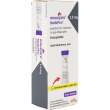
- Minoxidil is a topical solution applied directly to the scalp. It’s thought to increase blood flow to the hair follicles and extend the anagen (growth) phase of the hair cycle. This can lead to thicker, stronger strands over time.
Together, they address both the cause of male pattern baldness (high DHT) and the solution (stimulating regrowth). That’s why this combination is often seen by healthcare professionals and used in clinical settings.
Does using both help hair loss more? What the science says
Using Finasteride and topical Minoxidil together tends to lead to better results than using either one on its own, and growing evidence supports this approach.
Several studies have shown that the combination can improve hair density, scalp coverage, and overall satisfaction more than using only one (monotherapy) (1-3). A recent review of the research found that combining the treatments is also as safe as taking either one on its own (4). That’s good news if you’re hoping to boost your results without increasing your risk of side effects.
What’s especially encouraging is that some studies show men start seeing noticeable improvements earlier when using both. In one study, the combination treatment group was the only one to show statistically significant progress at both 3 and 6 months, a time when patients using Finasteride or Minoxidil on their own only typically begin to see signs of improvement (5).
This doesn’t mean the combination speeds up the entire process. Full results can still take up to a year, because hair growth happens slowly. But it does suggest that using both treatments together can help you start seeing visible changes sooner and improve the overall outcome.
That said, everyone’s response is different. Some people respond quickly, others more gradually. Consistency, patience, and the right support are key no matter which route you choose.
Should you start both at once?
Many people choose to start both Finasteride and Minoxidil at once. It’s generally considered safe as the treatments work via different mechanisms, and there are no known interactions between them. But starting with just one and adding the other later is also a valid approach.
If starting treatments one at a time, it’s more common to start Finasteride first and add Minoxidil later. Finasteride addresses the underlying hormonal cause of male pattern baldness, so beginning there can help stabilise shedding. Once the hair loss slows down, adding Minoxidil can help boost regrowth and improve thickness over time.
That said, it also works the other way around. If you’re already using Minoxidil and not seeing the results you hoped for, adding Finasteride can be a next step. There’s no need to stop one treatment before starting the other. In fact, continuing with Minoxidil while introducing Finasteride often helps maintain momentum.
The most important takeaway is that using both together is considered safe, whether you start both together or in stages. Talk to a pharmacist or prescriber about your goals and preferences, and they can help you figure out the best starting point for you.
What about oral Minoxidil? Is it better?
You may have heard people talking about oral Minoxidil as an alternative to the topical solution. While it’s gaining attention, there are a few important things to know:
- Oral Minoxidil is not licensed in the UK for hair loss. It’s sometimes prescribed off-label by doctors, which means it's used in a way that's not officially approved by medicine regulators.
- "Off-label" doesn’t mean unsafe. It just means the medicine is being prescribed outside of its original licence, based on a healthcare professional’s clinical judgement and evidence-based medicine.
Some people prefer oral Minoxidil because it’s easier to take and less messy than the topical version. When combined with oral Finasteride, it also allows both treatments to be taken as tablets, which some find more convenient. Studies suggest that the two may be effective together, particularly in cases of more advanced hair loss.
However, oral Minoxidil has a different side effect profile, and it’s not suitable for everyone. That’s why we recommend starting with the topical version, which is licensed, widely used, and effective for male pattern baldness.
If you’re curious about oral Minoxidil, speak to a doctor first. They’ll help you decide whether it’s a good fit for your individual needs.
What we see with our patients
At Oxford Online Pharmacy, we regularly support patients using Finasteride and topical Minoxidil together. In fact, it's one of the most common treatment combinations we see for hair loss.
Both are licensed, clinically proven medicines for male pattern baldness, and using them together is safe, effective, and often helps patients achieve more noticeable results. It’s not a one-size-fits-all solution, but it is a scientifically backed approach that works for the majority of men.
But when it comes to treating hair loss, consistency and support are as important as the medications you take. That’s why we don’t just deliver medicines. We offer ongoing support from UK-based doctors and pharmacists. Whether you’re just starting out or wondering what to try next, we’re here to help you find the right approach and stay on track.
If you’re thinking about combining Finasteride and Minoxidil, or just want help choosing the right approach for your hair loss, we’re here to help. Our clinical team can answer your questions, explain your options, and help you take the next step.
See our full range of treatments for hair loss
Let's goYou can speak to a UK-based doctor or pharmacist by emailing info@oxfordop.co.uk.
References
- Hu R, Xu F, Sheng Y, Qi S, Han Y, Miao Y, et al. Combined treatment with oral Finasteride and topical Minoxidil in male androgenetic alopecia: a randomized and comparative study in Chinese patients. Dermatologic Therapy [Internet]. 2015 Jun 2;28(5):303–8.
- Asad N, Naseer M, Ghafoor R. Efficacy of Topical Finasteride 0.25% With Minoxidil 5% Versus Topical Minoxidil 5% Alone in Treatment of Male Pattern Androgenic Alopecia. Journal of drugs in dermatology : JDD [Internet]. 2024 Jan;23(11):1003–8.
- Suchonwanit P, Srisuwanwattana P, Chalermroj N, Khunkhet S. A randomized, double-blind controlled study of the efficacy and safety of topical solution of 0.25% Finasteride admixed with 3% Minoxidil vs. 3% Minoxidil solution in the treatment of male androgenetic alopecia. Journal of the European Academy of Dermatology and Venereology. 2018 Jul 20;32(12):2257–63.
- Chen L, Zhang J, Wang L, Wang H, Chen B. The Efficacy and Safety of Finasteride Combined with Topical Minoxidil for Androgenetic Alopecia: A Systematic Review and Meta-analysis. Aesthetic Plastic Surgery. 2020 Mar 12;44(3):962–70.
- Rossi A, Caro G. Efficacy of the association of topical Minoxidil and topical Finasteride compared to their use in monotherapy in men with androgenetic alopecia: A prospective, randomized, controlled, assessor blinded, 3‐arm, pilot trial. Journal of Cosmetic Dermatology. 2023 Oct 5;23(2):502–9.
- Johnson H, Huang D, Clift AK, Ângela Bersch-Ferreira, Guimarães GA. Effectiveness of Combined Oral Minoxidil and Finasteride in Male Androgenetic Alopecia: A Retrospective Service Evaluation. Cureus [Internet]. 2025 Jan 16.