

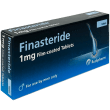

When it comes to treating male pattern baldness, there are two clinically proven medicines: Finasteride and Minoxidil. One is usually taken as a daily tablet, while the other is a foam or solution that’s applied directly to the scalp, on the areas where hair is thinning.
On paper, the difference sounds straightforward. But in real life, choosing between topical and oral hair loss treatment is often less about which one is “better” and more about which routine feels realistic to stick with day after day. Because with both medicines, consistency is essential.
If you’re weighing up your options, here’s what to consider.
The key points
- Finasteride (oral) and Minoxidil (topical) are the only licensed hair loss treatments in the UK.
- Both are proven to deliver results. Finasteride reduces DHT to protect existing hair, while Minoxidil boosts blood flow to stimulate growth.
- The best hair loss treatment is the one you can stick with consistently, as results depend on long-term commitment.
- Many men find tablets easier long-term, but others prefer the control of topical application.
- There is the option to combine oral and topical treatments for stronger results, but most men start with one and build up their routine.
- Nothing is final, and you can switch treatments if things change.
What are the main hair loss treatment options?
There are only two medicines licensed in the UK for male pattern hair loss (androgenic alopecia):
- Finasteride is an oral tablet taken once a day. It works by blocking a hormone called DHT, which causes hair follicles to shrink and produce weaker hair. By lowering DHT levels, it helps protect the hair you still have.
- Minoxidil is a topical treatment available as a foam, spray, or liquid solution. Applied directly to the scalp twice daily, it improves blood flow to the follicles and can stimulate regrowth as well as prevent further thinning.
Some newer sprays now combine Finasteride and Minoxidil, and doctors may sometimes prescribe oral Minoxidil “off-label.” But broadly speaking, Finasteride = oral, Minoxidil = topical.
Tablets vs scalp routine: How do they fit into daily life?
For many men, the decision between topical vs oral treatment boils down to lifestyle. Finasteride integrates quite easily into daily life: take one pill at the same time each day. It’s discreet, quick, and doesn’t interfere with your routine.
Minoxidil, on the other hand, takes a little more change and commitment. It’s usually applied to the scalp twice a day, which means parting your hair, applying the product, waiting for it to dry, and only then styling your hair. For men, this soon becomes a habit. For others, it feels fiddly or intrusive.
Neither approach is “right” or “wrong.” The key is choosing what feels manageable for you, because with hair loss treatment, consistency is everything.
What are the pros and cons of topical vs oral?
The most important factor when choosing a hair loss treatment is whether it works. Both Finasteride and Minoxidil are proven options, so neither is “better” in an absolute sense. Oral Finasteride is slightly more effective overall (1), but in reality, the biggest influence on your results is consistency.
That’s why convenience often ends up being the deciding factor. Tablets are quick and discreet, while topical treatments can feel more hands-on. Some men like the simplicity of swallowing a pill, while others prefer the reassurance of applying something directly to their scalp.
Side effects also differ. As Minoxidil is applied locally, only a tiny amount enters the bloodstream (2), so side effects are usually limited to mild scalp irritation or dryness. Finasteride, although generally well-tolerated, can cause sexual side effects and isn’t suitable if you’re trying to conceive.
To sum it up:
- Oral treatments are slightly more effective and easier to fit into daily life, but carry a higher risk of systemic side effects and aren’t suitable if you’re trying to conceive.
- Topical treatments take more effort to apply, but some men prefer the sense of control, and side effects are usually limited to the scalp.
Ultimately, the “pros and cons” depend on your perspective. What feels like a drawback to one person may be a benefit to another. It’s all about what fits your lifestyle best.
What do men usually find easier to stick with?
Many men start with topical Minoxidil but later switch to tablets (Finasteride, or in some cases oral Minoxidil) for simplicity. Most find that taking a pill is easier and less disruptive than applying a product twice daily, especially if you’re busy, travel often, or just don’t like the hassle.
That said, plenty of men prefer sticking with Minoxidil. They like the visible action of applying it directly to their scalp and feel more in control of their treatment. For some, it’s also easier to build into an existing haircare routine, while remembering a pill can take more effort until it becomes a habit.
Others find that combining both oral and topical treatments gives them the best of both worlds: Finasteride to protect existing hair and Minoxidil to stimulate regrowth. Some men go “all in” from the start, while others build up gradually. Both approaches are valid, as long as you choose a routine you can realistically maintain.
Can you switch later if your first choice isn’t working?
Absolutely, your plan isn’t fixed. It’s common for men to adjust their treatment choices over time, with several valid reasons for doing so. For example, you might:
- Start with topical Minoxidil and later decide that an oral treatment feels more manageable.
- Begin with Finasteride and add Minoxidil later if you’re looking for stronger regrowth results.
- Switch to a foam or solution if you keep forgetting to take your daily pill.
- Take a break from Finasteride while trying to conceive, switching temporarily to only Minoxidil.
- Swap from topical to oral if your scalp becomes dry or irritated.
The point is that hair loss treatment isn’t one-size-fits-all. You’re not stuck with your first decision, and it’s normal to adjust your treatment based on how you are getting on.
Finding what works for you
The most important thing to remember is that the best hair loss treatment for you is the one you can see yourself sticking to long-term. Results don’t come overnight, so building a routine you can commit to makes the biggest difference.
When deciding what’s right for you, think about:
- Your routine: Are you happy with a twice-daily application of Minoxidil or would a Finasteride tablet be easier to maintain?
- Your comfort: Do you feel more confident taking a daily pill, or applying a foam or solution directly where the thinning is happening?
- Your goals: If you’re aiming for the strongest results, combining Finasteride and Minoxidil can be a good option, provided you can keep it up.
There’s no wrong answer, and there’s no pressure to get it perfect from the start. Some men prefer to ease in gradually, while others want to go all in with oral and topical treatments right away. Either approach is fine, as long as you stay consistent.
A consultation can help you understand which option suits your lifestyle, your goals, and your comfort level, so you can start treatment with confidence.
Take the first step – find out if hair loss treatment is right for you
Show meReferences
- Arca E, Açikgöz G, Taştan HB, Köse O, Kurumlu Z. An open, randomized, comparative study of oral Finasteride and 5% topical Minoxidil in male androgenetic alopecia. Dermatology (Basel, Switzerland) [Internet]. 2004;209(2):117–25.
- Hussein RS, Salman Bin Dayel, Othman Abahussein, Abeer Ali El‐Sherbiny. Applications and efficacy of Minoxidil in dermatology. Skin Health and Disease. 2024 Nov 24;4(6).