

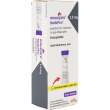

Topical minoxidil is one of the most widely used treatments for hair loss for men and women. Most people apply 1ml of topical minoxidil per application to areas of thinning hair. Depending on the strength and formulation and your circumstance, this is usually applied once or twice daily (1). Using more than recommended won’t improve results and may increase side effects, so consistency matters more than quantity.
This guide explains how to use topical minoxidil correctly so you can get the best possible outcome.
In this article:
How much minoxidil should I apply?
How do I measure my minoxidil dose?
How often do I need to use minoxidil?
Can I use more minoxidil to speed up hair growth?
How can I maximise my results?
What happens if I miss a dose?
When should I review or adjust my minoxidil treatment?
Not sure which minoxidil treatment is right for you?
FAQs
Visit our hair loss hub for more treatment advice or discover our hair loss products here.
How much minoxidil should I apply?
The standard dose for most liquid or foam minoxidil products is:
1ml per application
applied directly to thinning areas of the scalp
not spread across the entire head unless advised
This amount is designed to deliver enough medication to the hair follicles without increasing the risk of scalp irritation or unwanted hair growth elsewhere.
Using more than 1ml at a time will not speed up hair regrowth. Instead, it can increase the chance of side effects like scalp dryness or facial hair growth. Experiencing unwanted side effects can actually make it harder to stay consistent with treatment, which can impact results.
How do I measure my minoxidil dose?
The way you measure 1 ml depends on whether you’re using a liquid solution or foam.
Minoxidil liquid: Most liquid minoxidil products include a graduated dropper marked at 1ml. Fill the dropper to the line, then apply the solution directly to the thinning areas of your scalp. Spread it gently with your fingertips if needed, but avoid applying more than recommended.
Minoxidil foam: Foam products don’t use droppers. Instead, the usual dose is about half a capful of foam, which equals roughly 1ml once applied to the scalp. Some applicators may instead recommend a set number of pumps or sprays, depending on the product.
Always check the leaflet supplied with your treatment, as applicators vary slightly between brands like Regaine and generic minoxidil versions.
How often do I need to use minoxidil?
There are several versions of topical minoxidil that are licensed for hair loss, including liquids, foams, and sprays. Brands like Regaine have also developed specific products for treating pattern baldness in men and women, which contain different amounts of the medicine. How often you apply minoxidil depends on the product strength and formulation:
5% minoxidil liquid (men): usually twice daily
5% minoxidil foam (men): usually twice daily
2% minoxidil solution (women): usually twice daily
Always follow the instructions provided with your specific product, as dosing schedules can vary slightly between brands. If you are unsure how often you should be using your treatment, your prescriber or pharmacist can advise you based on your individual circumstances.
Can I use more minoxidil to speed up hair growth?
No, increasing your minoxidil dose — either by using more per application or applying it more frequently than recommended — won’t make your hair grow faster.
Minoxidil works by helping hair follicles stay in the growth phase for longer and encouraging dormant follicles to become active again. Because hair grows slowly, this process takes time. Most people see visible regrowth in 3 to 6 months (up to 12 months for fuller results), and using more minoxidil won’t change this timeframe (2,3).
But applying extra minoxidil does increase the chance of side effects such as (3):
Dryness, itching, or irritation of the scalp
Flaking or redness
Unwanted hair growth on the face or body if the product spreads beyond the scalp
Less commonly, some people experience headaches, dizziness, or a fast heartbeat. If these symptoms occur regularly, stop treatment and speak to a clinician.
How can I maximise my results?
Taking the right minoxidil dose consistently is key to seeing the results you’re hoping for.
Minoxidil doses are carefully chosen to balance effectiveness with comfort. Using more than recommended does not improve regrowth and can make irritation more likely, which sometimes leads people to stop treatment too soon.
You can also improve results by:
Applying minoxidil to a clean, dry scalp
Using it at the same time each day
Washing your hair regularly to prevent product build-up
Avoiding washing the scalp for 4 hours after application
Continuing treatment for at least 6 months before assessing progress
Another way to maximise your results is to use minoxidil alongside other treatments. For example, finasteride can be used with minoxidil in men with pattern baldness. The medicines work in different ways, and studies show combination treatment produces better regrowth than either one alone (4).
Microneedling (derma rolling) may also improve results for some people (5). It helps stimulate the scalp and can increase absorption of minoxidil when used correctly alongside treatment. It can be done professionally with clinical-grade devices or at-home rollers.
Looking after your existing hair by washing gently, avoiding excessive heat styling, and maintaining a healthy scalp environment can all improve the appearance of hair and may make it easier to stay consistent with treatment.
What happens if I miss a dose?
If you accidentally forget to apply minoxidil, use it as soon as you remember — unless it’s nearly time for your next application. In that case, skip the missed dose and continue as normal. Do not double up the next dose to make up for it.
Most importantly, don’t worry about it too much. Missing the occasional application won’t usually affect your long-term results. But minoxidil works best when used consistently, so repeated missed doses can slow progress or make regrowth less noticeable.
If you’re finding twice-daily treatment difficult to maintain, it may help to:
Adjust when you apply it so it fits better into your routine
Speak to a clinician about whether oral minoxidil or another treatment might suit you better
When should I review or adjust my minoxidil treatment?
Minoxidil works gradually — many people notice early regrowth at around 2 months, but fuller results aren’t often seen until 4 to 12 months of consistent use (2) — so it’s important to give it enough time before deciding whether it’s effective or needs adjusting.
Some people also notice temporary increased shedding in the first few weeks of treatment. This is normal and usually means new hairs are beginning to replace older ones, rather than signalling your treatment isn’t working or dose needs increasing (6).
However, if you’ve been using minoxidil consistently for 6 to 12 months without noticeable improvement, it may be worth reviewing your treatment with a doctor. They may suggest:
Switching from 2% to 5% minoxidil (for men)
Changing formulation (for example liquid to foam)
Combining treatment with finasteride (for men)
Considering oral minoxidil for hair loss, where appropriate
If you develop persistent irritation, dizziness, or unwanted hair growth outside the scalp, your treatment strength or formulation may also need adjusting.
What about oral minoxidil for hair loss?
An alternative to topical minoxidil is oral minoxidil tablets. Its use for hair loss is considered off-label, meaning doctors can prescribe it, but it hasn’t been formally approved for this use.
Because of this oral minoxidil requires a prescription, but is a safe and effective treatment prescribed by specialist services (7). Some people find these tablets more convenient than topical treatments, which helps with consistency.
Doses vary from 0.625mg to 2.5mg, taken at the same time each day. Your prescriber may adjust the dose depending on your response.
Oral minoxidil is not suitable for everyone, so it should only be used under medical supervision.
Not sure which minoxidil treatment is right for you?
Using the correct amount of minoxidil each day is one of the most important steps in successfully treating hair loss. Small adjustments to strength, formulation, or routine can make a noticeable difference to your hair over time.
If you’re unsure which minoxidil product is the best one for you, the team at Oxford Online Pharmacy can help you choose a treatment that fits your type and stage of hair loss, and your lifestyle, with advice available online and treatment delivered directly to your door.
Visit our hair loss hub for more treatment advice or discover our hair loss products here.
Sign up to our newsletter and get 10% off your first order.
FAQs
Can I use minoxidil every day?
Yes, and for most people daily use is recommended. Depending on the product and your circumstances, this means either once or twice daily. Consistency matters more than the amount you use. Sticking to your recommended schedule is the most important thing you can do for the best results.
How long does minoxidil take to work?
Most people notice early regrowth within 2 to 3 months, though fuller results typically take between 4 and 12 months of consistent use. It is important to give treatment enough time before deciding whether it is working for you.
Is it normal to lose more hair when I start minoxidil?
Yes. Some temporary shedding in the first few weeks is common and is usually a sign that new hair growth is beginning. This phase typically settles within a few weeks. If shedding continues beyond this or seems excessive, speak to a clinician.
Can I apply minoxidil to wet hair?
No. Minoxidil should be applied to a clean, dry scalp for best absorption. Applying it to wet hair can dilute the solution and reduce how effectively it reaches the hair follicles.
What happens if I stop using minoxidil?
If you stop using minoxidil, the effects gradually wear off and any regrowth achieved during treatment is likely to be lost over time. For this reason, minoxidil is generally considered a long-term treatment rather than a short-term fix.
Can women use topical minoxidil?
Yes. Topical minoxidil is one of the few hair loss treatments licensed for both men and women. The recommended strength and frequency may differ depending on your formulation. Check the dosing section of this article or the instructions supplied with your product for guidance specific to your situation.
Who can’t use topical minoxidil?
Anyone with an inflamed, infected, irritated or painful scalp, as this should not be used on broken skin. Damaged skin can allow significantly more of the medicine to be absorbed, increasing the risk of side effects. Equally, anyone who is trying to conceive, pregnant or breastfeeding, and anyone under the age of 18, or anyone with a known allergy or hypersensitivity to minoxidil or its ingredients, including propylene glycol, which is present in the liquid solution formulation.
Can I use minoxidil with other hair loss treatments?
In many cases, yes. Minoxidil is commonly used alongside finasteride in men with pattern hair loss, and studies show the combination may produce better results than either treatment alone (8). Minoxidil may also be used alongside microneedling (5). Always check with a clinician before combining treatments.
Is oral minoxidil better than topical?
Neither is universally better as they work differently and suit different people. Oral minoxidil can be more convenient for those who find daily scalp application difficult to maintain, but it carries a slightly different side effect profile and is currently unlicensed for hair loss in the UK, meaning doctors can prescribe it, but it hasn’t been formally approved for this use. Your prescriber can help you decide which option is most appropriate for you.
References
NICE. BNF – Minoxidil [Internet]. NICE.
Badri T, Nessel TA, Kumar D D. Minoxidil [Internet]. PubMed. Treasure Island (FL): StatPearls Publishing; 2020.
NICE. Clinical Knowledge Summaries - Topical Minoxidil [Internet]. NICE. 2022.
Chen L, Zhang J, Wang L, Wang H, Chen B. The Efficacy and Safety of Finasteride Combined with Topical Minoxidil for Androgenetic Alopecia: A Systematic Review and Meta-analysis. Aesthetic Plastic Surgery. 2020 Mar 12;44(3):962–70.
Abdi P, Awad C, Anthony M, Farkouh C, Kenny B, Maibach HI, et al. Efficacy and Safety of Combinational Therapy Using Topical Minoxidil and Microneedling for the Treatment of Androgenetic Alopecia: A Systematic Review and Meta-analysis. Archives of Dermatological Research. 2023 Sep 4;315(10):2775–85
Bi L, Kan H, Wang J, Ding Y, Huang Y, Wang C, et al. Whether the transient hair shedding phase exist after minoxidil treatment and does it predict treatment efficacy? A retrospective study in androgenetic alopecia patients. Journal of Dermatological Treatment. 2025 Mar 23;36(1):2480739–9.
Yagiz Matthew Akiska, Paradi Mirmirani, Roseborough I, Mathes E, Bhutani T, Ambrosy A, et al. Low-Dose Oral Minoxidil Initiation for Patients With Hair Loss. JAMA Dermatology [Internet]. 2024 Nov 20;
Li, Y., Huang, Q., Zhou, Z. and Zhang, Y. (2025) 'Comparing minoxidil-finasteride mixed solution with minoxidil solution alone for male androgenetic alopecia: a systematic review and meta-analysis of randomized controlled trials', Frontiers in Medicine, 12(1632139). doi:10.3389/fmed.2025.1632139.