



If you’re using topical minoxidil for hair loss, you might be wondering whether you need to wash your hair every day to keep it working properly. The short answer is no. Daily washing isn’t necessary for most people, although some choose to wash more often if they notice residue on the scalp.
In this guide, we explain how often to wash your hair when using minoxidil, what build-up is, and when alternatives such as oral minoxidil treatment might be worth considering.
In this article:
Do I need to wash my hair before applying minoxidil?
Do I need to wash minoxidil out after applying it?
Can minoxidil build up on my scalp over time?
What is minoxidil build-up?
Do I need to wash my hair daily to prevent build-up?
Does minoxidil liquid cause more build-up than foam?
Can I switch from liquid to foam minoxidil?
Is using topical minoxidil once a day enough?
Is oral minoxidil an alternative to topical treatment?
How do I get started with minoxidil for hair loss?
Visit our hair loss hub for more treatment advice or discover our hair loss products here.
Do I need to wash my hair before applying minoxidil?
Minoxidil solution should be applied to a clean dry scalp (1), but this doesn’t mean you need to wash your hair before every application, or even every day.
The medicine works best when applied directly to the scalp, so it helps if the area is free from heavy styling products (like clays and gels) or visible residue from previous minoxidil applications. However, most people find their scalp is clean enough if they continue with their normal hair-washing routine.
Of course, this depends on the styling products you use and what your normal routine looks like. If you notice flaking or product building up, or are struggling to apply the treatment evenly because of residues on the scalp, washing your hair more frequently could be a good idea.
If you do wash your hair before applying minoxidil, completely dry your hair and scalp before applying the treatment. Putting minoxidil to a damp scalp may help with absorption (2), but applying it to a dry scalp helps ensure you get the correct dose of minoxidil.
Do I need to wash minoxidil out after applying it?
No, topical minoxidil (including generic solutions, foams, and sprays, as well as branded versions like Regaine) do not need to be washed out after each application. Washing your hair too soon may actually stop the product from working as effectively, as it has been designed to be left on the scalp.
Once applied, you should leave the treatment on the scalp for at least four hours to give time for the active ingredients to be absorbed (3). After this time, washing your hair won’t reduce how well minoxidil works. Some people choose to wash their hair later in the day or the next morning.
Can minoxidil build up on my scalp over time?
While minoxidil liquid shouldn’t be washed out after every application, it can leave behind a residue on the scalp and hair with regular use. This minoxidil residue can gradually build up and cause several issues, such as:
Dry hair and scalp
Itching and irritation
Flaking that can look like dandruff
Discomfort between applications
Greasiness
Heavier build-up may also make it harder for new applications to absorb evenly into the scalp. To effectively stop hair loss, minoxidil must be absorbed. But if the scalp is covered by a film of old product, new doses will sit on top of the dried-in residue and not be absorbed as easily.
Some people also find that heavy build-up makes new applications harder to spread evenly across the scalp, which could also impact treatment results. Washing your hair every few days, depending on your routine, is usually enough to prevent this.
What is minoxidil build-up?
Minoxidil liquid usually contains alcohol and propylene glycol to help the medicine absorb into the scalp. After the active ingredient has been absorbed, small amounts of these ingredients can remain behind as residue. When we refer to “product build-up,” this is what we are referring to.
A small amount of residue after one or two applications won’t be noticeable. But if you go too long between hair washes, you might notice:
Flakes on the scalp
Hair feeling sticky or coated
Heaviness of the scalp
Dullness to the hair
Tightness similar to a tension headache
These are all signs of heavier residue and should signal that it’s time to wash your hair. If you don’t, new doses become harder to evenly apply and may not be absorbed as well.
Do I need to wash my hair daily to prevent build-up?
Not necessarily. Many people use minoxidil successfully without washing their hair every day. But if you aren’t regularly washing and are allowing minoxidil residue to build up on the hair shafts and scalp, then you will notice some discomfort, dryness, and irritation.
How often you need to wash your hair depends on things like:
Your hair type
How sensitive your scalp is
How often you apply minoxidil
Whether you’re using a liquid, foam, or spray
So, while you don’t need to wash your hair every day, it is probably a good idea to wash your hair at least every other day to avoid build-up — especially if you’re applying minoxidil twice daily. It’s also a sign to wash your hair more if you notice visible flakes or greasy-looking roots.
If daily washing feels inconvenient or dries your hair out, adjusting your formulation or routine may help instead.
Does minoxidil liquid cause more build-up than foam?
Some people find minoxidil liquid leaves more visible residue than foam formulations because:
Liquid minoxidil typically contains propylene glycol to enhance absorption, but this compound can contribute to visible residue and irritation. The hair also has a tendency to look and feel unclean when using liquid minoxidil because of the heavier build-up.
Liquid minoxidil is applied with a dropper, which some people find can make it harder to apply evenly. Some areas of the scalp may get more than others, leading to uneven results but also irritation and greasiness in those areas.
On the other hand, minoxidil foam doesn’t contain propylene glycol. For this reason, many people find their hair feels cleaner and is easier to manage, while their scalp isn’t as irritated (4).
Can I switch from liquid to foam minoxidil?
Yes, you can switch from liquid minoxidil to a foam alternative like Regaine Scalp Foam. Because foams generally leave less residue, many people choose to switch if they:
Are struggling with build-up, dryness, and irritation
Don’t have enough time to wash their hair more frequently
Want a treatment that feels lighter on their hair
As both products contain the same medicine, switching does not reduce effectiveness, as long as treatment is used consistently. It’s as simple as using the preferred product on your next application. You may find there is an adjustment period with the changeover, but this is generally short-lived.
Is using topical minoxidil once a day enough?
When starting minoxidil, twice-daily application is recommended to most people (1), but once daily application may be recommended for stronger products or some formulations intended for women.
That said, minoxidil works best when used consistently. If you experience irritation, dryness, or discomfort that doesn’t improve with washing your hair more or switching formulation, applying minoxidil once daily consistently—even if twice-daily application is recommended—is usually more effective than using it twice daily inconsistently.
If side effects continue, it’s a good idea to speak with a clinician or pharmacist before stopping treatment completely. They can help adjust your routine safely or suggest alternative hair loss treatments that may suit you better.
The most effective treatment is one that you can use comfortably and consistently over time.
Is oral minoxidil an alternative to topical treatment?
Yes, low-dose oral minoxidil may be prescribed off-label if deemed clinically suitable as a treatment for hair loss (5). Rather than applying minoxidil directly to the scalp, the medicine can be taken once daily as a tablet.
Some people prefer oral minoxidil because:
Taking a tablet can be more convenient than applying solutions to the scalp
Swallowing a pill is quicker than applying topical treatments and regularly washing the hair
Doses are guaranteed and consistent rather than relying on even scalp application
However, oral minoxidil for hair loss is not licensed in the UK and requires a consultation before prescribing. It may also cause side effects like dizziness, fluid retention, and changes in heart rate (1). It’s prescribed in low doses to reduce the risk of these side effects, but it isn’t suitable for everyone.
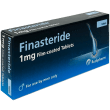
Other prescription treatments, such as finasteride or dutasteride may also be considered depending on your individual circumstances.
How do I get started with minoxidil for hair loss?
Topical minoxidil liquid and foam are available from Oxford Online Pharmacy without having to complete an online consultation. You can choose your preferred formulation, add it to your basket, and order online for discreet home delivery.
If topical treatment isn’t suitable for you, our clinical team can also assess whether prescription options such as oral minoxidil or finasteride may be appropriate.
Starting treatment early gives the best chance of slowing hair loss and supporting regrowth.
View our full range of hair loss treatments or order topical minoxidil online today.
Sign up to our newsletter and get 10% off your first order.
References
NICE. BNF – Minoxidil [Internet]. NICE.
Angelo T, Barbalho G N, Gelfuso G M, Gratieri T. Minoxidil topical treatment may be more efficient if applied on damp scalp in comparison with dry scalp. Dermatologic Therapy. 2016 Jun 30;29(5):330–3.
Ashique S, Sandhu N K, Haque Sk N, Koley K. A Systemic Review on Topical Marketed Formulations, Natural Products, and Oral Supplements to Prevent Androgenic Alopecia: A Review. Natural Products and Bioprospecting. 2020 Oct 4;10(6):345–65.
NICE. Clinical Knowledge Summaries - Topical Minoxidil [Internet]. NICE. 2022.
Yagiz Matthew Akiska, Paradi Mirmirani, Roseborough I, Mathes E, Bhutani T, Ambrosy A, et al. Low-Dose Oral Minoxidil Initiation for Patients With Hair Loss. JAMA Dermatology [Internet]. 2024 Nov 20;