


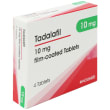



If you’ve recently started taking medicine for hair loss, not seeing the progress you’d hoped for can feel disheartening. You’ve committed to a daily routine, and maybe even worked up the courage to start treatment after weeks (or months) of thinking about it.
When nothing seems to change, it’s natural to worry: Is this even working?
The truth is, results from treatments like Minoxidil and Finasteride take time, and progress doesn’t always look like what you expect. Visible regrowth is only one possible outcome. Slowing or halting hair loss is just as valuable, and sometimes early shedding is actually a positive sign.
Let’s unpack what’s realistic, what to watch for, and what your next steps might be if you’re feeling unsure about your results.
The key points
- Hair loss treatments like Minoxidil and Finasteride usually need at least 6 months of consistent use before you can properly judge progress.
- Progress isn’t always about new growth. Slowing or stopping hair loss counts too.
- Some shedding early on, particularly with Finasteride, can be a sign your treatment is working.
- Switching treatments too soon can set you back. Give your current plan time to work.
- If results are limited after 6 months, options like adding or switching treatments may be explored with a prescriber.
- Dutasteride may be considered, but only after reviewing your response to Finasteride.
How long should you wait before expecting results?
One of the hardest parts of treating hair loss is the wait. Results don’t happen quickly. Because hair grows in cycles, it usually takes 3 to 6 months before you notice changes (1-2).
And this is when you’re only starting to see results. At around three months, some men might begin to notice very small changes. Others won’t see any at all, and it may take them the full six before they see reduced shedding or areas that look a little denser.
At 12 months, you’ll usually know for sure whether your treatment is working for you. This is often when results “peak,” though you’ll need to keep going indefinitely to maintain them. Patience and consistency are key.
What kinds of results count?
When people imagine success from Minoxidil or Finasteride, they often picture dramatic regrowth. But in reality, success usually looks more like:
- Less hair falling out in the shower or on your pillow
- Thinning areas not getting noticeably worse
- Hair looking stronger and healthier where follicles are still active
If treatment is started early, some men may even reverse mild thinning, but only if the follicles are still alive. Once follicles stop working altogether, there’s no way to bring them back. That’s why slowing down or halting loss is still a major win. You’ve stopped your hair loss from worsening.
Is shedding a sign it’s working, or not?
This is one of the most common worries we hear. Men often panic when they see more hair falling out in the first few weeks and assume treatment is failing.
Odd as it feels, temporary shedding in weeks 2 to 6 can be a good sign (2). It often means older, weaker hairs are making way for stronger new ones, and it is a sign your hair loss treatment is working. It is more common if you’re taking Finasteride, but it can also happen with Minoxidil.
The important thing is to stick with treatment through this stage; shedding usually settles within a few months. If it continues or worsens, it’s worth checking in with our team to rule out other causes or see if your treatment plan needs adjusting.
What to do at 3 months, 6 months and beyond
- At 3 months – Don’t panic if you can’t see progress yet. While some men might see early signs of improvement, this stage is too early to judge. Stick with your treatment, even if you’re not convinced it’s working.
- At 6 months – Time to check in. Ask yourself: Is shedding reduced? Does your hairline or crown look stable? Even small improvements like less hair falling out in the shower are worth noting. If you’re unsure, photos taken a few months apart can be surprisingly helpful.
- At 12 months – By now, you should have a clearer idea of whether your treatment is effective. If you’re happy with the progress, continue. If results are underwhelming and you feel disappointed, it’s worth discussing options with a prescriber.
Why switching too soon can be a mistake
It can be tempting to swap treatments when you’re not seeing the results you hoped for as quickly as you expected. But hair loss medicines require consistency, and stopping early is one of the most common reasons treatments fail. Give each treatment a fair chance before moving on.
Switching too soon also delays progress by resetting the clock. Once you've swapped treatments, you’ll need to wait another 3 to 6 months to fairly assess whether or not it is working.
Learn more about why timing matters
Let's goIs Dutasteride right for you?
Some men ask about Dutasteride, which belongs to the same class of drugs as Finasteride. Both work by blocking the conversion of testosterone to DHT, the hormone that causes hair follicles to shrink. But while Finasteride blocks around 70% of DHT conversion, Dutasteride blocks around 90% (4).
That means Dutasteride may sometimes offer additional benefits, but not always. If Finasteride hasn’t worked at all, Dutasteride is unlikely to change things. If Finasteride has slowed loss but not stopped it, then Dutasteride might be worth exploring.
At Oxford Online Pharmacy, we’ll only consider Dutasteride after at least 6 months on Finasteride, and only if there’s a clear reason.
When to speak to a prescriber
If you’ve committed to six months of treatment and are still unsure whether your hair has improved, it’s time to speak to a prescriber. You might want to get in contact sooner if you’re experiencing side effects or you’re just not getting on with your current treatment.
At Oxford Online Pharmacy, our UK-registered prescribers can review your progress, talk through your options, and decide whether a change might be helpful. This might mean:
- Continuing with your current treatment if progress is steady.
- Adding another treatment, like combining Minoxidil with Finasteride.
- Considering alternatives such as Dutasteride, where appropriate.
It’s always a case-by-case decision, and you don’t need to figure it out alone. Contact our friendly team, and we can help run through your options.
What other options might be explored?
If one hair loss treatment hasn’t worked well for you, another sometimes can. For example, Minoxidil and Finasteride target hair loss in different ways. If one isn’t effective, the other may help. For many men, combining the two delivers the best results. For others, Dutasteride could be the right next step.
Other supportive approaches, like taking hair growth supplements, using caffeine shampoos, managing stress, and addressing any nutritional gaps, can also help protect your hair.
There are options, and with the right support, you can find an approach that feels right for you.
References
- NHS. Common questions about Finasteride [Internet]. NHS. 2023.
- Kim J, Song SY, Sung JH. Recent Advances in Drug Development for Hair Loss. International Journal of Molecular Sciences. 2025 Apr 8;26(8):3461.
- NICE. Topical Minoxidil [Internet]. NICE. 2025.
- Estill MC, Ford A, Omeira R, Rodman M. Finasteride and Dutasteride for the Treatment of Male Androgenetic Alopecia: A Review of Efficacy and Reproductive Adverse Effects. Georgetown Medical Review [Internet]. 2023 Oct 27;7(1).