

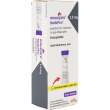

If you’re considering Gina 10 for vaginal dryness or discomfort and want to understand how it works, who it’s for, and what side effects to expect, this is a pharmacist-reviewed guide written for women in the UK.
Key Facts
Gina 10 is a 10mcg Estradiol vaginal tablet used to treat the vaginal dryness and discomfort related to the menopause.
It has been the first over-the-counter vaginal oestrogen in the UK since September 2022, after a MHRA reclassification.
To buy it over the counter, you need to be aged 50 or over and at least 12 months since your last period.
Dosing is one tablet a day for 14 days (loading phase), then one tablet twice weekly as maintenance.
Symptoms usually start to improve within 3 to 4 weeks and full benefits may appear at 8 to 12 weeks.
In this article
What is Gina 10 and how does it work?
What are the side effects of Gina 10?
Who can use Gina 10, and who should not?
How does Gina compare to Vagifem, Vagirux, Ovestin and Estring?
How do you use Gina 10: dosing, insertion and leakage?
How long does Gina take to work, and what if it isn’t enough?
Is Gina 10 safe long-term, and does it affect breast cancer risk?
Frequently asked questions about Gina 10
What is Gina 10 and how does it work?
Gina 10 is a 10mcg Estradiol vaginal tablet used to treat vaginal dryness and discomfort related to the menopause, with minimal absorption into the rest of the body.
Gina 10 contains Estradiol, which is a body-identical form of the oestrogen produced in your ovaries before undergoing the menopause, and it works by releasing oestrogen directly into the walls of the vagina. This helps to restore the vaginal lining, making it more naturally lubricated and bringing the pH level down to a better point. Given that so little is absorbed into your body as a whole, it is not associated with having the same risks for the body as older, full-body hormone replacement therapy (HRT).
It’s specifically used for genitourinary syndrome of menopause (GSM), which is just a medical way of grouping all the symptoms with the vagina and lower urinary system that occur as oestrogen levels fall. These include dryness, soreness, discomfort during sex, urinary urgency and recurrent urinary tract infections (UTIs). The British Menopause Society estimates that GSM affects around 50 to 70% of post-menopausal women, but only about 7% of them receive treatment for it, largely because they don't mention it to their doctors (2).
In September 2022, the Medicines and Healthcare products Regulatory Agency (MHRA) reclassified Gina 10 from a prescription-only medicine to a pharmacy medicine. It was the first vaginal oestrogen to be made available over the counter in the UK (1). NICE guideline NG23 (updated in November 2024) also recommends vaginal oestrogen as the first option you should use for GSM, and it can be taken for as long as needed (4).
What are the side effects of Gina 10?
Gina 10 commonly causes headache, abdominal pain, vaginal discomfort, discharge and light bleeding, but these are generally mild and will settle down after a few weeks.
Most women don't experience too many side effects with Gina 10. The list of side effects below is taken from the medication’s official information (and the frequency of each is as given as a guide) (3).
Side-effect frequency table (based on the Gina 10 SmPC)
Frequency | Definition | Reported side effects |
|---|---|---|
Common | 1 in 100 to 1 in 10 | Headache, abdominal pain, nausea, vaginal haemorrhage, vaginal discharge, vaginal discomfort, vulvovaginal mycotic infection (thrush), rash, weight increase. |
Uncommon | 1 in 1,000 to 1 in 10 | Hot flush, hypertension |
Post-marketing reports (frequency not reported in clinical trial data) include generalised hypersensitivity (for example anaphylaxis), migraine aggravation, diarrhoea and fluid retention (oedema)(3).
Symptoms that mean you should stop Gina and see a clinician:
Any unexplained vaginal bleeding after the initial loading phase.
New or worsening breast pain, a new breast lump, or changes in the nipple or breast skin.
Signs of a generalised allergic reaction: widespread rash, facial swelling, breathing difficulty (call 999).
Signs suggestive of a blood clot (DVT/PE): calf swelling, chest pain, breathlessness (call 999).
Many people understandably worry about two things: low-dose vaginal oestrogen is not associated with an increased risk of breast cancer in the same way as older, systemic hormone replacement therapy, and a yeast infection (thrush) or bacterial vaginosis can show up in the first few weeks of using Gina, but will generally get better with a quick course of antifungal medicine.
Who can use Gina 10, and who should not?
In the UK, women who are 50 or older and have not had a period for at least 12 months, and have never had hormone-sensitive cancer, can buy Gina 10 over the counter.
The eligibility checklist to buy Gina 10 over the counter includes:
Aged 50 or over.
At least 12 months since your last period.
Not pregnant or breastfeeding.
No personal history of breast, ovarian or endometrial cancer.
No unexplained postmenopausal bleeding.
No current active vaginal infection.
No active DVT or pulmonary embolism.
No severe liver disease.
Before you purchase it, a doctor should check you for these conditions: fibroids, endometriosis, migraine with aura, heart disease, a new breast lump or systemic lupus erythematosus.
If you still have your uterus, you generally won't need to take progestogen with Gina 10. This is because the very small amount of oestrogen that is absorbed in the vagina with Gina 10 is usually enough, but this isn't something you are often told at the pharmacy.
Gina 10 isn't approved for use if you’re under 50 or are still having occasional periods. However, oestrogen vaginal medications are still available with a prescription (like Vagifem and Vagirux, which are prescription only and contain the same 10mcg of Estradiol). You should discuss this with your GP, or have a consultation with an independent prescriber at Oxford Online Pharmacy, to find out if a prescription option would be right for you.
How does Gina compare to Vagifem, Vagirux, Ovestin and Estring?
Gina, Vagifem and Vagirux are all the same 10mcg Estradiol tablet that is inserted into your vagina. You can get Gina over the counter directly, however Vagifem and Vagirux you need a prescription for.
Gina, Vagifem and Vagirux all have the same ingredient and the same dose – what makes them different is whether you need a prescription, the applicator they come with and the packaging. Ovestin cream contains Estriol (a different type of oestrogen). Estring is a long-acting Estradiol vaginal ring. In the UK, Vagifem, Vagirux, Ovestin and Estring are all prescription only and are included here for educational comparison, not to promote them.
Vaginal oestrogen comparison
Product | Active | Format | Status | Dosing | Best for |
|---|---|---|---|---|---|
Gina 10 | Estradiol 10mcg | Tablet, applicator | OTC (P-medicine) | Daily for 2 weeks, then twice weekly | Self-managing, 50+, 12+ months postmenopausal |
Vagifem | Estradiol 10mcg | Tablet, applicator | Prescription only (POM) | Daily for 2 weeks, then twice weekly | Under 50, recent periods, or GP-led review |
Vagirux | Estradiol 10mcg | Applicator-free tablet | Prescription only (POM) | Daily for 2 weeks, then twice weekly | Prefer no applicator, less plastic |
Ovestin | Estriol | Cream | Prescription only (POM; availability varies) | Daily 2 to 3 weeks, then twice weekly | Cannot tolerate tablets |
Estring | Estradiol (slow-release) | Vaginal ring | Prescription only (POM) | One ring every 90 days | Long-acting convenience |
Vagisan MoistCream | Non-hormonal (lactic acid) | Cream | OTC / online | As needed, typically 3x per week | Avoiding oestrogen; adjunct to Gina |
If you meet Gina’s over-the-counter criteria and prefer to self-manage, Gina may be the simplest option for you. If you want a review by a doctor, Vagifem or Vagirux are the same active ingredient but on prescription. If tablets don’t sound like something you’re comfortable with, Ovestin cream or Estring are alternatives (all are prescription only). Non-hormonal vaginal moisturisers such as Vagisan are also an option if you prefer to avoid taking oestrogen. For more information, check out Oxford Online Pharmacy’s blog post to compare all vaginal oestrogen options, and for Ovestin specifically, what to use if Ovestin cream isn’t available.
How do you use Gina 10: dosing, insertion and leakage?
Gina 10 is used as one tablet daily for 14 days (loading phase), then one tablet twice a week (maintenance phase), at the same time of day.
Loading phase, days 1 to 14: one vaginal tablet inserted once a day. Bedtime may be the best time for most people to take it so it stays horizontal overnight, which reduces the risk of leakage.
Maintenance phase from week 3 onwards: one tablet twice a week (for example Tuesday and Friday), at the same time of day.
How to insert it: wash your hands, remove the tablet from packaging, attach it to the applicator, and insert it deep into the vagina in a comfortable position (lying on your back with knees bent, or standing with one foot raised). Push the plunger, remove the applicator and dispose.
Leakage: a small amount of clear or slightly milky discharge in the first week is normal. A panty-liner may help for the first 7 to 10 days.
Missed dose: insert one when you remember, then continue with the normal schedule. Do not double up.
If a tablet falls out of the applicator before insertion: discard it and use a fresh one. Do not rinse it and reinsert.
How long does Gina take to work, and what if it isn’t enough?
Usually, improvements in vaginal dryness with Gina 10 begin in 3 or 4 weeks, and you get the full benefit after 8 to 12 weeks with long-term twice-weekly use.
Most women will notice less dryness, soreness or pain during sex within 3 to 4 weeks when you’re on the first phase of the treatment (the ‘loading phase’) (3). You’ll typically notice the full benefits after 8 to 12 weeks, once you’ve settled into using it twice a week.
Given that symptoms may come back within a few weeks if you stop, vaginal oestrogen is usually used over the long term. NICE guidelines (NG23) also confirm that it can be continued for as long as you need (4), but a review with a pharmacist or your GP each year is a good idea. This is to look at your overall symptoms and to find out if you are getting any new bleeding.
If you’re still having symptoms after 12 weeks, or if you’re experiencing other menopausal symptoms such as hot flushes, night sweats, disrupted sleep, mood changes or joint pain, then Gina on its own will probably not be sufficient. Talk to your doctor or a menopause specialist about whether HRT (which needs a prescription and a medical evaluation) would suit you better. And if vaginal oestrogen isn't helping GSM (genitourinary syndrome of menopause) even when you are on standard HRT, you may be able to use both at the same time.
Is Gina 10 safe long-term, and does it affect breast cancer risk?
Gina 10 contains a low dose of vaginal oestrogen, hardly any of which gets absorbed into the rest of your body; you can usually use it indefinitely as long as a pharmacist or doctor monitors that it is still right for you at a yearly check-up.
There is an important difference between oestrogen that works locally and oestrogen that goes through your whole body. Systemic HRT (pills, patches, gels, sprays) delivers hormones to your bloodstream to help with all the symptoms of the menopause. However, low-dose vaginal oestrogen mainly stays in the vagina, and only a very small amount reaches the bloodstream. Thanks to this, the risks of breast cancer that are found with traditional HRTs don't directly apply to Gina.
However, if you’ve had breast, ovarian or endometrial cancer in the past, you’ll need to discuss starting any vaginal oestrogen with a cancer specialist and/or a menopause specialist. It’s not necessarily impossible to use it, but this is something a doctor needs to decide, rather than a pharmacist.
NICE guideline NG23 (updated November 2024) and the BMS GSM consensus set the UK clinical framework for this, with both supporting long-term use of vaginal oestrogen in eligible women (2) (4). If you want a more in-depth conversation about hormone therapy, start your free consultation with an Oxford Online Pharmacy pharmacist.
Frequently asked questions about Gina 10
What are the side effects of Gina 10?
Headaches, abdominal pain, nausea, thrush, rash, weight increase, vaginal discomfort, discharge and light bleeding are all common side effects, but these are generally mild and improve on their own in the first few months. Hot flushes and increased blood pressure are uncommon side effects. If you experience unexplained post-menopausal bleeding, new breast pain or a lump, or signs of an allergic reaction, you need to stop using Gina and seek medical advice as soon as possible.
How does Gina vaginal tablet work?
Gina 10 slowly releases a small dose of Estradiol into the vaginal lining. This helps to restore the tissue, improve natural lubrication and reduces the pH levels in the area, which can make it less dry, less sore and make sex less painful. Very little is absorbed into the body as a whole. This means Gina deals with the vaginal and urinary symptoms of the menopause without the side effects of whole-body HRT.
Who can use Gina vaginal tablets?
You can buy Gina 10 in the UK if you are 50 or over, have not had a period for at least 12 months, are not pregnant or breastfeeding, and have no history of breast, ovarian or endometrial cancer, unexplained bleeding, active DVT/PE or severe liver disease. Pharmacists also check for fibroids, migraine with aura and heart disease as part of the MHRA Pharmacy Checklist.
Is Gina 10 safe long term?
Yes, a low dose of oestrogen for the vagina (like in Gina 10) isn't absorbed much into the body as a whole, and is thought to be safe to use in the long term. NICE guideline NG23 (updated in November 2024) says you can carry on taking it for as long as you require. You should have a check-up with a pharmacist or doctor every year, and get any new, unexplained bleeding looked at quickly.
Do you need a prescription for Gina?
No. Since September 2022, Gina 10 has been available over the counter in the UK, making it the first vaginal oestrogen you can buy without a prescription. However, to be eligible for it, you must be 50 years of age or older and have not had a period for at least 12 months, and you’ll need to pass the pharmacy checklist. If you are younger than 50, or don't meet the requirements of the pharmacy checklist, then versions of this medicine that require a prescription, like Vagifem and Vagirux, may be an option from your doctor or an independent prescriber.
How long does Gina take to work?
Most women notice improvements in dryness, soreness or painful sex within 3 to 4 weeks of starting the daily loading phase. You’ll generally get the full benefit from it between 8 and 12 weeks, once you’ve settled into using it twice a week for maintenance. If symptoms haven’t improved at 12 weeks, speak to a pharmacist or GP. You may need a different product or traditional HRT alongside it.
What’s the difference between Gina, Vagifem and Vagirux?
Gina, Vagifem and Vagirux each contain a 10mcg dose of Estradiol as a tablet you insert into your vagina. They all work the same way but the only differences are how you obtain them (Gina you can buy over the counter, but you need a prescription for Vagifem and Vagirux) and the packaging (Vagirux doesn't require an applicator). Gina is good for women over 50 who are happy to manage the condition themselves, whereas Vagifem or Vagirux are better for those who would like a doctor to check in on them or who aren't eligible to buy Gina over the counter.
Can I use Gina if I still have periods?
No. It is only approved for women 50 years of age or older who haven't had a period for at least 12 months. If you’re still having periods, even if they aren't regular, you can't get Gina over the counter. However, Vagifem or Vagirux (which require a prescription) might be a possibility if you’re having symptoms of vaginal atrophy and need treatment earlier, so you should talk to your GP or independent prescriber.
References
Easier access to locally-applied HRT to treat postmenopausal vaginal symptoms in landmark MHRA reclassification. GOV.UK (MHRA). Published 2022 Jul 20.
Briggs P. Genitourinary syndrome of menopause (GSM). British Menopause Society consensus statement. [Reviewed Nov 2025].
Gina 10 microgram vaginal tablets. Summary of Product Characteristics (SmPC). Novo Nordisk Ltd. electronic Medicines Compendium.
National Institute for Health and Care Excellence. Menopause: identification and management. NICE guideline NG23. Published 2015 Nov 12; updated Nov 2024.
Menopause: symptoms. NHS. [Accessed 2026 Apr 17].