

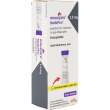

If you're considering vaginal oestrogen or wondering which product suits you best, this guide compares all the options available to you in the UK.
Key Facts
Vaginal oestrogen products deliver oestrogen directly to the vaginal tissues. It has minimal systemic absorption (in the bloodstream) and instead works locally within the body. These are available as tablets, pessaries, creams, gels and vaginal rings.
Between 45 and 77% of post-menopausal women experience genitourinary syndrome (dryness, irritation, painful sex, urinary urgency) of menopause; however, only approximately 35 per 1,000 women use vaginal oestrogen.
Vaginal oestrogen has a predictable safety profile and it doesn't have the same risks as hormone replacement therapy (HRT) because it works locally in the vaginal tissue.
Unlike traditional HRT, vaginal oestrogen hasn't been associated with increased risk of breast cancer, blood clots or stroke. No progestogen is required.
You'll likely begin to notice some improvements within 2 to 4 weeks, but to get all the benefits, you might need to use it for up to 3 months of consistent use.
Table of Contents
What are the different types of vaginal oestrogen products?
Is vaginal oestrogen safe (especially for breast cancer survivors)?
How long does vaginal oestrogen take to work?
Vaginal oestrogen products: comparison table
Can you use vaginal oestrogen and systemic HRT together?
Should you try non-hormonal options first?
What are the side effects of vaginal oestrogen?
Frequently asked questions
What Are the Different Types of Vaginal Oestrogen Products?
Oestrogen products for vaginal use deliver synthetic oestrogen (not made in the body) directly to the vaginal tissues, with very little being absorbed into the bloodstream. These are available as tablets, pessaries, creams, gels and vaginal rings.
Between 45 and 77% of post-menopausal women experience genitourinary syndrome of menopause (GSM); however, only approximately 35 per 1,000 women use vaginal oestrogen. This difference is frequently due to a lack of clarity about which formulation to choose and its safety.
The below options are currently available in the UK:
Vaginal tablets: Vagifem, Vagirux and Gina all contain 10 micrograms of Estradiol. They are small for comfortable insertion with an applicator and are used daily for two weeks, then twice a week. Gina is the only vaginal oestrogen tablet available to buy over the counter.
Pessaries: Imvaggis contains 0.03 mg (30 micrograms) of Oestriol in each one and is inserted directly into the vagina. This is a single-insertion type and a prescription is necessary.
Creams: Estriol cream and Ovesse allow flexible dosing, being applied with a measured applicator. The ease of adjusting the quantity of cream is a benefit for some women.
Gels: Blissel contains 50 micrograms of Estriol per gram and is rapidly absorbed. A prescription is needed.
Vaginal rings: Estring releases 7.5 micrograms of Estradiol over a 24-hour period. After a single insertion, it is changed every three months. For those who do not want to use a product every day, this is the most convenient choice.
Importantly, all of these treatments act locally on the area being targeted. They restore oestrogen to the vaginal tissues, but do not increase blood oestrogen levels to the extent that systemic hormone replacement therapy (HRT) does in the form of patches, oral tablets or gels.
Is vaginal oestrogen safe (especially for breast cancer survivors)?
Vaginal oestrogen has a predictable safety profile and it doesn’t have the same risks as hormone replacement therapy (HRT) because it works only in the vagina, and very little of it reaches the bloodstream.
Here are the key safety points:
Minimal systemic absorption: When you take vaginal oestrogen as advised, oestrogen levels in your bloodstream tend to remain within the normal range for post-menopausal women (1).
No increased risk of breast cancer, blood clots or stroke: Unlike traditional HRT, vaginal oestrogen hasn't been associated with these risks in clinical studies.
No progestogen required: Standard doses of vaginal oestrogen don't stimulate the lining of the womb, so you don't have to use progesterone to protect it.
Breast cancer survivors: If you’ve had breast cancer, this is understandably something both you and your doctor will be careful about. What we know now, including looking at many studies together, is that using vaginal oestrogen as recommended doesn’t seem to make the cancer come back. However, the official product information for most vaginal oestrogen medications does say that if you’ve had known, past, or suspected breast cancer, you should not use them. The 2025 AUA/SUFU/AUGS guidelines state that vaginal oestrogen can be an option for women who have had hormone-sensitive cancer in the past, but you should discuss it with a cancer specialist and make a decision together.
If you’ve been advised to stay away from HRT after being treated for breast cancer, you should know that vaginal oestrogen is not in the same category of medications. Given that it’s mostly absorbed in the vagina, and more recent studies are yielding encouraging results, the outlook is more positive. Still, it's essential to have your cancer specialist assess your individual risks.
How long does vaginal oestrogen take to work?
You’ll likely begin to notice some improvements within 2 to 4 weeks, but to get all the benefits, you might need to use it for up to 3 months of consistent use.
Usually, the first things to get better are dryness and discomfort. It takes longer for the vaginal tissues to get their elasticity and moisture back, and some women don't feel the full effect until 8 to 12 weeks of treatment.
Two important points about vaginal oestrogen to keep in mind: it works best if you use it at the same time and day each week, and not using it consistently will slow down your progress. Also, it’s something to use for the long haul, not just for a short time. When you stop, the symptoms may come back, and because of this, most women plan on continuing using it indefinitely.
If you’ve been using a particular product for 8 weeks and aren’t seeing any positive changes, it may be a good idea to talk to your pharmacist about your options. It may help to switch to a different treatment format (e.g. from a pill to a cream or a ring) or change the dose you take.
Vaginal Oestrogen Products: Comparison Table
This table compares the main vaginal oestrogen products available in the UK.
Product | Ingredient | Format | Frequency | Prescription? | Notes |
|---|---|---|---|---|---|
Vagifem | Estradiol 10 mcg | Vaginal tablet | Daily for 2 weeks, then 2x weekly | POM | Established product; widely prescribed |
Vagirux | Estradiol 10 mcg | Vaginal tablet | Daily for 2 weeks, then 2x weekly | POM | Generic alternative to Vagifem |
Gina | Estradiol 10 mcg | Vaginal tablet | Daily for 2 weeks, then 2x weekly | OTC | Only OTC vaginal oestrogen in the UK |
Imvaggis | Estriol 0.03 mg | Pessary | Daily for 2–3 weeks, then 2x weekly | POM | Single-insertion design |
Estriol cream | Estriol | Cream | Daily for 2–3 weeks, then 2x weekly | POM | Flexible dosing; measurable applicator |
Ovesse | Estriol 1 mg/g | Cream | Daily for 3 weeks, then 2x weekly | P- Med (pharmacy only) | Pre-filled applicators |
Blissel | Estriol 50 mcg/g | Gel | Daily for 3 weeks, then 2x weekly | POM | Fast absorption; discreet |
Estring | Estradiol 7.5 mcg/24h | Ring | Continuous; replace every 3 months | POM | Most convenient; no daily application |
Key: POM = prescription-only medicine. OTC = over the counter. mcg = micrograms.
Can you use vaginal oestrogen and systemic HRT together?
Yes, it’s true that vaginal oestrogen and systemic (absorbed by the whole body) hormone replacement therapy (HRT) can be used at the same time.
Systemic HRT (which comes as patches, oral pills) increases oestrogen levels throughout your body. This helps with hot flushes, night sweats, mood swings and other symptoms of menopause that affect you generally. However, some women find that even with systemic HRT, they still have a dry, sore or painful vagina during sex. That's when using vaginal oestrogen may be considered a good option as a body gel.
Doctors frequently prescribe both together and are very familiar with it. As vaginal oestrogen is used directly in the vagina and at the typical doses does not significantly change your oestrogen levels throughout your body, it doesn't increase the risks that are connected with systemic HRT.
If you are already on systemic HRT but are still having vaginal symptoms, you should talk to the prescriber about possibly adding a vaginal product.
Should You Try Non-Hormonal Options First?
For women with mild-to-moderate vaginal dryness, the 2025 AUA/SUFU/AUGS guidelines (three leading medical associations) recommend that you try non-hormonal options first. This isn’t to say that oestrogen for the vagina is unsafe, just that products without hormones are a good starting point.
Non-hormonal can provide fast, short-term relief during sex, lessening friction, but they don’t change anything in the vaginal tissue itself. Vaginal moisturisers (that you apply regularly, not only during sex) help maintain moisture between applications lubricants.
If neither lubricants nor moisturisers are doing the trick, using vaginal oestrogen may be the next thing to try. It actually rebuilds the tissue from the inside, instead of just making the symptoms better on the surface. For women with moderate-to-severe symptoms of GSM (genitourinary syndrome of menopause), oestrogen in the vagina is commonly a better first choice from the start.
The guideline recommendations for starting with non-hormonal treatments are because they’re a simpler starting point, not because vaginal oestrogen is something you resort to if nothing else works. If you aren’t sure what will be best for you, a pharmacist can offer advice about what to do depending on how bad your symptoms are.
What are the side effects of vaginal oestrogen?
Typically, side effects are uncommon and usually mild in severity. They usually go away in the first 1 or 2 weeks of use. The most commonly reported side effects include headache, mild stomach discomfort, vaginal bleeding or spotting (which can last up to 3 to 6 months as the tissue responds to oestrogen), and localised irritation or itching at the application site (1).
Severe side effects are rare. If you have an allergic reaction (look out for swelling, difficulty breathing or a rash), you need to seek medical attention immediately.
To make side effects less likely to occur, use the medicine at bedtime (this cuts down on leakage and irritation), only use as much as the directions say, and allow your body 2 or 3 weeks to get used to it before you decide it’s not for you.
Frequently asked questions
Do you need a prescription for vaginal oestrogen?
You almost always need a prescription to get vaginal oestrogen products in the UK. Gina vaginal tablets (Estradiol 10 microgram tablets) are the only exception; women who are 50 or older and haven’t had their period for at least 12 months can get these at a pharmacy over the counter.
Is vaginal oestrogen suitable if I've had breast cancer?
Newer research suggests that vaginal oestrogen is unlikely to make breast cancer come back or increase the chances of dying from it. However, the official product information for most vaginal oestrogen medicines says to not use them if you’ve been diagnosed with breast cancer, have had it in the past, or if you have suspected cancer currently. The 2025 guidelines from AUA/SUFU/AUGS state that it can be an option when someone has a history of breast cancer, but it’s absolutely necessary to discuss starting treatment with your cancer specialist or GP and make the decision together.
How often do you need to use vaginal oestrogen?
It depends on the product. Vaginal tablets, creams, gels and pessaries are usually used daily for the first 2 to 3 weeks, then twice weekly for maintenance. The Estring vaginal ring is inserted once and replaced every 3 months.
Can vaginal oestrogen be used with antibiotics?
Vaginal oestrogens can interact with some antibiotics by either reducing osestrogen effectiveness (rifampicin) or raising oestrogen levels. It’s worth discussing with your prescriber or GP when using oestrogen and taking antibiotics at the same time. Also, vaginal oestrogen is not a contraceptive, so it doesn't affect how well your antibiotics work with your birth control.
How long can you safely use vaginal oestrogen?
There's no set time limit. In fact, lots of women continue using it indefinitely, because the symptoms come back if they stop. Using the recommended dose for a long time doesn’t seem to raise your chances of having other health issues.
Will vaginal oestrogen improve painful intercourse?
Yes. Vaginal oestrogen restores tissue elasticity, thickness and moisture, which are the main factors behind painful intercourse after menopause. Most women notice an improvement within 2 to 4 weeks, with the full benefit by 3 months.
What's the difference between vaginal oestrogen and a lubricant?
Lubricants provide temporary relief during intercourse by reducing friction, whereas vaginal oestrogen treats the underlying cause by restoring the vaginal tissue itself. Lubricants just help with the discomfort; vaginal oestrogen actually reverses the changes in the vaginal tissue causing the discomfort.
Can you use vaginal oestrogen during menstruation?
Nothing says you shouldn’t use vaginal oestrogen during your menstrual cycle, so just keep using it as directed during your period and at all other times.
What if vaginal oestrogen isn't working?
It is advised to give it at least 8 to 12 weeks of consistent use before deciding it isn't helping. Talk to your pharmacist or GP about possibly changing to a different type of product or changing how much you use. For example, some women find cream works for them when tablets don’t, and vice versa.
If you have questions about which vaginal oestrogen product may be appropriate for you, speak to your pharmacist or GP. They can help you choose based on your symptoms, preferences and medical history.
References
Santen RJ, Mirkin S, Bernick B, Constantine GD. Systemic estradiol levels with low-dose vaginal estrogens. Menopause. 2020 Mar;27(3):361–370. doi:10.1097/GME.0000000000001463.
Kaufman MR, Ackerman LA, Amin KA, Coffey M, Faubion SS, Hardart A, et al. Genitourinary Syndrome of Menopause: AUA/SUFU/AUGS Guideline (2025) [Internet]. Linthicum (MD): American Urological Association; 2025 [cited 2026 May 22]. Available from: https://www.auanet.org/guidelines-and-quality/guidelines/genitourinary-syndrome-of-menopause
NHS. Vaginal oestrogen [Internet]. London: National Health Service; 2023 Jul 21 [updated 2026 Mar 19; cited 2026 May 22]. Available from: https://www.nhs.uk/medicines/hormone-replacement-therapy-hrt/vaginal-oestrogen/