


Alzheimer’s disease is something many of us worry about, whether for ourselves or someone we care about. So when headlines appeared suggesting that a medicine used for diabetes and weight loss was being tested as a potential Alzheimer’s treatment, it understandably caught people’s attention.
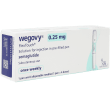
The drug in question is oral semaglutide, a tablet form of the GLP-1 medicine more widely known by brand names like Wegovy and Ozempic. Two clinical studies, EVOKE and EVOKE+, set out to test whether this medicine could make a difference in early-stage Alzheimer’s. And the results are now in.
This article walks you through what the trials looked at, what the results showed, and what all of this means (and doesn’t mean) for families, carers, and anyone following Alzheimer’s research.
What are the EVOKE and EVOKE+ trials?
EVOKE and EVOKE+ are two large, long-term clinical trials involving 3,808 people with early-stage Alzheimer’s disease (1). Running over three years, they were the largest and longest studies to test a GLP-1 drug for a neurodegenerative disease.
The researchers at Novo Nordisk, the pharmaceutical company in charge of EVOKE and EVOKE+, set out to answer one key question:
Could oral semaglutide slow the rate of cognitive decline in early Alzheimer’s?
Why test a diabetes and weight loss drug in Alzheimer’s?
It might seem surprising that a medicine commonly used for diabetes or weight management is being explored for brain health. But scientists had a few reasons to investigate it:
- GLP-1 receptors that drugs like semaglutide bind to are not only found in the gut. They’re also found throughout the brain (2).
- Several studies found that GLP-1 medicines help improve learning and memory and protect nerve cells in mouse models of Alzheimer’s disease (2–3).
- People taking oral semaglutide for diabetes have a lower incidence rate of Alzheimer’s compared to people on other treatment options (4).
Together, these ideas sparked scientists to question whether GLP-1s could help reduce inflammation in the brain or support nerve cell survival in people with mild Alzheimer’s.
The link was still unproven, but given the huge need for new Alzheimer’s therapies (and the fact that semaglutide is already licensed, well-studied and widely used), it was considered a sensible, relatively safe avenue to explore. Novo Nordisk themselves put it clearly (5):
“Based on the significant unmet need in Alzheimer’s disease as well as a number of indicative data points, we felt we had a responsibility to explore semaglutide’s potential, despite a low likelihood of success.” – Martin Hols Lang, Chief Scientific Officer at Novo Nordisk.
What did the EVOKE trials find?
Unfortunately, results from both EVOKE and EVOKE+ are not what the researchers hoped for (5):
1. Oral semaglutide did not slow cognitive decline
Researchers measured this using a tool called the Clinical Dementia Rating Sum of Boxes (CDR-SB), a widely used scale that looks at memory, problem-solving, and functioning. Throughout the study, the scores of participants taking semaglutide showed the same rate of decline as those taking a placebo.
2. Some Alzheimer’s biomarkers improved, but not enough
Both trials reported small improvements in some biological markers of Alzheimer’s – for example, amyloid and tau measures in cerebrospinal fluid. These are proteins linked to the disease process. However, these changes didn’t translate to real-world improvements in symptoms, which is the outcome that matters the most.
Why do these results still matter?
Understandably, the trial results can feel like a let-down, especially for families hoping for new treatment options for Alzheimer’s. But these results are still valuable.
Even when a trial result is negative, it can move research forward:
- It narrows down which approaches don’t work. The results from both studies were clear that semaglutide doesn’t slow early Alzheimer’s. This clarity saves years of further research in the wrong direction.
- It provides an enormous amount of biological data. The EVOKE trials generated years of information about symptoms, progression and biomarkers in early Alzheimer’s.
- It reinforces that symptoms appear late in the disease: By the time symptoms appear, the disease may already be very advanced inside the brain.
- It deepens understanding of brain metabolism: Alzheimer’s has a complex pathobiology involving multiple systems.
- It represents forward momentum: Research is expanding beyond amyloid and tau toward metabolism and inflammation.
What the results don’t mean
It’s important to keep expectations grounded.
- Semaglutide is not a treatment for Alzheimer’s, and based on the results from the EVOKE trials, it’s unlikely to become one.
- These results don’t mean all GLP-1 drugs are ineffective for brain health. They simply tell us that oral semaglutide, on its own, in early Alzheimer’s didn’t make a difference to symptoms.
- This result doesn’t signal a dead end for research. Progress is happening across many different biological pathways.
A valuable step, despite the outcome
The EVOKE and EVOKE+ trials didn’t deliver the breakthrough many were hoping for. But in Alzheimer’s research, every well-run study adds another piece to the puzzle.
If you or someone you love is living with early Alzheimer’s, your clinician remains the best source of personalised advice. Keep asking questions, stay connected to trusted sources, and remember that research is moving forward all the time, even when individual studies don’t go the way we hope.
For further support and information, you can visit the Alzheimer’s Society, Alzheimer’s Research UK, or speak with your healthcare team.
References
- Cummings JL, Atri A, Feldman HH, Hansson O, Sano M, Knop FK, et al. evoke and evoke+: design of two large-scale, double-blind, placebo-controlled, phase 3 studies evaluating efficacy, safety, and tolerability of semaglutide in early-stage symptomatic Alzheimer’s disease. Alzheimer’s Research & Therapy [Internet]. 2025 Aug;17(1):14.
- Hölscher C. Protective properties of GLP‐1 and associated peptide hormones in neurodegenerative disorders. British Journal of Pharmacology. 2021 May 29;179(4):695–714.
- Kong F, Wu T, Dai J, Zhai Z, Cai J, Zhu Z, et al. Glucagon-like peptide 1 (GLP-1) receptor agonists in experimental Alzheimer’s disease models. Frontiers in Pharmacology [Internet]. 2023 Sep 13;14.
- Wang W, Wang Q, Qi X, Gurney M, Perry G, Volkow ND, et al. Associations of semaglutide with first‐time diagnosis of Alzheimer’s disease. Alzheimer’s & Dementia. 2024 Oct 24;20(12).
- Novo Nordisk. Evoke phase 3 trials did not demonstrate a statistically significant reduction in Alzheimer's disease progression [Internet]. 2025.