

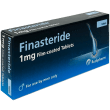
When you are experiencing hair loss, finding an effective treatment becomes a priority. It is estimated that male pattern baldness, also known as androgenetic alopecia, affects around half of all men by the age of 50, rising to around 80% by age 70 (1). But while it may be common, there is no reason why you should live with hair loss if it is affecting your confidence and self-esteem. You may have heard of topical Finasteride for hair loss, but does it work?
What is topical Finasteride and which one is right for me?
Topical treatments are those that are applied onto your skin, rather than taken via another route (such as orally or injected). Topical Finasteride comes in a range of formulations including sprays, gels and lotions and foams. It is also sometimes combined with another treatment, such as topical Minoxidil, into a single product.
This variation in formula means that it is often simple to find a type of topical Finasteride to suit you. For example:
Foam Finasteride (often combined with Minoxidil) is easy to apply liberally and dries quickly, leaving less greasy residue and is easy to style over. It is also propylene-glycol free and is shown to significantly lower rates of itching, contact dermatitis and flaking, which may make it a better option for people with sensitive scalps (2).
Liquid Finasteride is supplied using a dropper or pipette, which helps you to target specific areas and apply with greater precision. Studies show that it's ingredients of ethanol/propylene glycol helps drive Finasteride into the follicles and scalp (3).
Gel/cream Finasteride tends to be a better option for people who want a solution that they can leave on overnight. However, since it can make hair appear greasy, you may not like to be seen with it on, and hair washing after treatment may feel like a priority.
If you are looking to use topical Finasteride, your prescribing clinician will be able to help you to choose a formulation to suit your needs.
How does topical Finasteride work?
Topical Finasteride is a liquid, foam or spray that you apply directly to your scalp, where it reaches your hair follicles. It works by blocking a hormone called DHT, which helps to slow down hair loss and enables hairs to grow thicker and stay on your scalp for longer (4).
How to use topical Finasteride
Please note that the following is general guidance on how to use topical Finasteride. However, you should always follow the specific instructions provided by your prescribing clinician. Remember, because there is currently no licensed topical Finasteride product, your best source of information for anything related to your treatment, including how to use the medication, is your prescriber.
Topical Finasteride is usually applied once per day onto a clean, dry scalp. We recommend using it at the same time every day where possible, as this will help you to get into a routine and reduce your chance of forgetting application or administration.
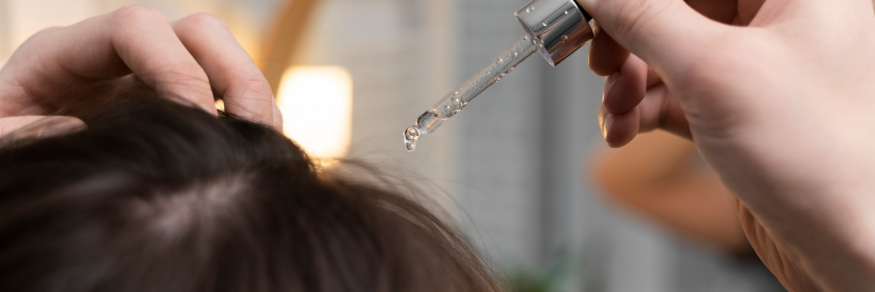
If you are using liquid, draw up the prescribed amount into your pipette/dropper, part your hair and place small drops along the thinning areas. Use your fingertip to massage the liquid into your scalp (5).
If you are using a foam/spray, hold the bottle around 3 inches from your head and spray the recommended amount in the thinning areas. Be sure to part your hair first, then massage the Finasteride solution into your scalp using clean hands after (6).
Once you have applied the Finasteride, allow it to air-dry on your scalp completely before styling your hair/putting on a hat/going to bed. Be sure to wash your hands after application, to avoid transferring any Finasteride to other areas of your body.
Topical Finasteride results
There are multiple studies that support the effectiveness of topical Finasteride for treating mild to moderate hair loss. The best single study is a phase III, randomised controlled trial by Piraccini et al, (2022) comparing 0.25% topical Finasteride spray, oral Finasteride 1mg and a placebo in men with male pattern hair loss. This study showed that topical finasteride significantly increased hair count compared with placebo (users gained an average of 20.2 hairs over 24 weeks, compared with 6.7 hairs in the placebo group). It was also as effective as oral finasteride over 24 weeks, with both treatments producing a numerically similar increase in hair count, and with the advantage of lower systemic (whole body) exposure (7).
Topical Finasteride side effects
All medications can cause side effects, and topical Finasteride is no exception. Clinical studies show that around 97% of side effects associated with topical Finasteride use are mild to moderate (8) and mostly local reactions such as scalp irritation, itching and dryness or redness where it is applied (8).
The MHRA has released updated warnings around Finasteride and its potential side effects (11). The side effect warnings are consistent with those reported for oral Finasteride, and included erectile dysfunction, anxiety, brain fog, depression, fatigue, insomnia and low sex drive (11).
They also included suicidal ideation and there has since been advice published by the European Medicines Agency that recommends that if you have a history of low mood, anxiety or other mental health disorders, Finasteride may not be a suitable treatment for you (9).
If you notice any mood changes while taking Finasteride, stop treatment immediately and seek the advice of your prescriber. If you experience suicidal thoughts, seek emergency mental health support or call 999.
You should stop taking Finasteride and seek immediate medical attention if you experience the symptoms of an allergic reaction. These include:
Swelling of your face, lips, throat or tongue
Difficulty breathing or swallowing
Lumps under your skin or a rash
Who should not use topical Finasteride?
You should not use topical Finasteride if:
You have a known allergy to any of the ingredients
You have an irritated, broken or inflamed scalp – this should be treated first before Finasteride treatment begins
You are already taking Finasteride or Dutasteride
Although we are talking about topical Finasteride to treat male pattern baldness, it is also important to state that it also should not be used by anyone who is pregnant, planning to become pregnant, or breastfeeding (7).
You should also speak to your prescribing clinician before using topical Finasteride if you:
Have a history of depression, anxiety, other mood disorder or suicidal thoughts
Are experiencing erectile dysfunction
Have liver disease
Have a history of breast or prostate cancer
Always provide your clinician with complete details about your medical history, and any current conditions, medications or impending referrals at your consultation.
Topical vs oral Finasteride
Unsure whether topical or oral Finasteride is best for you? Our handy blog offers a direct comparison.
Combining topical Finasteride treatment with Minoxidil or other hair loss products
Topical finasteride and oral Minoxidil are sometimes used together to treat male pattern hair loss, and this is because they work in different ways. While Finasteride works by reducing the effect of DHT on your hair to slow hair loss, Minoxidil works by encouraging thicker hair growth (10). It is also available in both oral and topical minoxidil formulas.
Using both treatments together may improve hair density and give better results than either one alone, although the benefit varies from person to person and combination treatment is not guaranteed to work. Results take time and treatment usually needs to continue to maintain regrowth. Ask a healthcare professional whether the combination is suitable for you, as both medicines can cause side effects and Finasteride is not suitable for some people.
Supportive haircare products like Alpecin C1 Shampoo or Sons DHT Blocking Shampoo and Sons Conditioner may also improve the appearance of hair alongside medical treatment.
If you are experiencing hair loss, do not panic, there are treatments that can help.
Visit our Hair Loss Hub for more advice or start a consultation to see what is suitable for you.
References
British Association of Dermatologists. Male pattern hair loss (androgenetic alopecia) [Internet]. British Association of Dermatologists. 2016. Available from: https://cdn.bad.org.uk/uploads/2021/11/29200304/Male-pattern-hair-loss-Update-March-2016-lay-reviewed-March-20166.pdf
Rossi A, Caro G. Efficacy of the association of topical minoxidil and topical finasteride compared to their use in monotherapy in men with androgenetic alopecia: A prospective, randomized, controlled, assessor blinded, 3‐arm, pilot trial. Journal of Cosmetic Dermatology. 2023 Oct 5;23(2):502–9. [Cited 2026 Aug 12]. Available from: https://pubmed.ncbi.nlm.nih.gov/37798906/
Farah HA, Brown MB, McAuley WJ. Enhanced Follicular Delivery of Finasteride to Human Scalp Skin Using Heat and Chemical Penetration Enhancers. Pharmaceutical Research. 2020 May 31;37(6). [Cited 2026 Aug 12]. Available from: https://pmc.ncbi.nlm.nih.gov/articles/PMC7340673/
Gupta AK, Talukder M. Topical finasteride for male and female pattern hair loss: Is it a safe and effective alternative? Journal of Cosmetic Dermatology. 2022 Mar 14;21(5):1841–8. [Cited 2026 Aug 12]. Available from: https://pubmed.ncbi.nlm.nih.gov/35238144/
Lubis FF, Legiawati L, Saulina M, Saldi SRF. Randomized controlled trial on the efficacy and safety of the combination therapy of topical 0.1% finasteride - 5% Minoxidil in male androgenetic alopecia. Archives of dermatological research [Internet]. 2025 Oct [cited 2026 Aug 16];317(1):691. Available from: https://pubmed.ncbi.nlm.nih.gov/40208341/.
Piraccini BM, Blume‐Peytavi U, Scarci F, Jansat JM, Falqués M, Otero R, et al. Efficacy and safety of topical finasteride spray solution for male androgenetic alopecia: a phase III, randomized, controlled clinical trial. Journal of the European Academy of Dermatology and Venereology. 2021 Oct 25;36(2):286–94. [Cited 2026 Aug 12]. Available from: https://pmc.ncbi.nlm.nih.gov/articles/PMC9297965/
Estill MC, Ford A, Omeira R, Rodman M. Finasteride and Dutasteride for the Treatment of Male Androgenetic Alopecia: A Review of Efficacy and Reproductive Adverse Effects. Georgetown Medical Review [Internet]. 2023 Oct 27 [Cited 2026 Aug 14];7(1). Available from: https://gmr.scholasticahq.com/article/88531-finasteride-and-dutasteride-for-the-treatment-of-male-androgenetic-alopecia-a-review-of-efficacy-and-reproductive-adverse-effects
FDA alerts health care providers, compounders and consumers [Internet]. U.S. Food and Drug Administration. 2025 [Cited 2026 Aug 14]. Available from: https://www.fda.gov/drugs/human-drug-compounding/fda-alerts-health-care-providers-compounders-and-consumers-potential-risks-associated-compounded
Measures to minimise risk of suicidal thoughts with finasteride and dutasteride medicines | European Medicines Agency (EMA) [Internet]. European Medicines Agency (EMA). 2025 May [Cited 2026 Aug 14]. Available from: https://www.ema.europa.eu/en/news/measures-minimise-risk-suicidal-thoughts-finasteride-dutasteride-medicines
Messenger AG, Rundegren J. Minoxidil: mechanisms of action on hair growth. British Journal of Dermatology. 2004 Feb;150(2):186–94. [Cited 2026 Aug 14]. Available from: https://pubmed.ncbi.nlm.nih.gov/14996087/
MHRA. Finasteride and dutasteride: updated safety warnings for psychiatric side effects and sexual dysfunction [Internet]. GOV.UK. Available from: https://www.gov.uk/drug-safety-update/finasteride-and-dutasteride-updated-safety-warnings-for-psychiatric-side-effects-and-sexual-dysfunction