

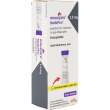

Experiencing pattern hair loss can be a deeply personal and distressing journey for many. You may have wondered: what is the difference between Regaine vs Rogaine? These two popular hair loss treatments for men and women are actually the same product. The only difference is the name.
Regaine is sold in the UK, and Rogaine is sold in the USA. But both contain the ingredient Minoxidil to help treat hair loss and regrow hair. When you rub it into your scalp, the liquid or foam makes the tiny blood vessels around each hair root larger. This increases blood flow, bringing more oxygen and nutrients to help the hair roots.
Over time, consistently using either Rogaine or Regaine products helps jump start shrinking follicles back into action. New hairs begin growing fuller and healthier, replacing what has been lost. Regrowth typically becomes visible within a few months.
Both brands offer a regular strength (2%) formula and an extra strength (5%) version. The extra strength is for more severe hair thinning or bald spots.
The only real difference amounts to regional availability under these brand names. So buyers in America grab Rogaine, while UK buyers pick up Regaine. But hair improvement awaits with either!
So, let’s have a look at Regaine vs Rogaine in more depth.
Key takeaways:
- Regaine and Rogaine are just two different brand names for the same hair loss treatment products containing the active ingredient Minoxidil
- They come in liquid solutions and foam sprays that are applied directly to balding or thinning areas of the scalp to stimulate regrowth
- Both branded products have proven benefits for improving hair coverage when used correctly and consistently over at least 2-4 months
Regaine vs Rogaine at a glance
| Feature | Regaine | Rogaine | Notes |
| Active Ingredient | Minoxidil | Minoxidil | Both contain the same active ingredient for treating hair loss. |
| Availability | UK | USA | Named differently based on the region of sale. |
| Formulations | Liquid solution or foam | Liquid solution or foam | Both offer a 2% regular strength and a 5% extra strength formula. |
| Application | Directly on the scalp | Directly on the scalp | Applied twice daily with a dropper for liquid or cap for foam. |
| Visible Regrowth | Within 2-4 months | Within 2-4 months | Consistent use is required to see results. |
| Side Effects | Minimal (itchiness, redness) | Minimal (itchiness, redness) | Rare cases of unwanted hair growth or systemic reactions. |
| Suitability | Not for pregnant/breastfeeding women | Not for pregnant/breastfeeding women | Consult a healthcare provider if there are cardiovascular issues or scalp wounds. |
What is Regaine?
Regaine is the version of Rogaine sold in the United Kingdom. It contains the active ingredient Minoxidil, just like Rogaine does. Regaine comes in two formulations - a liquid solution or a foam.
The liquid solution comes in a bottle with a dropper. You apply it drop-by-drop directly onto your scalp - not onto the hair itself. The foam also contains Minoxidil, just like the liquid, but it is applied by spraying onto the scalp twice a day.
Unlike some hair growth tablets or supplements, Regaine only comes as a topical solution or foam. The goal is to apply Minoxidil right onto the area of the scalp where hair growth is needed. By widening blood vessels under the skin, it allows better blood flow to hair follicles in that area to stimulate regrowth.
Both the liquid and foam Regaine are available in different strength options - a 2% Minoxidil formula for early hair loss or a 5% extra strength formula for more advanced hair loss. Your doctor can help decide which formula may be most suitable.
What is Rogaine?
Rogaine is the number one over-the-counter hair regrowth brand sold in the United States. The key ingredient it contains is Minoxidil, which is known for stimulating hair follicles to grow new, thicker strands of hair.
Rogaine was the first company to market topical Minoxidil solutions directly to consumers for treating hair loss and thinning hair. It has been clinically tested and FDA-approved to safely and effectively treat pattern baldness when used as directed.
A study involving 393 men suggests that using Rogaine products consistently helps people regrow hair.
The key with Rogaine is ensuring the Minoxidil solution reaches the scalp. It widens blood vessels around hair follicles below the skin so that more oxygen, blood and nutrients reach the roots. This revives dormant follicles to trigger new growth.
Comparing Regaine and Rogaine
When looking closely, Rogaine and Regaine contain the same key ingredient - Minoxidil. This ingredient makes blood vessels bigger, improving blood flow and oxygen to the hair roots, which helps hair start growing again. So, they essentially provide the same effective treatment for hair loss.
Regaine and Rogaine are named differently just for marketing in different regions. Rogaine is the name used in North America, while Regaine is used in the UK.
Both brand names offer men’s and women’s formulas containing 2% or 5% concentrations of Minoxidil as the active pharmaceutical component. The only difference is purchasing location rather than product formulation or results.
In fact, both products have undergone extensive clinical testing with excellent data on the ability to slow and even reverse hereditary hair loss for many people.
In summary, it has the same active ingredient and treatment effectiveness, just different branding and retail availability between the USA for Rogaine and the UK for Regaine.
Do Regaine and Rogaine really work?
There is a lot of research showing that Regaine and Rogaine Minoxidil solutions really work for treating hereditary hair loss and baldness. Some key benefits confirmed by the research:
- Multiple large clinical trials show that Minoxidil regrows hair for men and women alike.
- Research suggests that Minoxidil works best in the early stages of hair loss.
- Continued use for 1 year allows for better hair growth. In a 1-year observational study with 904 men, 62% of them saw the affected area become smaller.
Both Regaine and Rogaine have proven effective based on clinical evidence. But how long does it take Minoxidil to work? Individuals can expect similar success in practice with either product when used correctly and consistently over 2-4 months to see results.
Side effects and safety considerations
When used properly as directed, both Rogaine and Regaine generally have a low risk of concerning side effects or adverse reactions. However, some people may experience:
- Scalp itchiness was seen in 13.8% of people.
- Unwanted facial or body hair growth
- Headaches, dizziness, fluid retention - These tend to be very rare negative effects. In a 2023 study with 400 patients, 5% of them reported experiencing headaches. It likely signals sensitivity or mild allergic reactions. Stop use if they occur.
Be sure to carefully follow all usage guidelines and inform healthcare providers of any bothersome reactions.
Pregnant or breastfeeding women should avoid using these products just to be safe. As always, consult treating physicians or dermatologists managing your hair loss treatment for personalised guidance on potential side effects and what to watch for when using these products.
Alternatives to Regaine and Rogaine
While Regaine and Rogaine Minoxidil solutions are proven and popular hair regrowth treatments, other options to consider for managing baldness and thinning hair include:
- Oral Medications - Pills prescribed by doctors, like Finasteride, can stop hormones that cause hair to thin. This helps stabilise hair loss if used long-term. They are good to add with Minoxidil treatments.
- Laser Devices - Wearable laser caps and headbands use light energy that can stimulate follicles, promoting thicker, healthier hair.
- Hair Transplants - A proven surgical hair restoration approach if hair loss has stabilised. Transplants take hair from fuller areas of the scalp and redistribute it to balding zones. Recovery takes about 2 weeks before seeing how grafted hair integrates and continues growing. It’s an expensive option that is only necessary if very extensive baldness remains unresponsive to other treatments.
Discuss all hair growth solutions with your treating hair restoration physician to determine what alternatives or combination treatment plans make the most sense in your unique situation.
Take the next step with Oxford Online Pharmacy
At the Oxford Online Pharmacy, we understand how stressful it can be to deal with hair loss - and we’re here to help. Explore our over-the-counter solutions like Regaine or prescription-strength hair loss treatments like Finasteride. While we can’t help you prevent hair loss, our range of products can help you slow it down after it has occurred.
So, how can you get started?
First, you need to complete an online consultation and choose a preferred treatment. Your answers will help our licensed healthcare professionals understand your degree of hair loss and determine if your preferred treatment is appropriate. If it is, you’ll get a prescription. But if you need a different treatment or we need more information, we’ll get in touch through our confidential message centre.
Contact us today to explore hair loss treatments like Regaine and start the journey toward healthy, confidence-boosting hair regrowth.
FAQs
What is the downside of using Rogaine?
The most common downsides with using Rogaine for hair loss are continued expense, time commitment applying it daily, and potential mild scalp irritation, especially at first. Results also vary from person to person. But for most users, hair-thickening benefits outweigh the negatives.
Is it worth using Regaine?
Yes, Regaine is an affordable and readily accessible option containing the clinically proven hair growth ingredient Minoxidil with relatively low risk. The inconvenience of daily applications can discourage some people. However, consistency in using it leads to visible improvements in hair coverage and quality for most men and women affected by pattern baldness.
Who should not use Regaine?
Certain people should avoid using Regaine products without medical guidance. This includes women who are pregnant or breastfeeding to prevent risk to a developing baby. And anyone with open wounds or irritation on the scalp.
References:
- Preeti Patel; Trevor A. Nessel; Dinesh Kumar D. (2024). Minoxidil
- Sumel Ashique, Navjot Kaur Sandhu,Sk. Niyamul Haque, and Kartick Koley (2020). A Systemic Review on Topical Marketed Formulations, Natural Products, and Oral Supplements to Prevent Androgenic Alopecia: A Review
- Zari Shadi (2023). Compliance to Topical Minoxidil and Reasons for Discontinuation among Patients with Androgenetic Alopecia