


-
 UK-registered clinical team
 -
Confidential & secure
-
No GP visit needed
-
Fast & discreet delivery

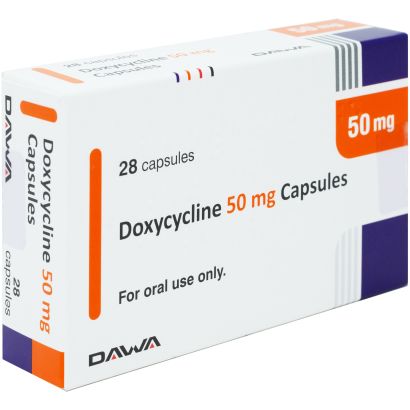
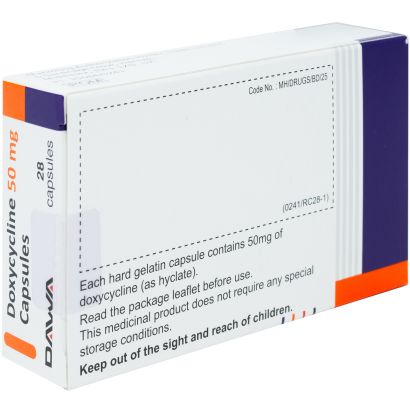
Doxycycline 50mg 28 Capsules for Acne
Doxycycline 50mg 28 Capsules for Acne Product information
£15.99
Product Information for Doxycycline 50mg 28 Capsules for Acne
Buy Doxycycline online in the UK
Doxycycline is an antibiotic that is used for treating moderate to severe inflammatory acne, or mild acne that is not improving with other treatments. It belongs to the group of antibiotics called tetracyclines. Doxycycline works by reducing and preventing the production of acne-causing bacteria on the skin. This type of bacteria is called cutibacterium acnes.
Doxycycline calms inflammation resulting in improved redness and visibility of puss-filled bumps.
It is usually recommended that you take doxycycline alongside a topical acne medication, such as Adapalene (Differin) gel for best results. It may take up to 2 weeks before you notice improvements and you may need to take Doxycycline for up to 12 weeks to address the bacteria that are causing it.
- Effective acne treatment that is used to treat moderate to severe inflammatory acne, or mild inflammatory acne that is not getting better with other treatments
- Your acne might start improving in as little as 2 weeks
- Helps with redness and inflammation
- Works by preventing the replication of bacteria that can lead to breakouts
- You will see the best results if you use a topical acne medication alongside these tablets
Doxycycline 50mg 28 Capsules for Acne reviews
How to use Doxycycline 50mg 28 Capsules for Acne
Always take your medicine exactly as your doctor has instructed. If you are unsure, you can check with one of our medical experts. You should not take more than your doctor has recommended.
The usual dose for treating Acne is one 50mg capsule to be taken daily for 6 to12 weeks, with food or at least 150ml of fluid.
If you forget to take it
Take the dose as soon as you remember to take it unless it is nearly time to take your next dose. If that is the case, leave the missed dose and take your next dose at the usual time.
Never take two doses at the same time. Never take an extra dose to make up for a forgotten one.
If you find that you struggle to remember to take your doses, it could help to set an alarm to remind you. You could also ask your pharmacist for advice on other ways to remember to take your medicines.
If you take too much
It is unlikely to harm you if you take an extra dose of doxycycline, however, contact us if you are worried or you have taken more than one extra dose.
Side effects of Doxycycline 50mg 28 Capsules for Acne
Doxycycline is not suitable for some people. To make sure it is safe for you, tell your doctor if you:
- have ever had an allergic reaction to doxycycline or any other medicine
- have an inflamed food pipe (oesophagitis)
- have myasthenia gravis, a condition that causes severe muscle weakness
- have kidney or liver problems
- are pregnant or breastfeeding
- have lupus, an autoimmune disease
Possible side effects
Like all medicines, Doxycycline can cause side effects, although not everybody gets them.
Stop taking your medicine and tell your doctor immediately or go to an accident and emergency if you notice any of the following symptoms.
Although the symptoms are very rare, they may be severe.
- A ringing or buzzing noise in the ear (tinnitus)
- Severe skin reactions such as erythema multiforme (circular, irregular red patches), Stevens-Johnson syndrome (rash with flushing, fever, blisters or ulcers), toxic epidermal necrolysis (reddening, peeling and swelling that resembles burns)
- Symptoms of an allergic reaction - sudden wheeziness, difficulty in breathing, chest pain, fever, sudden swellings of the face, lips, tongue, throat, hands or feet, rash or itching (especially affecting the whole body),
- Pericarditis (inflammation of the membrane surrounding the heart)
- Worsening of systemic lupus erythematosus (autoimmune disease)
- Fever, swollen lymph nodes or skin rash. These may be symptoms of a condition known as DRESS (Drug Reaction with Eosinophilia and Systemic Symptoms) and can be severe and life-threatening.
- If you experience any of the side effects listed below, tell your doctor as soon as possible:
- Sensitivity to sunlight - you may get a skin rash, itching, redness, or severe sunburn when out in sunlight or after using a sunbed
- Swollen tongue, severe watery or bloody diarrhoea, fever, and cramps (pseudomembranous colitis), stomach pains
- Low blood pressure
- Aches in the joints or muscles
- Unusual rapid heartbeats (palpitations)
- Fainting
- Porphyria (sensitivity of the skin to sunlight, inflammation of nerves and stomach pains)
- The Jarisch-Herxheimer reaction which causes fever, chills, headache, muscle pain and a skin rash that is usually self-limiting. This occurs shortly after starting doxycycline treatment for infections with spirochete such as Lyme disease
The side effects listed below may go away during treatment as your body adjusts to the medicine. Tell us if any of these side effects continue to bother you:
Common: may affect up to 1 in 10 people
- Feeling or being sick
- Headache
Uncommon: may affect up to 1 in 100 people
- Vaginal infection
- Heartburn
Rare: may affect up to 1 in 1,000 people
- Increased levels of urea in the blood
- Bulging fontanelles (soft spot on the head) of infants
- Increased pressure in the skull (severe headache which may be associated with visual disturbances such as blurred vision, double vision, or loss of vision)
- Anxiety
- Inflammation and/or ulcers of the gastrointestinal tract (symptoms may include sore mouth, indigestion, and difficulty swallowing)
- Loss of appetite
- Diarrhoea
- Soreness and itching of the rectal and/or genital area
- Skin reddening (flushing)
- Jaundice (yellowing of the skin or white of the eyes) has rarely been reported
- Pancreatitis (manifested by severe upper abdominal pain) has rarely been reported
- Discolouration of thyroid tissue (does not affect thyroid function)
- Changes in liver function tests
- Hepatitis (inflammation of the liver)
- Liver failure
- Loosening of the nail from the nail bed after exposure to the sun
- Blood disorders (symptoms may include tiredness, weakness, easy bruising or susceptibility to infection)
- Yeast infection around the anus or genitals
- Skin Hyperpigmentation (with chronic use of doxycycline)
Not known: frequency cannot be estimated from the available data
- Vaginitis
- Discolouration and/or lack of growth of teeth
-
The usual dosage of doxycycline for the treatment of acne is 50 mg to 100 mg per day. Do not exceed the recommended dose and follow your doctor's recommendations. Take one or two doses of doxycycline each day. Usually, doxycycline is prescribed for usage once or twice daily.
-
Doxycycline takes some time to reduce acne-causing bacteria's ability to spread. You might need to take doxycycline for up to 3 months before you start seeing results, which could take 2 weeks.
-
Some antibiotics, like doxycycline and erythromycin, help minimise inflammation and the number of P. acnes bacteria on your skin. You might notice reduced acne and sometimes clearing when that occurs.
-
Many different bacterial infections, including those that result in acne, are treated with this medication. Malaria prevention is another usage for this drug. This drug is in the group of tetracycline antibiotics.
-
In many different areas of the body, doxycycline is used to treat bacterial infections. It is also used to treat rosacea, commonly known as acne rosacea or adult acne, which causes pimples and abscesses, typically on the face.
-
After taking doxycycline for as few as 2 hours, it begins to work. However, it could take up to 24 to 48 hours (1 to 2 days) to start feeling the effects, depending on the infection you have. Although doxycycline normally takes 1 to 2 weeks to completely clear an infection, certain infections can take up to 2 months.
-
Currently, doxycycline and minocycline are the most often prescribed tetracyclines in dermatology. These medicines are primarily used to treat acne vulgaris and have a long history of success and safety.
-
When you start taking doxycycline, you can have unexpected breakouts and a worsening of your acne condition, but this is nothing to be concerned about. Simply put, when you use this medicine, your acne gets worse before it gets better. However, definitely see your dermatologist if it persists.
-
These common side effects of doxycycline happen in around 1 in 10 people. There are things you can do to help cope with them:
- Headaches
- Feeling sick (nausea)
- Being sick (vomiting)
- Skin being sensitive to sunlight
-
You can purchase doxycycline as a tablet or capsule to take orally along with a full glass of water. Doxycycline is often taken in doses of 50 mg or 100 mg once daily for the treatment of acne.
-
If you take it twice a day, this could be first thing in the morning and evening – before you go to bed. Try to avoid lying down for at least 30 minutes after taking doxycycline. This helps to prevent any irritation.
Important - Before taking any medication, it is always important to read the Patient Information Leaflet (PIL)
Doxycycline 50mg 28 Capsules for Acne - Patient Information Leaflet
- How to treat perioral dermatitis
- What is post-inflammatory hyperpigmentation?
- Understanding the different types of acne and solutions
- How An Online Consultation Can Help You
- How much should you pay for treating your skin condition?
- Acne treatments, what works and what to avoid
- Save on Your Treatment This January
- How blood affects erections: the science behind erectile dysfunction
- Why do ED medicines work for some people but not others?
- How do GLP-1 side effects compare between treatments?
Authored on November 29, 2022

Robert Bradshaw (Pharmacist) — MRPharms BSc(Hons) Pharmacy
Superintendent Pharmacist
GPhC Number: 2036118
GMC Number: 20399999
Reviewed on November 29, 2022
