


-
 UK-registered clinical team
 -
Confidential & secure
-
No GP visit needed
-
Fast & discreet delivery

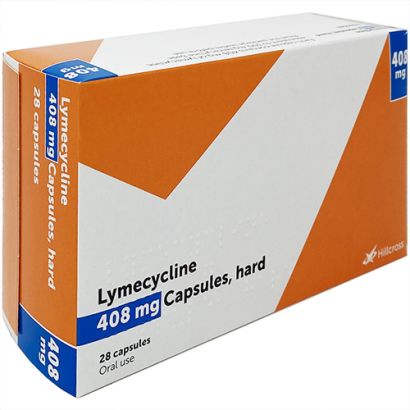
Lymecycline 408mg 28 Capsules
Lymecycline 408mg 28 Capsules Product information
£14.49 (£0.52 per capsules)
| 408mg | |
|---|---|
| 28 capsules | £14.49 |
| 56 capsules | £23.95 |
| 84 capsules | £32.98 |
Product Information for Lymecycline 408mg 28 Capsules
Buy Lymecycline Online in the UK
Lymecycline 408 mg comes in hard capsule form with a blue cap and white body. Lymecycline capsules belong to a group of medicines called tetracycline antibiotics. Each lymecycline capsule is equivalent to a 300 mg tetracycline base. Lymecycline treats acne by fighting bacteria and promoting healing.
About Lymecycline
Lymecycline is an antibiotic treatment used to help treat acne. Available from trusted based Oxford Online Pharmacy, you will receive a free online GP consultation with a UK-based Doctor.
Lymecycline acts by targeting bacteria that cause the inflammation associated with acne, this allows old lesions to heal and prevents new blemishes from forming. Lymecycline is part of the tetracycline antibiotic group and is prescribed to prevent bacteria from spreading effectively. Attacking a bacteria known as propionibacterium acnes prevents the bacteria’s ability to produce proteins essential to their survival. As a result, the bacteria also lose the ability to grow and reproduce. This allows your immune system the opportunity to fend off the existing bacteria.
- Effective treatment for acne
- Once-daily dose
- Also available as a branded product (Tetralysal)
- Lower cost than the branded product
- Works by reducing bacteria’s ability to grow
- Larger pack sizes are available
Low cost generic Tetralysal
Since Tetralysal's patent expired, cheaper generic Lymecycline 408 mg capsules (starting at 52p each) were approved for sale in the UK. The brand name is Tetralysal and Lymecycline 408mg is the active ingredient of Tetralysal. Medically speaking, capsules of Tetralysal and generic Lymecycline 408 mg are the same. You can find more information about brands vs generics here.
The manufacturer of the product supplied may vary. Please read the patient information leaflet that is provided with the product
Lymecycline 408mg 28 Capsules reviews
How to use Lymecycline 408mg 28 Capsules
How To Take Lymecycline
When using Lymecycline 408mg Capsules, you should follow the instructions given to you by your doctor. The usual dose given for acne treatment is one capsule daily, preferably taken in the morning. The capsules should always be taken with a glass of water. The length of time of your course depends on the severity of your acne and how quickly it improves. The course is normally at least 8 weeks.
If you take more capsules than required, or you believe a child has swallowed a capsule, you should contact your nearest hospital casualty department or tell your doctor immediately. If you forget to take a dose, do not double up doses. Take the dose as soon as your remember and then take the next dose at the correct time.
Lymecycline 408mg Capsules is an antibiotic medicine. This means that acne responds slowly to this kind of treatment. It is important that you finish the course given to you by the doctor and not stop earlier. If you stop too soon, your acne could come back or even get worse.
Side effects of Lymecycline 408mg 28 Capsules
Lymecycline Side Effects & Warnings
Lymecycline 408mg Capsules should not be taken:
- If you are allergic to any of the ingredients in the medicine
- If you have ever had kidney disease, are pregnant or breast-feeding
- If you are a child under the age of 12 years
You should speak to your doctor before taking Lymecycline:
- If you have liver or kidney problems
- Suffer from systemic lupus erythematosus or Myasthenia Gravis
You should avoid direct exposure to sunlight or artificial sunlight from sunbeds.
You should make sure to mention if you are taking any other medicines, including medicines obtained without a prescription.
If you take indigestion remedies, ulcer healing drugs, quinapril for high blood pressure or supplements containing calcium, aluminium, magnesium, zinc or iron, then you should not take Lymecycline at the same time. You should leave at least a two-hour gap between taking the different medicines.
Before taking Lymecycline, you should make sure your doctor is aware if you are taking oral retinoids, anticoagulants, diuretics, or oral contraceptives - Lymecycline may make contraceptives less effective - medicines for epilepsy or methoxyflurane.
If you are pregnant or breastfeeding, think you may be pregnant or are planning to have a baby, speak to your doctors before taking Lymecycline, because they must not be taken during pregnancy or breastfeeding.
As with all medicines, Lymecycline can cause some side effects, although not everybody gets them. If, whilst taking Lymecycline, you get a severe allergic reaction which causes swelling of the face, tongue and throat, or you get a serious illness with severe peeling and swelling of the skin, blistering of the skin, mouth, eyes, genitals and fever or get a skin rash with pink-red blotches, especially on the palms of hands or soles of feet, then you should stop taking Lymecycline immediately and go to your doctor or hospital.
Common side effects include:
- Nausea
- Abdominal pain
- Diarrhoea
- Headaches
Other side effects, with unknown frequencies, include:
- Disturbances of eyesight
- Dizziness
- Vomiting
- Yellowing of the skin or eyes
- Increased sensitivity of the skin to sunlight
- Increased pressure in the brain
- Changes in the number or type of certain blood cells
- Pain in the upper part of the abdomen
- Changes in some blood tests
- Fever
- Itchiness
- Skin rash or hives
- Inflammation of the intestine
The side effects which may occur during treatment with the class of medicines to which Lymecycline capsules belong are:
- Inflammation or ulceration of the gullet
- Difficulty in swallowing
- Inflammation of the pancreas
- Liver damage
- Teeth discolouration
- Inflammation or soreness of the tongue, mouth, cheeks, gums or lips
- Soreness or itching of the genital area
- Yeast infection around the anus or genitals
- Infection of the colon or permanent visual loss
If any of these side effects occur, you should speak to your doctor.
If any of these side effects get serious, or you get side effects not listed above, please speak to your doctor or pharmacist.
-
Within two hours of taking lymecycline, you should refrain from taking indigestion medications, medications for treating ulcers and dietary supplements containing calcium, aluminium, magnesium, zinc, or iron.
-
Oil glands that are blocked or irritated or an increased number of acne-causing bacteria on your skin are the two main causes of spots which is a common skin issue. There are many various kinds such of acne such as blackheads, whiteheads, cysts, and others. .
-
Acne is mostly brought on by four things:
- Overproduction of sebum (oil)
- Oil and dead skin cells clogging the hair follicles
- Bacteria
- Inflammation
-
Between the ages of 10 and 13, acne frequently begins throughout puberty. People with oily skin are more likely to experience worse acne. Acne in teenagers typically lasts five to ten years until clearing up in the early 20s. Although it affects both sexes, teenage guys typically have the most severe cases.
-
How does hormonal acne appear:
Common hormonal acne signs include whiteheads, blackheads, papules, pustules, cysts, and nodules. Whiteheads and blackheads often do not cause discomfort, irritation, or swelling, but if they do, then it is likely that cysts and pustules are in the process of developing. -
You shouldn't have any issues using microneedling while taking antibiotics as long as your acne is under control and there are no open lesions.
-
7 indications that acne is recovering:
- Pustules and larger cysts crust over. Acne cysts are large, visibly evident pimples filled with fluid
- Nodules decrease
- "Redness," is reduced
- There are fewer new spots
- Less severe spots/cysts
- The skin appears less greasy
- There are fewer blackheads and whiteheads
-
Dosage and strength:
Lymecycline is typically taken once daily, generally in the morning, to treat acne. There is 408 mg of lymecycline in each pill. -
There are 408 mg of lymecycline in each capsule. This is equivalent to 300 mg of the drug tetracycline, which is similar. Either of these strengths can be listed on the label of the capsule brand that you have been prescribed. Try to take your medications every day at roughly the same time.
-
Typically, lymecycline will be prescribed to you for 8 to 12 weeks. If your acne is more severe, it can take longer for it to start working and be recommended for longer. Only take lymecycline for the length of time recommended by your doctor. Like other antibiotics, lymecycline should not be used for an extended period of time.
-
When using Lymecycline 408mg Capsules, you should follow the instructions given to you by your doctor. The usual dose given for acne treatment is one capsule daily, preferably taken in the morning.
-
Acne or infection could worsen or return if you stop using Lymecycline capsules too soon. You still need to wash and cleanse your skin twice a day even when you are using an oral medication to treat your acne such as lymecycline.
-
Weight gain is not a side effect of lymecycline and is not known to cause it.
-
Serious side effects are uncommon, but you should stop taking lymecycline and call your doctor right away if you experience any of the following symptoms: dark urine; a yellowing of the skin or eyes; or yellowing of the skin (less pronounced in people with brown or black skin). These symptoms could indicate liver problems. Your skin becomes extremely sun-sensitive.
-
By eliminating the bacteria that cause the infection and accompanying inflammation, lymecycline helps to reduce the signs and symptoms of acne.
-
Lymecycline is an Antibiotic and its most commonly used to treat and reduce spots (acne). Infections including sinus and chest infections are also treated with it.
-
- feeling nauseous and being sick
- diarrhoea
- abdominal pain
- headache
-
Lymecycline may be suitable for you if your acne is moderate to severe and has been unresponsive to topical treatments alone.
-
Lymecycline is an antibiotic medicine. This means that acne responds slowly to this kind of treatment. You should begin to see signs of improvement after a week, however it can take a few weeks for skin to clear. Results vary depending on the severity of your acne. It is important that you finish the course given to you by the doctor and not stop earlier. If you stop too soon, your acne could come back or even get worse.
-
The usual course of Lymecycline is 8 weeks, however this varies depending on your condition and severity of acne.
Important - Before taking any medication, it is always important to read the Patient Information Leaflet (PIL)
- How to treat perioral dermatitis
- What is post-inflammatory hyperpigmentation?
- Understanding the different types of acne and solutions
- How An Online Consultation Can Help You
- How much should you pay for treating your skin condition?
- Acne treatments, what works and what to avoid
- Save on Your Treatment This January
- How blood affects erections: the science behind erectile dysfunction
- Why do ED medicines work for some people but not others?
- How do GLP-1 side effects compare between treatments?
Authored on December 23, 2022

Robert Bradshaw (Pharmacist) — MRPharms BSc(Hons) Pharmacy
Superintendent Pharmacist
GPhC Number: 2036118
GMC Number: 20399999
Reviewed on December 23, 2022
