-
 UK-registered clinical team
 -
Confidential & secure
-
No GP visit needed
-
Fast & discreet delivery

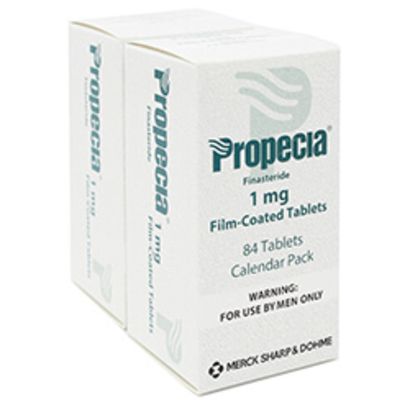
Propecia 1mg 168 Tablets For Hair Loss
Propecia 1mg 168 Tablets For Hair Loss Product information
£214.99 (£1.28 per tablets)
| 1mg | |
|---|---|
| 28 tablets | £41.59 |
| 56 tablets | £80.94 |
| 84 tablets | £109.99 |
| 168 tablets | £214.99 |
Effective in 90% of men for male pattern baldness
1 tablet daily for 3-6 months needed to see effect of treatment
Prevents further hair loss
Contains the active ingredient finasteride
A hair loss treatment for men only
Product Information for Propecia 1mg 168 Tablets For Hair Loss
Buy Propecia online in the UK
You can buy Propecia 1mg tablets online for hair loss in men from Oxford Online Pharmacy through the online doctor service.
You must complete the online consultation above before you can continue with your Propecia order to treat male pattern baldness.
What is Propecia?
Propecia is a branded, prescription-only medicine that comes as daily tablets and contains the active ingredient Finasteride.
Propecia is the branded version of the generic Finasteride 1mg tablets.
Finasteride is a type II 5-alpha reductase inhibitor for people seeking effective treatment for hair loss.
How does Propecia help?
Male pattern hair loss affects different people in different ways; some take it in their stride, while others are deeply impacted by it.
Men who suffer from premature balding are more likely to suffer some form of anxiety as a result of the condition. While it is not possible to cure male pattern hair loss, it is possible to reverse the effects with medication.
Propecia drugs have been proven to be effective in treating male pattern baldness, also known as androgenetic alopecia, in 90% of men. [1]
How does Propecia work for hair loss?
Hair loss is a natural part of the hair’s life cycle for men and women. However, in men, a change in the way scalp cells react to testosterone can lead to thinning hair, which can eventually result in baldness.
Propecia UK is used to treat common male pattern baldness, also known as androgenetic alopecia. This condition, often passed down through families, makes hair follicles shrink over time because they are sensitive to a hormone called dihydrotestosterone (DHT).
A natural body process changes testosterone, a male hormone, into a different hormone called dihydrotestosterone (DHT) using an enzyme (a type of protein) called 5-alpha reductase.
Hair follicles are sensitive to DHT, and with increased exposure to the hormone, the follicles narrow. When levels of DHT get too high, it can make hair follicles shrink. This means that every time a hair falls out naturally, the new hair grows back a little bit narrower. Eventually, the hair is so fine that it can’t break through the surface of the skin.
Propecia works by blocking this enzyme, which reduces the levels of DHT. Lower DHT levels help hair follicles to grow back to their normal size, leading to a thicker and healthier head of hair. Then hair can grow again like normal.
Research shows that 4-6 months after taking Propecia, up to 60% less DHT is present in the scalp. This works to regrow hair in 9 out of 10 men with male pattern baldness. [2]
How effective is Propecia in treating hair loss?
According to clinical studies, Propecia pills have shown significant effectiveness in treating male pattern hair loss.
Findings show that within a 5-year study, 90% of men taking Finasteride daily maintained or regrew hair compared to only 25% of men taking the placebo.
A 2-year study showed that 66% of men using Finasteride noticed at least 50% more visible hair than only 7% of men using the placebo.
Research shows that Finasteride (Propecia) helps the majority of men using it to successfully maintain or regrow hair. [3]
How long does Propecia take to work?
You will notice the best hair growth results when starting this medicine early (before your hair loss gets bad).
For most people, the following Propecia timeline to work for hair regrowth is as follows:
- You should first notice the effects of this treatment within 3-6 months of daily use. [4]
- Within 9-12 months, you should experience the full response of this treatment.
- Maximum regrowth is present 1-2 years after starting treatment.
It is important to understand that Propecia doesn't work instantly but gradually improves hair growth for most men over several months.
Is Propecia right for me?
When choosing a medicine for hair loss it is important to understand whether it's the best option for you.
There are many hair loss treatment options and before you decide, read our hair loss articles that compare the different available treatments.
Propecia is suitable for:
- Men with diagnosed male pattern baldness (androgenetic alopecia) - those with genetic hair loss and shrinking follicles
- Men in the early stages of balding who still have active, salvageable follicles
- Men with moderate to extensive hair loss focused on the anterior scalp region and crown
- Adults over age 18 with balding (safety/efficacy not established for teens)
Propecia is not recommended for men who are already near or completely bald in the scalp area.
Is Propecia available on the NHS?
Hair loss treatment is not available for funding under the NHS. For this reason, many men don’t realise that it is possible to get prescription medication for the condition.
You can get a private prescription for hair loss treatment online with Oxford Online Pharmacy in a few simple steps. Add the product(s) that you want to your basket and go to check out.
Once you have completed the process, you will be asked to complete a short questionnaire; this will be assessed by a doctor, who will issue a private prescription if appropriate.
The process couldn’t be simpler - the cost of your prescription is included in the product price, and your doctor is on hand to ask any questions that you may have.
Propecia UK and some other medications containing the active ingredient Finasteride are some of the the only drugs licensed in the UK for treating hair loss. We know that you may have some questions about Propecia; below, you will find answers to our customers’ most frequently asked questions.
We understand that hair loss can be an emotional journey and that, for many, finding hair loss treatment online can have a huge impact.
Oxford Online Pharmacy is on hand to give you professional medical advice on the best course of action for you. If you have any questions about hair loss treatment or the prescription and consultation process, please do get in touch.
Propecia 1mg 168 Tablets For Hair Loss reviews
How to use Propecia 1mg 168 Tablets For Hair Loss
The standard doctor-recommended dosage for Propecia is one 1mg Finasteride tablet taken orally once per day. Patients can take it with or without food. Continuous daily administration allows levels to build up so that benefits are sustained over time.
Evidence of stabilised hair loss or regrowth typically requires using Propecia for 3 to 6 consecutive months. However, maximum benefits and results may take up to a year of uninterrupted treatment before becoming fully evident to patients.* It is critical to keep taking Propecia oral tablets every day to maintain positive outcomes. [5]
Periodic reassessment of progress with a treating physician is suggested. This allows monitoring for efficacy and any possible need for changes or discontinuation.
Importantly, Propecia has only been evaluated for use in adult men and should not be taken by women, children or adolescents at any dose.
*Disclaimer. Individual results may vary.
Side effects of Propecia 1mg 168 Tablets For Hair Loss
Propecia side effects
As with any medication, Propecia does carry risks of side effects. Some are more common, while others are rarer. Often, side effects will resolve after taking the medication regularly for some time.
Some of the potential side effects of Finasteride are:
- Breast tenderness
- Breast tissue enlargement
- Decreased libido
- Erectile dysfunction
- Testicular pain
- Nausea
Stop taking this medicine and talk to your doctor immediately or go to the nearest hospital emergency department if you have any of the following symptoms:
- Swelling of your face, lips, tongue or throat
- Difficulty swallowing
- Skin rash, itching, lumps under your skin (hives)
- Breathing difficulties
- Excessive fatigue
For a full list of side effects, please read the Propecia patient information leaflet.
General warnings from our Clinical Lead Dr Roisin McHugh:
Propecia has in rare cases caused depression. If you develop any symptoms of depression such as low mood please stop the medication straight away and discuss it with a healthcare professional.
Infertility has been reported in men who took finasteride for a long time and had other risk factors that may affect fertility; this should improve on discontinuation of finasteride. Long-term clinical studies about the effects of finasteride on fertility in men have not been conducted.
Propecia affects your hormones and can have an impact on some blood results. If you need a blood test for PSA (prostate-specific antigen), you must let your doctor know that you are taking Propecia, as it can affect the results.
You should promptly report to your doctor any changes in your breast tissue such as lumps, pain, enlargement or nipple discharge as these may be signs of a serious condition, such as breast cancer (very rare).
It can cause erectile dysfunction. If you have any questions regarding any of this please email or telephone the pharmacy.
A small number of men (less than 1%) may experience heart palpitations when taking Finasteride for the first time, especially if they are aged over 60.
If you get any side effects, talk to your doctor or pharmacist. This includes any possible side effects not listed in this leaflet. You can also report the side effects of Propecia 1mg tablets directly via the Yellow Card Scheme here or search for MHRA Yellow Card in the Google Play or Apple App Store. By reporting side effects you can help to provide more information on the safety of these tablets.
You will need to be aware of the potential longer-term side effects of taking Finasteride (known as Post Finasteride Syndrome) - please see our Blog page for more information here.
It should not be taken by people who are allergic to the ingredients of the medication. It is also not suitable for female patients.
All patients should always read the patient safety leaflet included with their medication. If you are experiencing side effects, stop taking the treatment and follow the instructions on the leaflet.
You can also contact our Pharmacy Team on 01295 262925.
Cautions
There are a few notable precautions regarding Propecia use that patients should discuss with their doctor:
Pregnant women or women who may get pregnant should not handle crushed Propecia tablets due to the risk of birth defects if absorbed.
Propecia can affect PSA levels checked for prostate cancer screening. Inform your doctor of use.
Use should be reassessed periodically with a healthcare provider Your doctor will check your to monitor results and any new medical conditions, medications, or symptoms that could impact continued treatment.
Discontinue immediately if allergic reaction, swelling, or breathing issues are experienced.
Covering these key cautions in a simple manner allows men considering Propecia treatment to understand special cases that require added consideration and monitoring.
-
Propecia is used by men with male pattern hair loss who want to prevent further hair loss and regrow back their hair.
-
No, even though they are both used to stop hair loss they work in a different way.
Containing different active ingredients, Finasteride (Propecia) works by blocking the bodys natural production of the DHT hormone which is responsible for stopping hair growth and Minoxidil (Regaine) works by relaxing the blood vessels, improving blood flow and delivering essential nutrients and oxygen.
-
You can get Propecia 1mg tablets from Oxford Online Pharmacy from $41.59 for 28 tablets.*
*Prices are as of 20.11.24 and are subject to change.
-
Propecia is generally safe to be taken long term. That being said, like most medicines, side effects are possible.
You should always familiarise yourself with potential side effects before starting a medicine and if any side effects are severe or last longer than you think they should, contact your doctor immediately.
-
No, Propecia is a prescription-only product and requires a prescription to be issued by a registered GP. You can get a prescription for Propecia from Oxford Online Pharmacy
-
As well as stopping hair loss, Propecia may help you grow back the hair you lost.
-
This all depends on your preference, if Propecia (finasteride) works well for you then you should stick to it
There are alternative hair loss treatments such as Dutasteride and Regaine that you could consider
You can learn more about the different hair loss treatments through our dedicated blog article.
-
Althought these side effects are common with Finasteride (Propecia) many people won't experience any of them at all.
Possible common side effects include:
- Chills
- Cold sweats
- Confusion
- Dizziness, faintness, or lightheadedness when getting up suddenly from a lying or sitting position
- Decreased interest in sexual intervourse
- Sexual dysfunction
- Loss in sexual ability, desire, drive, or performance
All of the side effects listed above should be temporary, while your body is getting used to the medication.
If for any reason these side effects are prolonged or severe, contact your doctor for advice.
https://www.mayoclinic.org/drugs-supplements/finasteride-oral-route/description/drg-20063819
-
Finasteride (Propecia) is most effective when sued long term, as soon as you stop using this medicine your hair will slowly revert to the state it was before starting.
-
Yes, Propecia can slightly increase your testosterone levels, this is due to the way it works on the body.
This shouldn`t be anything to worry about as your levels will go back to normal after stopping the medicine.
You can learn more about how Finasteride impacts testosterone levels here.
-
Propecia is safe for long term use and is often recommended to be taken for at least a year. Your doctor will assess the medicines suitability and effectiveness during your treatment and provide recommendations on where you should continue or stop treatment.
-
Propecia is used to treat male pattern hair loss on the anterior mid-scalp area and vertex. Like many treatments for progressive conditions, the earlier hair loss treatment is used, the more effective it is; Propecia cannot reverse complete baldness.
-
Propecia contains the active ingredient, Finasteride, which is the only drug licensed in the UK for the treatment of male pattern hair loss. In 2014, the UK patent for Propecia expired, which meant that other companies could produce products containing generic Finasteride. In short, Finasteride vs Propecia work in the same way, but Propecia is the original brand.
-
Propecia isn’t a cure for male-pattern hair loss, it just helps to widen the affected hair follicles while you are taking the medication. If you stop taking these pills, over time the hair that grew back will become thin and fall out again. Depending on the level of regrowth and how long you were taking Propecia, you are likely to lose the hair that you regained within a year.
Regardless of the risks of stopping taking Propecia, if you experience an allergic reaction or any serious side effects, it is important that you stop taking the medication immediately and contact your doctor.
- Adil, A., & Godwin, M. (2017). The effectiveness of treatments for androgenetic alopecia: A systematic review and meta-analysis. Journal of the American Academy of Dermatology, 77(1), 136-141.e5.
- Rathnayake, D., & Sinclair, R. (2010). Male androgenetic alopecia. In Endotext [Internet]. MDText.com, Inc.
- Kaufman, K. D., Olsen, E. A., Whiting, D., Savin, R., DeVillez, R., Bergfeld, W., Price, V. H., Van Neste, D., Roberts, J. L., Hordinsky, M., Shapiro, J., Binkowitz, B., & Gormley, G. J. (1998). Finasteride in the treatment of men with androgenetic alopecia. Finasteride Male Pattern Hair Loss Study Group. Journal of the American Academy of Dermatology, 39(4 Pt 1), 578–589.
- National Health Service. (2023, March 15). Common questions about finasteride.
- National Institute for Health and Care Excellence. (2022, December). Male pattern hair loss (male androgenetic alopecia): Prognosis.
- What is Finasteride and how does it work for hair loss?
- Can stress really cause hair loss?
- What we ask (and why) before we prescribe
- Does Hollywood Typecast Bald Actors?
- Do you have to use hair loss treatment forever?
- What happens during our hair loss consultations?
- Topical vs oral hair loss treatments: What suits your lifestyle?
- What should you do if you don’t see results from hair loss treatment?
- Is it worth treating early-stage hair loss? What we know about timing
- Hair loss and mental health: Why it hits harder than you expect
Authored on November 20, 2024

Reviewed on November 20, 2024