


A 2026 Freedom of Information (FOI) request by Oxford Online Pharmacy to NHS trusts in England found that demand for weight loss treatment is increasingly being met by non-invasive options rather than surgery.
While weight loss surgeries were long the main medical solution for eligible patients, weight loss medications have proven to be a more popular and accessible option over recent years.
Based on a sample of 38 NHS trusts in England, we found that weight loss medication prescriptions have increased by 381% since 2023, while bariatric surgeries have increased at a slower rate of 29% over the same period. This suggests the balance of NHS weight loss treatment is shifting towards non-invasive options, but demand remains for surgery.
The latest NHS Health Survey found that approximately 30% of UK adults are classed as living with obesity. It’s estimated that around 7% of UK adults use GLP-1 weight loss drugs and a further 8% have considered them as a weight loss solution.
Key findings
The data provided by a sample of 38 NHS Trusts across England show:
Weight loss medication prescriptions have increased by 381% between 2023 and 2025
Bariatric surgeries have increased by 29% between 2023 and 2025
Tirzepatide (Mounjaro) is the fastest-growing and most prescribed weight loss drug
Mounjaro and Wegovy account for 87% of all reported weight loss prescriptions
37% of trusts don’t provide any weight loss services
16% of trusts provide weight loss medication only, with no surgical option
What weight loss treatments does the NHS offer?
Aside from general dietary advice and local programmes, NHS weight loss treatment options include medication prescriptions, such as pills or injections, and surgical procedures. The recommended treatment will depend on your body mass index (BMI), health conditions and preferences.
Bariatric surgery supports weight loss by shrinking the stomach to encourage a decrease in food consumption, or rerouting the digestive system so fewer calories are absorbed.
The procedure can take up to three hours, and side effects vary from patient to patient. This treatment also carries the risk of more serious post-surgical complications such as stomach leaks, infection and gallstones.
Weight loss surgery is typically only available to patients with a BMI of 40 and above. You could also be eligible with a BMI of 35 and above if you have a weight-related condition such as type 2 diabetes.
Prescription weight loss drugs can cater for a wider group of patients. Suitability depends on your BMI, health conditions and whether you access treatment through the NHS or privately.
GLP-1 medications can cause side effects including nausea, vomiting, diarrhoea and constipation. These typically ease within a few weeks, though some people can experience them for longer.
How are NHS weight loss management solutions changing?
Of the 38 trusts that responded, 37% provide no weight loss services at all, while 16% offer medication but no bariatric surgery.
In 2025, there were 1,664 bariatric surgeries carried out by the trusts, compared to over 11,000 weight loss medication prescriptions issued.
For many, weight loss medication isn’t just the preferred choice. It’s often the only treatment route available to them.
Weight loss medications are changing the landscape of NHS weight loss management, with a surge of 381% in two years compared to a 29% growth for weight loss surgeries in the same time frame.
While bariatric surgeries are still increasing, growth has been far slower than for medication solutions. This gap is driven by capacity, as research reveals that less than 1% of those eligible for bariatric surgery are able to access it.
In the future, surgery could increasingly be reserved for the patients who need it most, while weight loss drugs absorb the wider demand.
Top NHS trusts for weight loss treatments
Our FOI request revealed how many bariatric surgeries and weight loss prescriptions each of the 38 responding trusts have completed in the last two years.
We’ve identified the top trusts for weight loss surgeries and medication based on the volume of treatments they’ve provided since 2023.
Top trusts for bariatric surgery
Of the NHS Trusts included in the sample, Ashford and St Peter’s Trust saw bariatric surgeries increase by 108% between 2023 and 2025, performing 1,293 during this period – more than any other trust.
Bedford Trust has the second highest number of surgeries performed at 984, and Derby Trust completes the top three with 479 surgeries across the two years.
Top trusts for weight loss medication
Weight loss medication prescriptions increased by 2,928% between 2023 and 2025 at Guy’s and St Thomas’ Trust. The trust issued over 9,500 weight loss medication prescriptions during this time, accounting for 51% of all prescriptions recorded by the responding trusts.
Ashford and St Peter’s Trust is also a top provider for weight loss medication, issuing over 2,500 prescriptions within the two years, followed by Frimley Trust, with 1,226 prescriptions.
Which weight loss medications are the most prescribed?
Weight loss drugs differ in how they work and how effective they are. The right option depends on your health conditions, how much weight you need to lose and how you prefer to take treatment.
Specific medication information provided by six trusts:
Weight Loss Medication | 2023 | 2024 | 2025 | Total |
|---|---|---|---|---|
Liraglutide | 684 | 495 | 135 | 1,314 |
Semaglutide | 463 | 2,284 | 3,334 | 6,081 |
Tirzepatide | 0 | 1,102 | 5,186 | 6,288 |
Total | 1,229 | 4,118 | 8,909 | 14,256 |
From data provided by six responding NHS trusts, we found that liraglutide medications, such as Saxenda, have seen the biggest decline since 2023, falling by 80%. Orlistat prescriptions, meanwhile, have increased by 210%.
Tirzepatide drugs, including Mounjaro, are the fastest-growing weight loss medications, growing from zero prescriptions in 2023 to over 5,000 in 2025.
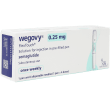
Semaglutide prescriptions, such as Wegovy, are close behind as the second most prescribed medication, with 3,334 prescriptions in 2025.
Together, Mounjaro and Wegovy account for 87% of all reported weight loss prescriptions.
Why are weight loss medications rising in demand?
GLP-1 drugs have uncovered the scale of demand for non-invasive, accessible weight loss treatment.
These medications are more accessible than weight loss surgery in terms of eligibility and cost.
Bariatric surgery is only available to eligible patients with a BMI of 40, or 35 with other health conditions, whereas the licensed threshold for weight loss medication starts at a BMI of 30, though NHS criteria remain stricter. The risk profile for surgery is also higher, so patients are likely to prefer a more risk averse option, like medication.
Bariatric procedures are substantially more costly than short-term weight loss medication. But if GLP-1 treatment lasts several years, the medication costs could reach or even exceed surgery costs.
Prescription medication is also less invasive than surgery and requires little to no recovery time, with a lower risk of serious complications.
What should you look for in a provider?
Oxford Online Pharmacy research found that almost half of UK adults have bought medicine or medical products online. While this is a quick and discreet way to access healthcare, it’s important to be cautious and check whether you’re buying from a licensed, registered pharmacy.
An estimated 29 million people are eligible for weight loss medication through the NHS, yet approximately 220,000 are expected to be treated over the next three years.
This gap between demand and access creates ideal conditions for the black market to thrive. Of the people who admit to sourcing prescription medication illegally, 28% obtained weight loss drugs.
So, if you’re buying outside the NHS, it matters that you use a properly regulated provider.
A regulated online pharmacy will always ask about your weight, BMI, other medications and health history to ensure the medication is right for you. Unlicensed sellers skip these checks entirely, which is exactly what makes buying from them dangerous.
You should only use pharmacies that display a General Pharmaceutical Council (GPhC) logo and registration number.
A pharmacy operating lawfully will also require a consultation or proof of prescription before allowing you to order prescription-only medications.
Start your weight loss journey with Oxford Online Pharmacy
Oxford Online Pharmacy is fully regulated by the GPhC. We prioritise patient safety and satisfaction at every step of your weight loss journey.
Weight loss injections and pills are scientifically proven to help you lose weight alongside exercise and a balanced diet.
We offer clinical consultations with our qualified pharmacy team to discuss which treatment options may be right for you. If treatment isn't suitable for you, we’ll work with you to find alternative treatments or forms of support.