


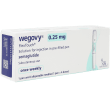

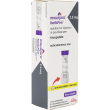

Wegovy can be highly effective for weight loss. In the most well-known clinical trial (STEP-1) of the drug adults who took the 2.4mg dose of semaglutide once a week lost 14.9% of their starting weight over 68 weeks (1). However, these results were measured over a set period of treatment, and many people hope to eventually maintain a healthier weight without medication. So, just how long should you stay on Wegovy? And what does it mean for your results if you decide to stop? Let us find out.
Do you have to stay on Wegovy forever?
Obesity is a common, long-term health condition in the UK. In England, around 3 in 10 adults were living with obesity in 2024, and around two-thirds were either overweight or living with obesity (2). In just one 20-year follow-up study, only around 1 in 10 adults who initially had obesity were classified as non-obese and metabolically healthy at the end of the study (3). The same study also found the people monitored remained the same weight or even became more obese during that time.
When it comes to weight management, many factors need to be considered, and people with obesity will require consistent support to help them reach and maintain a healthier weight. That is just one of the reasons why weight loss medications, particularly GLP-1s like Wegovy, are considered part of a long-term strategy that also includes eating a healthy, balanced diet and increasing your physical activity (4).
But does this mean that you need to stay on Wegovy forever? What is important to remember is that everyone’s weight loss journey is unique to them. While the STEP 1 extension trial showed that participants regained around two-thirds of the weight they had lost within one year of stopping treatment, some people may find it easier to make and stick to positive lifestyle changes that will continue to support their long-term weight loss goals, even after coming off Wegovy (5).
How long should you stay on Wegovy?
How long you stay on Wegovy is a clinical decision made between you and your prescriber, based on your weight goals, how well you are responding to treatment, how well you tolerate it, and whether the benefits continue to outweigh the risks. Most people stay on the medication for as long as it is helping you to lose or maintain your weight, you are tolerating the side effects of Wegovy, and your prescriber feels that the benefits of taking it outweigh the risks.
While you will have to request the appropriate dose from your prescriber every month, NICE guidelines also recommend reviewing treatment after six months on the highest tolerated dose. If you have lost less than 5% of your body weight at this time, your clinician should assess whether continuing with Wegovy is advisable, or if there is an alternative weight loss medication that you could consider (4).
It is also worth knowing that clinical trials have only followed people taking Wegovy for up to around 4 years (6). There is also little research on the best way to come off Wegovy, such as gradually reducing your dose rather than stopping all at once (7). This is another reason to plan any changes with your prescriber.
Key milestones to expect on Wegovy
The most important thing to remember about any weight loss medication, including Wegovy, is that progress can vary from person to person. So, while we are able to give you a rough indication of some of the key milestones to expect on Wegovy, your experience may differ.
Weeks 1-4
Usually everyone starts on the lowest dose of Wegovy, which is 0.25mg. This is because starting on the lowest dose is considered to be the best way to introduce your body to a new medication and reduce the risk of side effects. However, you are still likely to experience some of the most common Wegovy side effects, which include headache, nausea, vomiting, diarrhoea, constipation, mild abdominal pain and fatigue (8).
Many people notice that Wegovy starts affecting their appetite straight away, and they think less about food and feel fuller more quickly. You may also start to see some weight loss, although this is usually water weight.
After each dose increase
Evidence suggests that the common side effects of Wegovy occurred most often during or shortly after dose escalation. This means that each time you titrate up to the next dose, you may briefly find that your side effects are worse in the day or two directly after injecting. This evidence also shows that nausea, vomiting and diarrhoea peaked at around week 20 of treatment and then declined after (9).
Week 12
By around week 12, many people are into the later stages of dose escalation and may be seeing steady weight-loss progress. Gastrointestinal side effects such as nausea, diarrhoea and vomiting are usually mild to moderate and often short-lived, although they can continue for some people (10).
As weight loss progresses, some people notice benefits beyond the scales, but individual experiences vary, and these effects are not guaranteed (10).
Week 20
By this time, you will probably notice a significant drop in your starting weight. In a 60-week randomised trial of semaglutide 2.4mg, participants had lost an average of 9.7% of their body weight by week 20 (11). Side effects should feel manageable unless you are still in the process of titrating up through the doses (you may choose to extend the titration process if you are achieving results and tolerating side effects well at a lower dose).
Week 24/6 months
UK licensing recommendations state that people who have not lost at least 5% of their starting body weight after 6 months should discuss with their clinician whether continuing Wegovy is right for them, taking their overall benefits and risks into account.
Week 68+
The STEP1 study shows that patients achieve an average weight loss of 14.9% of their body weight by 68 weeks after commencing treatment with Wegovy (10). By this point, most people are taking a maintenance dose of Wegovy that enables them to maintain their results.
Is Wegovy good for long term use?
Wegovy is intended to support weight loss as part of an overall weight management programme that includes following a healthy, balanced diet and increasing physical activity. This, along with strict eligibility criteria for this medication, makes it a longer-term treatment for overweight/obesity, rather than something that should be viewed as a quick fix.
However, how long “long term” is will depend on your ability to maintain your new, healthier weight once you reach your chosen goal. Unfortunately, weight regain after stopping Wegovy is common with one study showing that people who stopped semaglutide after 68 weeks regained about two-thirds of the weight they had lost over the course of the following year (12).
Continuing treatment may help to maintain weight loss, but whether it is right long-term will depend on your health goals, side effects, overall wellbeing and the recommendation of your clinician.
Can I stay on a low dose of Wegovy?
While Wegovy dose titration is designed to help your body get used to increasing amounts of semaglutide, there is no rule that states that you must follow the recommended titration timeline exactly. Some people are able to achieve effective results on a much lower dose.
The recommended maintenance dose of Wegovy is 2.4mg once a week. If you find side effects on 2.4mg hard to tolerate, your prescriber may discuss whether a lower dose, such as 1.7mg, is suitable for you (8). While long-term weight maintenance evidence is mainly focused on the higher dose, in one trial, the 1.7mg dose was associated with a weight loss of around 11.5% at 68 weeks post-treatment (12), showing that it can still be effective even at lower dosages.
Your weight loss is a personal journey, and your doses should be guided by your response to treatment and tolerance of any side effects.
Can you stay on Wegovy for life?
Since any prescription medication use is determined by your health and response to treatment, it may be feasible to stay on Wegovy for a very long time. However, since health and personal circumstances change over time, it’s highly unlikely that anyone will ever stay on Wegovy “for life”.
When to stop Wegovy
First, you should not stop Wegovy yourself without speaking to your provider.
Wegovy may need to be stopped if you:
Become pregnant or are planning to become pregnant
Suffer from the effects of an allergic reaction, such as skin rash, swelling of your tongue, lips and airway, or have problems with breathing
Develop pancreatitis, which is characterised by severe abdominal pain, sometimes spreading to your back, with or without vomiting.
If you experience signs of an allergic reaction or pancreatitis, call 111 or visit your local Accident and Emergency department for urgent medical care (8).
If you have further questions about staying on Wegovy, get in touch with your prescriber for more help and support.
References
Singh G, Krauthamer M, Bjalme-Evans M. Wegovy (semaglutide): a new weight loss drug for chronic weight management. Journal of Investigative Medicine [Internet]. 2023 May 25 [cited 2026 Oct 1];70(1):jim–2021-001952. Available from: https://www.ncbi.nlm.nih.gov/pmc/articles/PMC8717485/
NHS England. Health Survey for England, 2024: Adults’ overweight and obesity [Internet]. 2026 Jan 27 [cited 2026 Oct 20]. Available from: https://digital.nhs.uk/data-and-information/publications/statistical/health-survey-for-england/2024/adults-overweight-and-obesity
Bell JA, Hamer M, Sabia S, Singh-Manoux A, Batty GD, Kivimaki M. The Natural Course of Healthy Obesity Over 20 Years. Journal of the American College of Cardiology. 2015 Jan;65(1):101–2. [cited 2026 Oct 1]. Available from: https://www.jacc.org/doi/10.1016/j.jacc.2014.09.077
NICE. Overweight and Obesity Management NICE Guideline [Internet]. 2025 Jan [cited 2026 Oct 1]. Available from: https://www.nice.org.uk/guidance/ng246/resources/overweight-and-obesity-management-pdf-66143959958725
Pedersen S D, Priya Manjoo, Dash S, Jain A, Pearce N, Poddar M. Pharmacotherapy for obesity management in adults: 2025 clinical practice guideline update. CMAJ [Internet]. 2025 Aug 11 [cited 2026 Oct 1];197(27):E797–809. Available from: https://www.cmaj.ca/content/197/27/E797
Ryan DH, Lingvay I, Deanfield J, Kahn SE, Barros E, Burguera B, et al. Long-term weight loss effects of semaglutide in obesity without diabetes in the SELECT trial. Nature Medicine [Internet]. 2024 May 13 [cited 2026 Oct 20];30(7):2049–57. Available from: https://pmc.ncbi.nlm.nih.gov/articles/PMC11271387/
Yevusiak T, Weisman A, Retnakaran R, Wharton S, Drucker DJ, Kramer CK. Impact of semaglutide withdrawal on cardiometabolic profile and physiology of energy balance: Recovery effects after semaglutide termination – The REST trial study protocol. PLoS One [Internet]. 2026 Jul 27 [cited 2026 Oct 20];21(7):e0354237. Available from: https://pmc.ncbi.nlm.nih.gov/articles/PMC13405095/
Wegovy 0.25 mg, FlexTouch solution for injection in pre-filled pen - Summary of Product Characteristics (SmPC) - (emc) [Internet]. www.medicines.org.uk. [cited 2026 Oct 1]. Available from: https://www.medicines.org.uk/emc/product/13799/smpc
Wharton S, Calanna S, Davies M, Dicker D, Goldman B, Lingvay I, et al. Gastrointestinal tolerability of once‐weekly semaglutide 2.4 mg in adults with overweight or obesity, and the relationship between gastrointestinal adverse events and weight loss. Diabetes, Obesity and Metabolism. 2021 Oct 4;24(1). [cited 2026 Oct 1]. Available from: https://pmc.ncbi.nlm.nih.gov/articles/PMC9293236/?utm
Wilding JPH, Batterham RL, Calanna S. Once-Weekly Semaglutide in Adults with Overweight or Obesity. The New England Journal of Medicine [Internet]. 2021 Feb 10 [cited 2026 Oct 1];384(11):989–1002. Available from: https://www.nejm.org/doi/full/10.1056/NEJMoa2032183
Tronieri JS, Allison KC, DeRouen K, Amaro A, Collins KG, Roy A, et al. Short- and long-term effects of semaglutide 2.4 mg on energy intake, appetite, and food reward: a 60-week, double-blind randomized controlled trial [Internet]. Vol. 124, The American journal of clinical nutrition. United States; 2026 [cited 2026 Oct 1]. p. 101403. Available from: https://pubmed.ncbi.nlm.nih.gov/42323166/
Wilding JPH. Weight regain and cardiometabolic effects after withdrawal of semaglutide: The STEP 1 trial extension. Diabetes, Obesity and Metabolism [Internet]. 2022 May 19 [cited 2026 Oct 1];24(8):1553–64. Available from: https://pubmed.ncbi.nlm.nih.gov/35441470/