


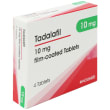



Mounjaro is the current leading prescription weight loss treatment in the UK, taken as a once-weekly injection. Foundayo is a brand-new medicine that aims to deliver the same benefits, only it’s conveniently taken as a daily tablet.
For many people, the choice between a tablet and an injection is an easy one. But while both medicines help reduce appetite and support steady weight loss, they work slightly differently, don't produce exactly the same results, and are better suited to different people.
Here, we’ll compare Foundayo and Mounjaro side by side, looking to help you understand which option may be the better fit for your goals and lifestyle.
Complete an online weight loss consultation to explore your options today.
In this article:
What are the similarities between Mounjaro and Foundayo?
How do they work differently?
Which one causes the most weight loss?
Are the side effects the same?
Which treatment is more likely to cause side effects?
Who is better suited to which treatment?
Are they both available in the UK for weight loss?
So, should you choose Foundayo or Mounjaro?
What are the similarities between Mounjaro and Foundayo?
Despite one being a weight loss injection and the other a weight loss tablet, Mounjaro and Foundayo have a lot in common. They are both:
Made by the pharmaceutical company Eli Lilly
Developed for adults living with obesity or overweight with weight-related health conditions
Started at a low dose and gradually increased over several months
Support weight loss by mimicking hormones involved in appetite control pathways
Reduce feelings of hunger, increase feelings of fullness, and stop food noise
Work best alongside a healthy, balanced diet and regular exercise
Intended for long-term, ongoing weight management
How do Foundayo and Mounjaro work differently?
Both medications help support weight loss by targeting hormonal pathways involved in appetite regulation. But it's important to understand how what Foundayo is and how it works differently to Mounjaro. In the simplest terms: the active ingredient in Foundayo (Orforglipron) targets one pathway, whereas the active ingredient in Mounjaro (Tirzepatide) targets two.
Orforglipron, mimics a hormone called GLP-1. This hormone is produced naturally by the body after eating to regulate hunger. By copying GLP-1, Foundayo “tricks” the body into feeling fuller, helping you to feel satisfied with less (2).
Alternatively, Tirzepatide, mimics both GLP-1 and a second hormone involved in appetite regulation called GIP. Some people notice a stronger effect on appetite because of this dual action (1).
You can find out more about what Mounjaro does in the body in our guide.
Foundayo vs Mounjaro: Which causes the most weight loss?
Current evidence suggests that Mounjaro leads to more weight loss than Foundayo — and all other weight loss injections currently available in the UK, for that matter. This is presumably down to its dual action, which is unique to Mounjaro.
In clinical trials, people taking the highest dose of Mounjaro lost an average of around 20% of their starting weight over 72 weeks (1). In comparison, participants taking the highest dose of Foundayo lost around 11.1% of their starting weight on average over the same time period (2).
This may seem like a huge difference, and it is. But it’s important to remember that these figures are averages. As weight loss and its journey is specific to each person, some participants lost more weight, others far less. In real life, there’s no guarantee that you will achieve the same results in trials, as everyone responds differently.
Are the side effects of Foundayo and Mounjaro the same?
Mounjaro side effects and Foundayo side effects are widely similar and shared by all GLP-1 medicines. Because, like all GLP-1 treatments, Mounjaro and Foundayo slow digestion, the most common ones are gastrointestinal, such as (1-2):
Nausea
Vomiting
Diarrhoea
Constipation
Bloating
Heart burn
For most people, these side effects are mild to moderate. They’re also typically worse when starting a GLP-1 treatment or increasing your dose, but you can help manage them by eating smaller, simpler meals and avoiding greasy food. Most people find they improve as the body adjusts to the medication.
Both Mounjaro and Foundayo also carry similar warnings for more serious side effects, including pancreatitis, kidney problems, and low blood sugar (1,2). These are rare, but it’s important to be aware of them so that you can get medical attention if you notice any unusual signs.
The main practical difference is that Mounjaro can cause injection-site reactions, whereas Foundayo is taken as a tablet, and doesn't carry this risk.
Which treatment is more likely to cause side effects?
For both Mounjaro and Foundayo, digestive side effects are considered “very common”, meaning they affect more than 1 in 10 people (3).
In clinical trials, 60 to 69% of people taking Orforglipron reported at least one digestive symptom, depending on the dose they were taking (4). Below is a more detailed breakdown of the incidence of gastrointestinal side effects seen in trials (4-5):
Nausea: 35% with Foundayo vs around 20% with Mounjaro
Diarrhoea: 25% with Foundayo vs around 16% with Mounjaro
Constipation: 24% with Foundayo vs around 2.5% with Mounjaro
Vomiting: 24% with Foundayo vs around 9% with Mounjaro
Indigestion: 13% with Foundayo vs around 7% with Mounjaro
It’s important to remember that these statistics are to help gauge an idea of what to expect when taking these medications, rather than a direct reflection of what will happen to you. They come from separate trials in distinct groups of people, so they shouldn’t be directly compared.
Whichever treatment you choose, it's sensible to expect some digestive discomfort.
Foundayo vs Mounjaro: Who is better suited to which treatment?
While Mounjaro leads to greater average weight loss, this doesn’t automatically make it better (1).
The biggest difference between the two medicines is how they’re taken. And importantly, weight loss medication only works if you're happy to take it consistently. For some people, that will be a weekly injection. For others, a daily tablet will be best.
The right choice depends on your priorities, lifestyle, and how comfortable you feel injecting.
Foundayo may be best for people who:
Have a phobia of needles or are worried about self-injecting
Travel often and don’t always have a way to store Mounjaro in the fridge
Prefer a treatment that can be taken in a way that they're used to
Have not tried GLP-1 treatments as they’ve been put off by injections
Are willing to accept slightly less weight loss to avoid injections
On the other hand, Mounjaro might suit you better if you:
Want the treatment that can give the greatest possible weight loss
Feel comfortable with the idea of using an injection pen
Struggle to remember to take daily medication
Prefer the convenience of a once-weekly treatment
Prioritise effectiveness over the convenience of a tablet
Are Mounjaro and Foundayo both available in the UK for weight loss?
Mounjaro is available in the UK for eligible patients. Foundayo has just been approved by the MHRA, but isn't yet available for purchase, Based on typical timelines, Foundayo is expected to become available for private prescribing towards the end of 2026, but there’s no confirmed launch date yet.
For some people, this may make the decision much simpler. If you want to start treatment now, Mounjaro is currently the only one of the two available. If you strongly prefer a tablet and are happy to wait, Foundayo may be worth considering once it becomes available.
If you start Mounjaro and later decide you'd prefer Foundayo, switching may be possible, but you’ll usually have to start at a low dose and increase gradually again. Your prescriber will be able to advise on the safest way to transition between treatments if and when Foundayo enters the UK market.
So, should you choose Foundayo or Mounjaro?
If you're still deciding between Foundayo and Mounjaro, the best next step is to speak to a prescriber. You can contact our support team at Oxford Online Pharmacy can help you choose a treatment that fits your goals, lifestyle, preferences, and medical history.
Complete an online weight loss consultation to explore your options today.
References
Jastreboff AM, Aronne LJ, Ahmad NN, Wharton S, Connery L, Alves B, et al. Tirzepatide Once Weekly for the Treatment of Obesity. New England Journal of Medicine [Internet]. 2022 Jun 4;387(3):205–16.
Wharton S, Aronne LJ, Stefanski A, Alfaris NF, Ciudin A, Yokote K, et al. Orforglipron, an Oral Small-Molecule GLP-1 Receptor Agonist for Obesity Treatment. New England Journal of Medicine. 2025 Sep 16;
NICE. Adverse Reactions to Drugs [Internet]. NICE. 2023.
Eli Lilly and Company. What is the incidence of gastrointestinal adverse events with FoundayoTM (orforglipron)? [Internet]. Lilly.com. 2026.
Hani Raka Karrar, Mahmoud Ismail Nouh, Yousef Ismail Nouh, Nouh MA, Adel, Yousef Hassan Hemeq, et al. Tirzepatide-Induced Gastrointestinal Manifestations: A Systematic Review and Meta-Analysis. Cureus [Internet]. 2023 Sep 27;
Lilly’s oral GLP-1, orforglipron, is successful in third Phase 3 trial, triggering global regulatory submissions this year for the treatment of obesity | Eli Lilly and Company [Internet]. Lilly.com. 2025.