






In a society where conversations about sex have traditionally been hushed, the digital age is ushering in a new era of openness and curiosity. However, despite this shift, accessing sexual health services remains a challenge for many, leading to a surge in online inquiries and potentially impacting public health.
Recent findings from Oxford Online Pharmacy shed light on the cities where Brits are most eager to seek answers to their most intimate & embarrassing questions, Britons Most ‘Embarrassing’ Sex Questions for Dr. Google Revealed
To find out what people have on their minds but feel too uncomfortable to talk about, the clever data analysts at Oxford Online Pharmacy have collected Google Search data from the past year to find out volumes for popular sex questions. And the results are in!
- ‘how to last longer in bed’ – 12,100 monthly searches
- ‘how to last longer’ – 4,400 monthly searches
- ‘how to make sex last longer’ – 2,400 monthly searches
- ‘how to last long in bed naturally with food’ – 1,900 monthly searches
- ‘how to make a woman orgasm’ – 1,900 monthly searches
- ‘how to do anal sex’ – 1,600 monthly searches
- ‘how to get hard’ – 1,300 monthly searches
- ‘how to have good sex’ – 1,300 monthly searches
- ‘how long should sex last’ – 1,300 monthly searches
- ‘how do you have an orgasm’ – 1,300 monthly searches
Where in the UK is most embarrassed about sex?
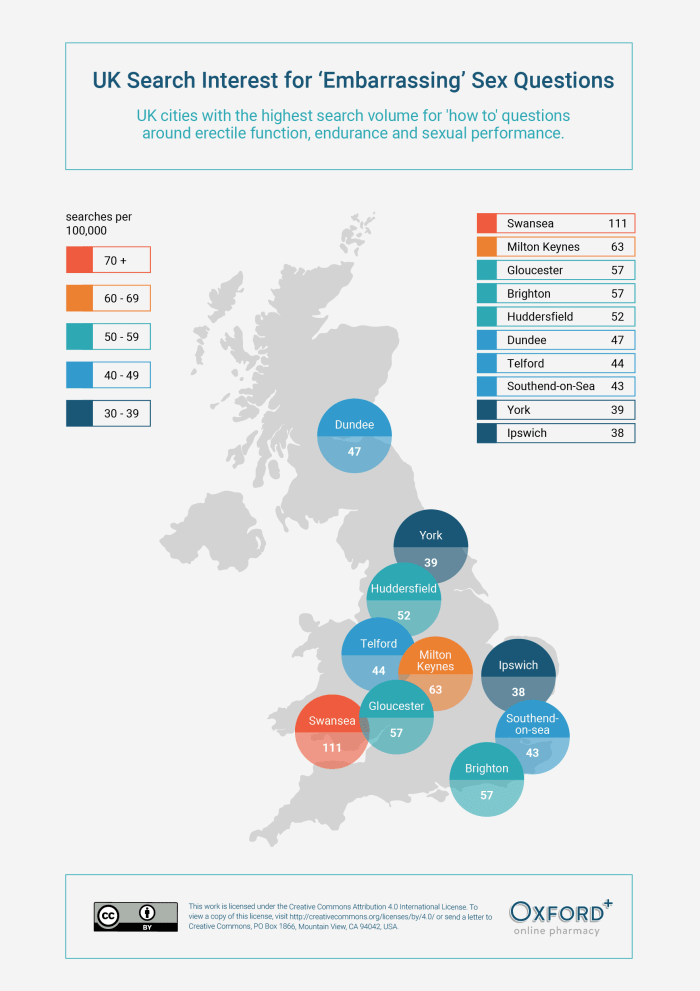
Topping the list is Swansea, South Wales, where residents are fervently turning to Google to address their sexual concerns. Despite its smaller population size, Swansea saw a staggering 111 searches per 100,000 residents, indicating a pressing need for accessible sexual health resources in the region.
Following closely behind is Milton Keynes, where a significant number of residents are seeking guidance on improving their sex lives. With 63 searches per 100,000 people, the city reflects a trend of reliance on online information, despite recent efforts to expand sexual health services.
Sharing the third spot are Gloucester and Brighton, with 57 searches per 100,000 residents. In Gloucester, a rise in internet-based puberty education suggests a growing reliance on digital resources among the younger population. Meanwhile, Brighton, known for its progressive attitudes towards sexuality, demonstrates a paradoxical reluctance to seek face-to-face support for intimate inquiries.
Implications for Sexual Health
The surge in online questions highlights the need for improved access to sexual health resources and education across the UK. While digital platforms offer a valuable source of information, they cannot replace the personalized care and support provided by trained professionals. Addressing the stigma surrounding sexual health and promoting open dialogue are crucial steps towards fostering a healthier and more informed society.
By shedding light on the cities where online inquiries about sexual health are most prevalent, this study underscores the importance of prioritizing sexual education and support services for all communities. With greater awareness and accessibility, we can empower individuals to make informed choices and prioritize their sexual health and well-being.
While digital resources provide valuable information, personal consultations are crucial, especially for conditions like erectile dysfunction where treatments such as sildenafil (the active ingredient in Viagra) or Cialis may be prescribe.
Methodology
Common questions Brits were asking Google about sex, erections and lasting longer in bed were collated from tools such as AlsoAsked and AnswerThePublic.
We submitted all these embarrassing questions into Google Keyword Planner and received the average monthly searches in the UK for each condition, as well as some additional questions people were asking. From this, we were able to find the most common embarrassing questions as a starting point.
By adjusting the search settings on Google Keyword Planner, we could also find which cities were Googling which questions the most. We analysed this for the top 50 most populated cities according to recent research.