







Switching from Finasteride to Dutasteride: everything you need to know



Explore a flexible range of prescription and non-prescription hair treatments that can help slow or stop hair thinning and hair loss. With tablets, foams and sprays for men, learn what could work for you depending on your needs and lifestyle.
Support your hairline and your confidence.
Male pattern baldness (sometimes called Androgenetic or Androgenic Alopecia) affects up to 80% of men, and usually starts between 20-25 years old. Hair usually thins in a predictable pattern and is influenced by both genetics and hormones.
Male pattern baldness is usually inherited. It happens when hair follicles become sensitive to a hormone called dihydrotestosterone (DHT), which is made from testosterone. Over time, DHT causes these hair follicles to shrink. The hair grows back finer and shorter, until eventually it stops growing.
Key causes of male pattern baldness include:
Genetics: Hair loss genes can be inherited from either parent, not just the mother's side as commonly believed
DHT sensitivity: This testosterone-based hormone binds to receptors in hair follicles, causing them to miniaturise
Ageing: Hair becomes more sensitive to DHT as you get older
Hormonal changes Changes in androgen levels may speed up hair loss in those already genetically predisposed
Male pattern baldness typically progresses through predictable stages, though the rate of progression varies significantly between individuals. This is known as the Norwood Scale and has 3 distinct stages – Early, Moderate and Advanced. Explore our FAQs for more information on each stage.
We’ve helped thousands of people manage hair loss with expert advice and access to licensed and unlicensed treatments.
Our prescription treatments include generic Finasteride or branded Propecia, which can slow, stop or even reverse hair loss and is currently unavailable on the NHS.
We are also one of the only online services to prescribe oral Minoxidil or Dutasteride for hair loss when appropriate, treatments also not available on the NHS.
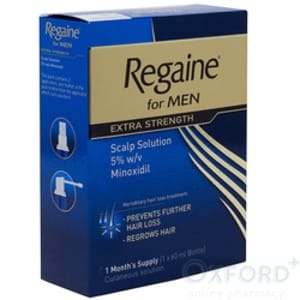
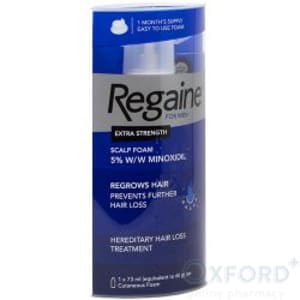
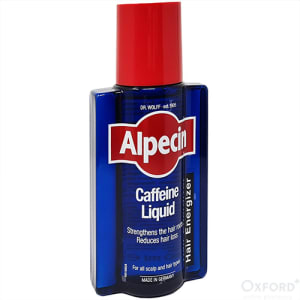
Our non-prescription treatments include generic Minoxidil spray or branded Regaine for Men, and Alpecin Caffeine Shampoo and Liquid.
See your doctor if your hair is falling out quickly or suddenly, if your eyelash or eyebrow hairs are falling out, if you have redness, swelling or spots on your scalp or if you have started or changed any medicine.
Discover a range of hair loss treatments and understand which might be most suitable for you. Remember, some options are prescription-only and will need to be approved by our clinical team once your order is placed.
Finasteride tablets
Works by blocking the conversion of testosterone to dihydrotestosterone (DHT), which shrinks hair follicles
Usually taken as a 1mg daily tablet
Results typically appear after 3-6 months of consistent use
Stops hair loss in about 80% of men; stimulates regrowth in about 60%
Potential side effects include mood changes, reduced libido and erectile dysfunction in a small percentage of users
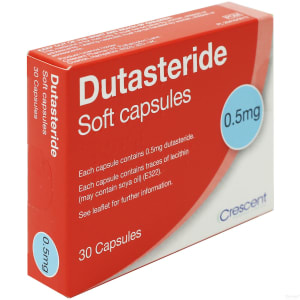
Dutasteride capsules
Second stage treatment where Finasteride hasn’t been successful
More potent than Finasteride tablets
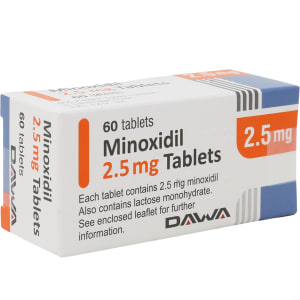
Minoxidil tablets
Works by increasing blood flow to hair follicles and prolonging the growth phase of hair
Usually prescribed at doses of 2.5mg daily for hair loss
Results typically appear after 3-6 months
Side effects may include fluid retention, rapid heartbeat, or unwanted body hair growth
Minoxidil solution/Regaine foam
Available in different strengths (2% often recommended for women, 5% for men)
Works by increasing blood flow to hair follicles and prolonging the growth phase
Applied directly to the scalp once or twice daily
Results typically appear after 4 months of consistent use
About 60% of users see reduced hair loss; about 40% experience regrowth
Side effects may include scalp irritation or unwanted hair growth on adjacent skin
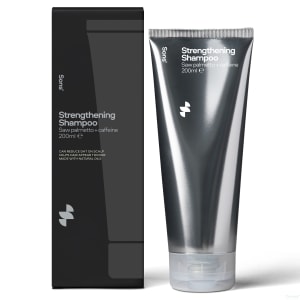
Alpecin caffeine shampoo
Contains caffeine which may help counter the effects of testosterone on hair follicles
Used as a regular shampoo, left on for 2 minutes to allow absorption
Less robust clinical evidence than minoxidil or finasteride
May complement other treatments
Very few side effects; mainly scalp irritation in sensitive individuals
Not sure which hair loss option is right for you or want to understand more about hair loss? Explore some of our most-asked hair loss questions.
Male pattern baldness is assessed using the Norwood Scale and has 3 distinct stages – Early, Moderate and Advanced.
Early stage (Norwood Scale 1-2)
Slight recession of the hairline at the temples, creating an "M" shape
Gradual thinning at the crown that may initially go unnoticed
Hair quality changes, becoming finer and shorter in affected areas
Moderate stage (Norwood Scale 3-4)
Deeper recession of the hairline, creating a more pronounced "M" pattern
Noticeable thinning at the crown, forming a small bald spot
Widening of the part line, especially toward the crown
Connection beginning to form between the receding hairline and thinning crown
Advanced stage (Norwood Scale 5-7)
Significant hair loss with only a narrow band of hair connecting the sides
Large bald areas merging between the crown and frontal regions
Remaining hair often becomes finer and less dense
Hairline may recede completely to the middle or back of the scalp
You can access hair loss treatments from online providers, like us, or privately through your GP or a dermatologist. When seeking treatment online, you can add over-the-counter products straight into your basket or begin a hair loss consultation, enabling us to prescribe treatments like Finasteride or Minoxidil if safe and appropriate.
The consultation takes around 5 minutes and, if appropriate, we can prescribe and ship your treatment on the same day.
Treatment for hair loss caused by Androgenetic Alopecia is unavailable on the NHS.
There are a range of hair loss options available depending on your biological sex and how advanced your hair loss has become. There are both oral and topical options available. This means tablets, shampoos, foams and liquid solutions for hair loss. Some oral and topical treatments can be combined to boost results.
You're likely suitable for Finasteride if you're a male over 18 with male pattern baldness and no liver problems. Minoxidil foam or liquid suits both men and women with early to moderate hair loss.
Some hair loss treatments available at Oxford Online Pharmacy are prescribed off-label, which means they are not licensed in the UK for treating hair loss, but may be used at our prescriber’s discretion where clinically appropriate.
This is a common and accepted practice in UK medicine, where the prescriber is experienced and the patient is fully informed. All off-licence prescribing at OOP is supported by our pharmacist-led service and follows MHRA and GPhC guidance.
Patience is often one of the most frustrating things about hair loss medications. Typically, you should commit to at least 6 months of consistent use before assessing how treatment is working. Full results generally take 12-18 months. Many people experience initial shedding in the first few weeks, which is actually a sign treatment is working.
Medicines can stabilise hair loss and may even regrow hair without the need for surgery. Medication is often less invasive and more affordable than surgery, and can even improve transplant results if you choose to have one later. It’s recommend maintaining a medication regimen for 12-18 months to assess its effectiveness before pursuing surgical options, as surgery without addressing the underlying causes can lead to continued hair loss around the transplanted areas.
For severe hair loss, high-quality hair systems (modern wigs or hairpieces) offer an excellent non-surgical alternative. Unlike older wigs, today's hair systems use medical-grade adhesives and breathable materials that create a natural-looking hairline. They can be custom-made to match your hair colour, texture, and desired style, with options ranging from partial coverage to full systems. Many specialist hairdressers and clinics offer these solutions, with professional fitting, styling and maintenance services. Hair systems allow immediate results without recovery time and can be especially appropriate for those with extensive hair loss patterns not suitable for transplantation or responsive to medications.
Piraccini, B. M. & Alessandrini, A. Androgenetic alopecia. G. Ital. Dermatol. Venereol. 149, 15–24 (2014).
Sawaya, M. E. & Price, V. H. Different levels of 5alpha-reductase type I and II, aromatase, and androgen receptor in hair follicles of women and men with androgenetic alopecia. J. Invest. Dermatol. 109, 296–300 (1997).
Rundegren, J. A one-year observational study with minoxidil 5% solution in Germany: results of independent efficacy evaluation by physicians and patients. J. Am. Acad. Dermatol. 50, P91 (2004).
Ho, C. H., Sood, T. & Zito, P. M. Androgenetic Alopecia. (StatPearls Publishing, 2022).
Sharma, A. N., Michelle, L., Juhasz, M., Muller Ramos, P. & Atanaskova Mesinkovska, N. Low-dose oral minoxidil as treatment for non-scarring alopecia: a systematic review. Int. J. Dermatol. 59, 1013–1019 (2020).
NICE.
NICE.
Cleveland Clinic. Hair Loss in Women | Cleveland Clinic [Internet]. Cleveland Clinic. 2018.
Authored on June 5, 2025

Robert Bradshaw (Pharmacist) — MRPharms BSc(Hons) Pharmacy
Superintendent Pharmacist
GPhC Number: 2036118
Reviewed on October 14, 2026
Not sure which treatment option is right for you? Fill out your details and an Oxford Online Pharmacy expert will get in touch.