

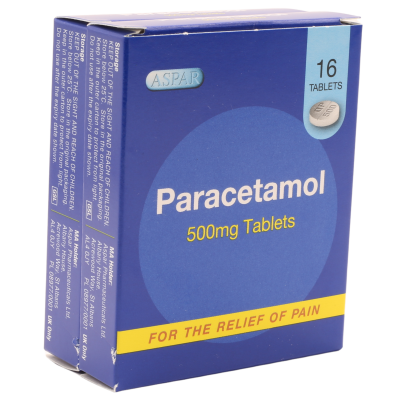
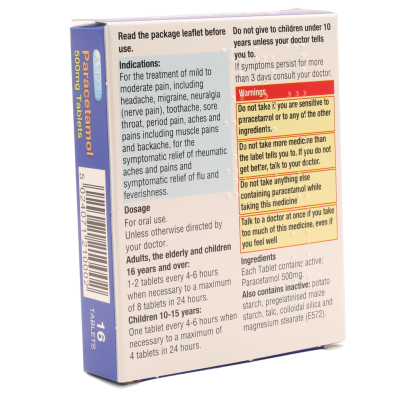
Paracetamol 500mg 2 x 16 Tablets
Paracetamol 500mg 2 x 16 Tablets Product information
£1.80
Everyday relief from aches, pains and fever.
Keep Paracetamol 500mg Tablets on hand for when headaches, toothache, period pain or other everyday aches and pains strike. They can also help bring down a high temperature when you're feeling unwell with a cold or flu (1).
Each pack contains 16 tablets, suitable for adults and children aged 10 and over.
Contains 500mg of paracetamol per tablet
Take when needed for short-term relief from aches and pains
Buy directly from Oxford Online Pharmacy without a prescription
Do not take Paracetamol 500mg Tablets with any other medicine containing paracetamol, including some cold and flu remedies. Taking too much can cause liver damage (1).
Product Information for Paracetamol 500mg 2 x 16 Tablets
What are Paracetamol 500mg Tablets used for?
Paracetamol 500mg Tablets provide short-term relief from mild to moderate pain and fever. Available in a convenient 16-tablet pack, they're useful to keep at home for everyday aches and pains like (1-3):
Headaches
Toothache
Back pain
Earache
Period pain
Sore throat
General aches and pains
Pain and fever caused by colds and flu
Paracetamol can help relieve pain and fever to help you feel better while unwell, but it won't treat the illness or infection causing your symptoms.
Who can take paracetamol 500mg tablets?
Paracetamol 500mg Tablets are suitable for adults and children aged 10 and over. The dose is different for adults and children, so make sure you follow the instructions for your age (1-3).
Do not give these tablets to children under 10, or take them if you're allergic to paracetamol or any of the other ingredients. Each tablet contains 500mg of paracetamol, along with maize starch, purified talc, stearic acid, povidone and soluble starch. Lactose is not listed as an ingredient (1).
Check with your doctor or pharmacist before taking paracetamol if you:
Have serious liver or kidney problems.
Have liver problems caused by drinking alcohol.
Are seriously unwell, particularly if you have sepsis (a severe reaction to an infection).
Are malnourished or regularly drink large amounts of alcohol.
Take other medicines that could interact with paracetamol.
These conditions can make paracetamol less safe for you to take, so you may need a lower dose or a different painkiller (1).
Can you take paracetamol during pregnancy or breastfeeding?
Paracetamol is generally considered safe to use during pregnancy and breastfeeding when needed, but check with your doctor or pharmacist first (1,2).
If you're pregnant, take the lowest dose that relieves your symptoms for the shortest possible time. You could start with one 500mg tablet rather than two, if that's enough to relieve your pain or fever. If your symptoms don't improve or you find you need to take it more often, speak to your GP or midwife.
Small amounts of paracetamol pass into breast milk, but it's unlikely to harm your baby when taken at the recommended dose. It is usually the best painkiller to take while breastfeeding (2).
Paracetamol 500mg 2 x 16 Tablets reviews
How to use Paracetamol 500mg 2 x 16 Tablets
Swallow the tablets whole with a drink of water. The amount you can take depends on your age (1-3).
Adults and children aged 16 and over:
Take 1 or 2 tablets (500mg to 1,000mg) per dose when needed
Leave at least 4 hours between doses
Do not take more than 8 tablets (4,000mg) in 24 hours
Do not take more than four doses in 24 hours
Children aged 10–15:
Take 1 tablet (500mg) per dose when needed
Leave 4 to 6 hours between doses.
Do not give more than 4 tablets (2,000mg) in 24 hours
Do not give these tablets to children under 10 years old (1,3).
Never take more than the recommended dose. If you need to take paracetamol for more than three days at a time, speak to your doctor.
Do not take these tablets with any other medicine containing paracetamol, including some cold and flu remedies or combination painkillers.
Do not drink alcohol while taking paracetamol 500mg tablets. Alcohol may increase the risk of side effects and liver damage. Speak to your doctor or pharmacist before taking paracetamol if you drink alcohol heavily or have alcohol-related liver problems (4).
What should you do if you take too much paracetamol?
If you've taken more paracetamol than recommended, contact NHS 111, even if you feel well (2,3).
Taking too much paracetamol is unlikely to cause problems but it can damage your liver, and you may not notice any symptoms straight away. NHS 111 can advise whether you need further treatment based on how much paracetamol over the maximum dose you've taken.
Keep the packaging handy so you can tell them exactly what you've taken.
How should you store Paracetamol 500mg Tablets?
Keep out of the sight and reach of children
Store in the original packaging to protect the tablets from moisture
Do not use after the expiry date printed on the packaging
Side effects of Paracetamol 500mg 2 x 16 Tablets
Side effects of paracetamol 500mg tablets are uncommon, especially when taken at the recommended dose, but some can be serious (1,4).
Call 999 if you have signs of a serious allergic reaction (anaphylaxis), such as difficulty breathing or swelling of your tongue or throat.
Stop taking paracetamol and call NHS 111 if you notice:
Signs of liver problems: Feeling sick (nausea), or yellowing of your skin or the whites of your eyes (jaundice). Yellowing may be harder to notice on darker skin.
Unusual bruising or bleeding: Bruising more easily than normal, frequent nosebleeds or getting infections more often. These may be signs of a problem with your blood cells.
Serious skin reactions: A severe rash, blistering or peeling skin.
In people who are very unwell or taking the antibiotic flucloxacillin, paracetamol can cause metabolic acidosis, where the blood becomes too acidic. Symptoms include deep, rapid breathing, drowsiness, nausea and vomiting. Seek urgent medical attention if you develop these symptoms.
This page does not list every possible side effect. Read the Patient Information Leaflet supplied with your medicine for the full list of side effects, warnings and precautions (4).
You can report suspected side effects through the MHRA Yellow Card Scheme (5).
Advisory information
Some medicines can affect how paracetamol works or increase the risk of side effects. Check with your doctor or pharmacist before taking paracetamol if you also take (1):
Other medicines containing paracetamol: Do not take these together. Some cold and flu remedies and combination painkillers already contain paracetamol.
Flucloxacillin: Taking paracetamol with this antibiotic may increase the risk of metabolic acidosis, particularly in people with certain risk factors.
Warfarin and other blood thinners: Regular paracetamol use may increase the risk of bleeding in people taking warfarin.
Metoclopramide and domperidone: These anti-sickness medicines may affect how quickly paracetamol is absorbed.
Colestyramine: This cholesterol-lowering medicine may reduce paracetamol absorption.
If you're unsure whether paracetamol is safe to take alongside your other medicines, ask your pharmacist before taking it.
Important - Before taking any medication, it is always important to read the Patient Information Leaflet (PIL)
Paracetamol 500mg 2 x 16 Tablets - Patient Information Leaflet
Paracetamol 500mg Tablets – Summary of Product Characteristics (SmPC). Electronic Medicines Compendium (eMC), 2025.
National Health Service. Paracetamol for adults. NHS; 2026.
National Health Service. Paracetamol for children. NHS.
Zentiva. Paracetamol 500mg Tablets: Patient Information Leaflet. Electronic Medicines Compendium (eMC). 2026.
Medicines and Healthcare products Regulatory Agency. Yellow Card Scheme. MHRA.
- How To Treat And Prevent Back Pain
- Save on Your Treatment This January
- How blood affects erections: the science behind erectile dysfunction
- Why do ED medicines work for some people but not others?
- How do GLP-1 side effects compare between treatments?
- What is the Black Market for Prescription Medication?
- What is GLP-1, and what does it have to do with weight?
- What does Mounjaro do in the body?
- Oral semaglutide for Alzheimer’s: What the EVOKE trial results tell us
- What you need to know about Wegovy 7.2mg
Authored on October 28, 2026

Robert Bradshaw (Pharmacist) — MRPharms BSc(Hons) Pharmacy
Superintendent Pharmacist
GPhC Number: 2036118
Reviewed on October 29, 2026
