


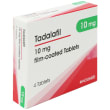


If you’re comparing finasteride and dutasteride, you’re already further along in your hair loss research than most people. Both medicines work by lowering DHT, the hormone that drives male pattern hair loss. But they aren’t identical treatments, and choosing between them isn’t always straightforward.
In this article, we explain how finasteride and dutasteride compare and when each treatment is typically considered. Understanding how they differ can help you have a more informed conversation with a prescriber and feel confident about whichever option you decide to try.
View our hair loss treatments or visit the Hair Loss Hub for more advice.
In this article:
How do finasteride and dutasteride work?
What are the key differences between the two?
Which treatment is more effective for hair loss?
What about their side effects?
Why isn’t dutasteride licensed for hair loss in the UK?
Who typically takes which medicine?
Can women use finasteride or dutasteride for hair loss?
How do I decide between finasteride and dutasteride?
Summary: should I choose finasteride or dutasteride?
How do finasteride and dutasteride work?
Both finasteride and dutasteride belong to a group of medicines called 5-alpha reductase inhibitors. They reduce the conversion of testosterone into dihydroxytestosterone (DHT), the hormone responsible for shrinking hair follicles in male pattern hair loss.
The key difference is how strongly these medicines lower DHT:
Finasteride blocks Type II 5-alpha reductase
Dutasteride blocks both Type I and Type II
Because dutasteride blocks both enzyme types, it reduces overall DHT levels more strongly. This is why it’s generally considered the more potent option.
What are the key differences between the two?
Although they work similarly, there are several differences between the two medicines:
Feature | Finasteride | Dutasteride |
|---|---|---|
Typical hair loss dose | 1mg daily | 0.5mg daily |
Enzyme blocked | Type II | Type I and II |
DHT reduction | ~70% | ~90%+ |
UK licence for hair loss | Yes | No (off-label use) |
Time to results | 3–6 months | 3–6 months |
Track record | Since 1997 | Newer for hair loss, but used to treat an enlarged prostate since 2001 |
Half-life | 6–8 hours | ~5 weeks |
Which treatment is more effective for hair loss?
Research comparing the two medicines shows that dutasteride 0.5mg and 2.5mg both increased hair counts more than finasteride 1mg, reflecting its stronger DHT-blocking effects (1). However, this doesn’t mean dutasteride is “better” for hair loss or the right starting treatment for everyone.
Many men respond well to finasteride and maintain stable results long term, with around 80% of men taking 1mg of finasteride seeing hair loss stop within a year (2). Others notice their progress slows after several months and may benefit from switching to dutasteride under clinical guidance.
Effectiveness depends on you and your individual response, treatment goals, and how comfortable you feel with off-label prescribing as part of your hair loss care plan.
View our hair loss treatments or visit the Hair Loss Hub for more advice.
What about their side effects?
Finasteride and dutasteride affect the same hormonal pathway, so they have very similar side effects. Most people take these treatments without experiencing side effects at all, but sexual symptoms are the most commonly reported on both medicines. These include (3,4):
Reduced libido
Erectile dysfunction
Reduced ejaculate volume
Breast tenderness or enlargement (rare)
Clinical studies suggest these sexual side effects occur at similar rates with both medicines, even though dutasteride reduces DHT more strongly overall (3).
Around 1 in 1,000 people report changes in mood, including low mood or anxiety, while taking finasteride or dutasteride (4). A causal link is still being studied, but the MHRA have sent out updated safety guidelines and it’s something prescribers take seriously. If you notice changes in your mood or have suicidal thoughts while on treatment, it's important to stop treatment immediately and contact your doctor as soon as possible. If you have seriously harmed yourself or feel you are at risk of serious harm, contact emergency services on 999 immediately (6).
If side effects do occur, they’re usually reversible after stopping treatment. Finasteride leaves the body relatively quickly, typically within a few days, so symptoms often settle soon after stopping. Dutasteride stays in the system for longer, with a half-life of several weeks, which means side effects may take longer to resolve if they occur.
There are also rare reports of ongoing symptoms after stopping finasteride, sometimes referred to as post-finasteride syndrome (5). This is uncommon but it is usually discussed during prescribing consultations so you can make an informed decision before starting treatment.
Why isn’t dutasteride licensed for hair loss in the UK?
Both finasteride and dutasteride are licensed medicines approved by the MHRA, meaning they have been carefully tested for safety and effectiveness in clinical trials. However, medicines are licensed for specific conditions, not for every possible use.
Dutasteride is licensed for treating benign prostate enlargement, not hair loss
Finasteride is licensed for treating male pattern hair loss
Prescribing dutasteride for hair loss is still legal, but it is known as “off-label prescribing” (6). This is a fairly common practice in the UK and simply means a prescriber is recommending a licensed medicine based on the available clinical evidence and their professional judgement, rather than a specific licence for that condition.
It does not mean the treatment is unsafe, only that it is being used outside its original licensed indication. Dutasteride is officially licensed for hair loss in several other countries, including South Korea and Japan, and is widely prescribed for hair loss by private clinicians in the UK.
Who typically takes each medicine?
For most people starting treatment, finasteride 1mg tablets are considered first because they:
Are licensed for hair loss in the UK
Have a long safety track record
Are widely available
Are generally lower cost
On the other hand, dutasteride is typically considered when finasteride has been used for several months, but there has been no real progress. It may also be recommended if hair loss is progressing particularly quickly or if someone prefers a more aggressive treatment under clinical guidance.
Both medicines are commonly used alongside topical minoxidil. Rather than blocking DHT, minoxidil lengthens the growth phase of the hair. Many men find that combining hair loss treatments across two different pathways improves their results (7).
For anyone concerned about side effects or who struggles to take tablets, topical finasteride and topical dutasteride are also available privately. As these solutions and sprays are applied directly to the scalp, they may reduce systemic exposure and potential side effects. These can be discussed with a prescriber if tablets are not suitable.
Can women use finasteride and dutasteride?
Sometimes, but they are not usually recommended.
Neither finasteride nor dutasteride is licensed in the UK for treating female hair loss, and they are not routinely prescribed. Finasteride should be avoided during pregnancy and breastfeeding because it can affect the development of a male fetus, and similar precautions generally apply to dutasteride.
In some specialist settings, these medicines may occasionally be considered for postmenopausal women under close clinical supervision, but this is not standard first-line treatment. For most women experiencing hair thinning, topical minoxidil is usually the recommended starting option.
Female hair loss can have several possible causes, so a consultation with a GP or specialist is an important first step before starting any treatment.
How do I decide which option is right for me?
Choosing between finasteride and dutasteride depends on several factors, including:
How advanced your hair loss is
Whether you’ve already tried finasteride
Your comfort with off-label treatment
Your previous experience with side effects
A prescriber’s clinical assessment
For many people, finasteride is a sensible starting point. Dutasteride may become an option later if stronger DHT reduction is needed. But to make sure you’re getting the best hair loss treatment for you, the decision is best made with clinical guidance rather than on your own.
At Oxford Online Pharmacy, our independent doctors can assess your medical history and hair loss pattern through an easy online consultation to help you choose a safe and effective option.
View our hair loss treatments or visit the Hair Loss Hub for more advice.
Sign up for our newsletter for treatment updates, expert advice, and 10% off your first order.
References
Almuntaserbellah Almudaimeegh, Hanadi AlMutairi, AlTassan F, Yomna AlQuraishi, Khalid Nabil Nagshabandi. Comparison between dutasteride and finasteride in hair regrowth and reversal of miniaturization in male and female androgenetic alopecia: a systematic review. Dermatology Reports. 2024 Apr 12;
Shapria J, Kaufman KD. Use of Finasteride in the Treatment of Men With Androgenetic Alopecia (Male Pattern Hair Loss). Journal of Investigative Dermatology Symposium Proceedings [Internet]. 2003 Jun 1;8(1):20–3.
Estill MC, Ford A, Omeira R, Rodman M. Finasteride and Dutasteride for the Treatment of Male Androgenetic Alopecia: A Review of Efficacy and Reproductive Adverse Effects. Georgetown Medical Review [Internet]. 2023 Oct 27;7(1).
NHS. Side Effects of Finasteride [Internet]. nhs.uk. 2023.
Pereira AFJR, Coelho TO de A. Post-Finasteride syndrome. Anais Brasileiros de Dermatologia. 2020 May;95(3):271–7.
GMC. Prescribing unlicensed medicines [Internet]. Gmc-uk.org. 2024.
Chen L, Zhang J, Wang L, Wang H, Chen B. The Efficacy and Safety of Finasteride Combined with Topical Minoxidil for Androgenetic Alopecia: A Systematic Review and Meta-analysis. Aesthetic Plastic Surgery. 2020 Mar 12;44(3):962–70.
Medicines and Healthcare products Regulatory Agency. Finasteride and Dutasteride – updated safety warnings for psychiatric side effects and sexual dysfunction. Drug Safety Update. 2026;19(10):1.